Spring Fair 2026: E-commerce at crossroads of governance, sustainable development

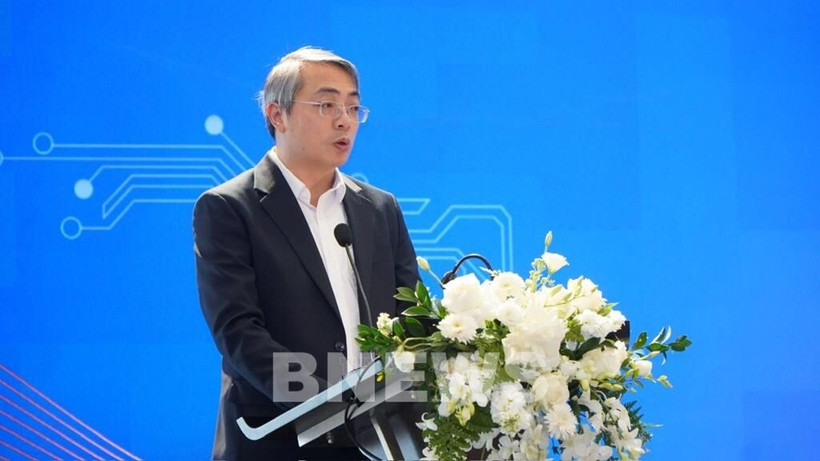
Hoang Ninh, Deputy Director of the E-commerce and Digital Economy Agency under the MoIT, said the forum was organised at the very beginning of 2026 to promptly update guidance and ensure unified implementation ahead of the enforcement of new mechanisms and policies, thereby helping localities and businesses proactively prepare, ensure compliance, mitigate risks, and improve the quality of development.

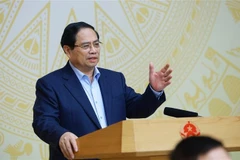
Deputy Director of the E-commerce and Digital Economy Agency Hoang Ninh speaks at the E-commerce Forum 2026 (Photo: VNA)

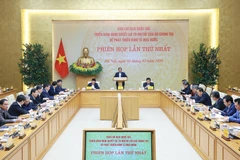
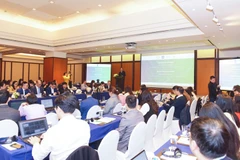
Hanoi (VNA) - The Ministry of Industry and Trade (MoIT) on February 2 hosted the E-commerce Forum 2026 under the theme of enhancing management capacity and strategic orientation for sustainable development, as one of the key activities held within the framework of the first Glorious Spring Fair 2026.

In his opening remarks, Hoang Ninh, Deputy Director of the E-commerce and Digital Economy Agency under the MoIT, said the forum was organised at the very beginning of 2026 to promptly update guidance and ensure unified implementation ahead of the enforcement of new mechanisms and policies, thereby helping localities and businesses proactively prepare, ensure compliance, mitigate risks, and improve the quality of development.

According to Ninh, digital transformation is profoundly reshaping production, business and consumption patterns. In this context, e-commerce has emerged as a vital distribution channel, directly connecting businesses with consumers and helping expand markets for Vietnamese goods.

In recent years, e-commerce has maintained an average annual growth rate of around 25%. In 2025, retail sales via e-commerce were estimated at 31 billion USD, accounting for about 11% of total retail sales, with roughly 60% of the population participating in online shopping. Rapid and broad-based growth has generated higher demands for discipline, transparency, consumer protection and legal compliance to ensure sustainable development.

The year 2026 is seen as a pivotal milestone as the E-commerce Law enters the implementation phase and marks the launch of the National Master Plan on E-commerce Development for 2026–2030. The plan aims to promote green, circular and sustainable growth while enhancing competitiveness and growth quality, with an emphasis on consistent implementation from central to local levels.

However, Ninh noted that e-commerce development remains uneven among localities, particularly between major cities and mountainous or border provinces, due to constraints in digital infrastructure, logistics, human resources and enterprises’ readiness for digital transformation. Strengthening grassroots implementation capacity and providing compliance support for businesses are therefore essential to consolidating market confidence.

Reflecting this orientation, the Government’s Resolution No. 01/NQ-CP for 2026 assigns tasks to study and develop a master plan for applying e-commerce in mountainous and border areas in the 2027–2030 period, with the goal of narrowing the digital divide and ensuring inclusive growth.

At the forum, participants also discussed new regulatory requirements under the E-commerce Law, which will take effect on July 1. The law introduces clearer classification of e-commerce models, defines responsibilities of platforms, sellers and livestream hosts, strengthens consumer protection, and enhances oversight of cross-border e-commerce activities.

The law, for the first time, clearly stipulates the responsibilities of social media platforms engaged in commercial activities. Accordingly, platforms are required to distinguish between business accounts and personal accounts, separate commercial content from regular content, and retain transaction dat. Large-scale platforms must fully comply with regulations applicable to intermediary e-commerce marketplaces.

It is also expected to rein in an overheated market and establish a clearer, more transparent legal framework, creating a more secure and sustainable environment for both businesses and consumers./.

VNA
See more

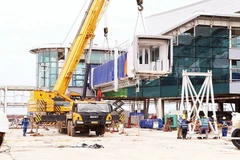
Construction underway on the passenger terminal’s jet bridge at Long Thanh Airport (Photo: nhandan.vn)

Long Thanh airport races toward commercial operation

In late January 2026, construction activities at the massive project site were in full swing under dry seasonal weather conditions. Hundreds of workers and machines were operating day and night on the second runway.

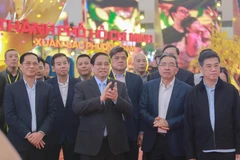
PM Pham Minh Chinh and delegates kick off the first Glorious Spring Fair 2026 (Photo: VNA)

Spring Fair 2026 must become national consumer festival: PM

Ministries, agencies, units, and localities must proactively renew their mindset, shifting from merely “displaying goods” to “spreading values.” They were encouraged to use more digital tools for supply-demand matching and market regional specialties and One Commune One Product (OCOP) items to draw Vietnamese brands nearer to international friends. At the same time, they should actively hold distinctive cultural, musical, and experiential exchanges that infuse energy and deliver real value to attendees.

A trial UAV-based delivery at the Saigon Hi-Tech Park. (Photo: VGP)

Domestic firms position for booming UAV industry in Vietnam

Ho Chi Minh City’s Department of Science and Technology has recently partnered with the Management Board of Saigon Hi-Tech Park (SHTP) and technology firms to pilot UAV-based delivery services within SHTP. Though currently limited to short-distance routes, the trial represents an initial step towards integrating UAVs into daily life in Vietnam’s largest economic hub.

Prime Minister Pham Minh Chinh, Head of the National Steering Committee for the Implementation of the Politburo’s Resolution No. 79-NQ/TW on the Development of the State-owned Economic Sector, chaired the first meeting of the steering committee in Hanoi on February 1. (Photo: VNA)

PM chairs first meeting of steering committee for development of state-owned economic sector

According to the steering committee, the Politburo’s Resolution No. 79-NQ/TW on the Development of State-Owned Economic Sector was issued in the context that the whole country is striving and determined to innovate and reform in many fields, aiming to become a developing country with modern industry and upper-middle income by 2030; and a developed country with high income by 2045.

At the seminar to launch the 2 million USD initiative on green banking capacity development (Photo: VNA)

ADB, SBV launch 2 million USD green banking initiative

The initiative is a component of the technical assistance project “Inclusive and Climate Finance” funded by the Japanese Government through the Japan Fund for Prosperous and Resilient Asia and the Pacific (JFPR).

Prime Minister Pham Minh Chinh speaks at the meeting on January 31. (Photo: VNA)

PM urges flexible investment models for North–South high-speed railway

On the North–South high-speed railway, PM Chinh underscored its urgency for achieving double-digit growth, urging rapid completion of pre-feasibility and feasibility studies, parallel land clearance, and consideration of all three investment models—State, private, and PPP—ensuring balanced interests.