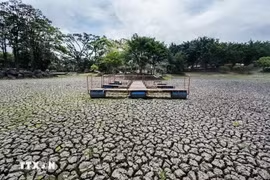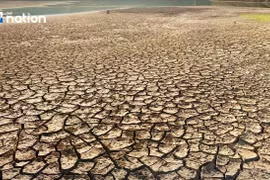
Bangkok (VNA) – The Thai government has instructed relevant agencies to strengthen water management and regulation to cope with the ongoing rainy season while preparing for the risk of El Niño, which could reduce rainfall in late 2026 and early 2027.
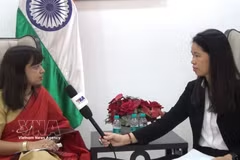
Thai Minister of Agriculture and Cooperatives Suriya Jungrungreangkit said on June 30 that the Royal Irrigation Department (RID) has been instructed to monitor weather conditions, rainfall, and water resources closely, and to develop proactive water management measures to ensure adequate supplies for domestic use, agriculture, industry, and ecosystem conservation.
Forecasts indicate that Thailand is entering a weak El Niño phase, which could intensify toward the end of 2026, bringing nationwide rainfall at or below the long-term average.
According to the Smart Water Operation Centre (SWOC) of the RID, as of June 30, water storage in the country's large and medium-sized reservoirs exceeded 42 billion cu.m, equivalent to 55% of total designed capacity, leaving room for an additional 34.6 billion cu.m. The four major reservoirs in the Chao Phraya River basin currently hold around 12.66 billion cu.m of water, or 51% of their designed capacity, which authorities consider sufficient to meet water demand during the 2026–2027 dry season.
To improve water management efficiency, the Ministry of Agriculture and Cooperatives has instructed the RID to fully implement the 2026 rainy-season water management plan, and review reservoir operation plans with greater flexibility to maximise water storage ahead of the next dry season.
Meanwhile, the department has also prepared machinery and equipment for flood prevention and response nationwide, and inspected the readiness of irrigation infrastructure, dikes and drainage systems under the 2026 rainy-season response plan.
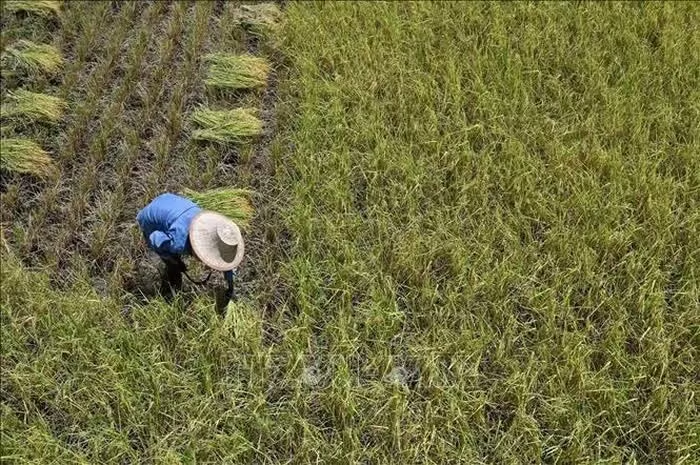
Suriya also asked relevant agencies to continue providing updated information on water resources and weather forecasts to farmers, water users and local authorities to help them develop appropriate water-use plans. He also encouraged water conservation, greater water reuse and adjustments to cropping patterns in line with available water resources./.