Bangkok (VNA) – Thailand is facing four major challenges, namely geopolitical instability, the Middle East conflicts, an aging population, and the middle-income trap, all within a context of limited budget resources, Thai Deputy Prime Minister and Commerce Minister Suphajee Suthumpun has said.
In her speech at the House of Representatives session considering the Budget Bill for fiscal year 2027, Suphajee said the government needs to simultaneously address immediate issues and implement long-term structural reforms, while acknowledging that many long-standing problems cannot be resolved in the short term.
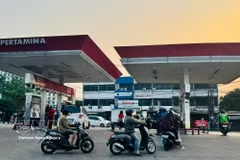
She noted that geopolitical tensions and polarisation among major powers are creating difficulties for international trade, while conflicts in the Middle East are causing significant fluctuations in energy prices, transportation and insurance costs.
Furthermore, Thailand has entered a period of population aging, requiring an increase in workforce skills, particularly in technology. The economy also needs reforms to escape the middle-income trap, she added.
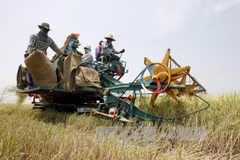
Referring to the agricultural sector, Suphajee said that it currently contributes less than 10% of the country's Gross Domestic Product (GDP) but employs more than 30% of the workforce. She emphasised that improving the efficiency of agricultural production and consumption must be carried out across the entire value chain, rather than by addressing individual commodities separately.
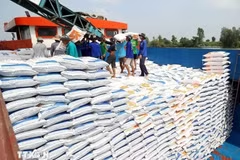
On rice, the Thai Deputy PM noted that the market situation this year is more favourable due to a smaller surplus supply than last year. The government will continue to implement measures to maintain price stability in line with market mechanisms and budgetary capacity.
The small and medium-sized enterprise (SME) sector, she stated, currently contributes approximately 35% of GDP, while the government's goal is to increase its contribution to at least 40%. According to the official, developing SMEs is one of the key solutions to help Thailand escape the middle-income trap./.