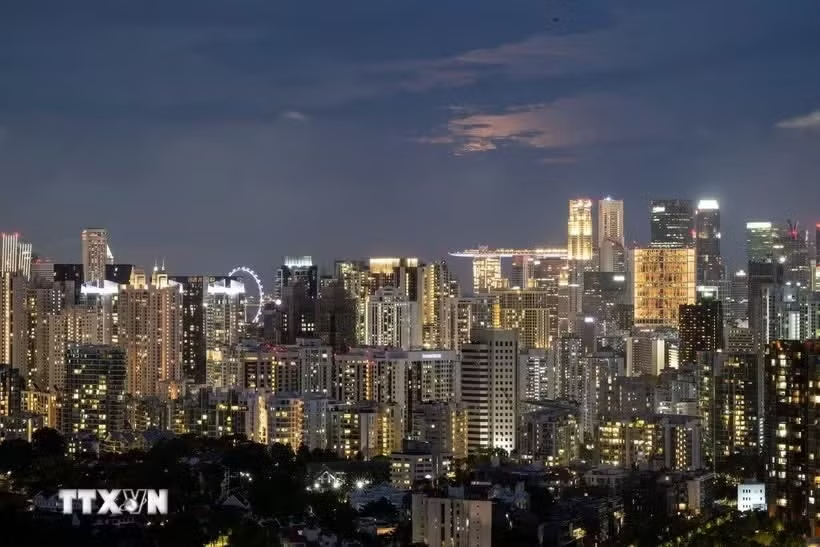
Singapore (VNA) – Singapore’s Department of Statistics on June 30 released the results of its General Household Survey 2025, showing that the trends of later marriages and smaller family sizes continue to gain momentum in the city-state.
The survey also highlighted changes in language use at home, religious affiliation, educational attainment and income levels.
According to the survey, singlehood rose among younger residents aged below 40 compared with 2020. Notably, the share of unmarried women aged 25–29 rose from 69% to 73.4%, while among men, the sharpest increase was recorded in the 30–34 age group, climbing from 41.9% to 47.6%.
The findings further indicated that among those in their 40s, men with lower educational attainment were more likely to remain single. In contrast, women aged 30–49 with a university degree or higher recorded a higher rate of never having married than their peers in other educational groups.
Despite the rising proportion of single adults, the traditional family structure comprising married couples and their children remained the most common household type in Singapore, accounting for 47.6% of resident households. However, this represented a decline from 50.4% in 2020.
The survey also reflected a continuing trend towards smaller family sizes. The average number of children born to ever-married women aged 40–49 fell from 1.76 in 2020 to 1.67 in 2025. The proportion of women with two or more children also declined, from 62.5% to 58.4%.
Women with higher levels of education tended to have fewer children. Those holding a university degree had an average of 1.59 children, compared with 1.84 among women with secondary education or below.
In terms of language use, English remained the most commonly spoken language at home. Some 58.1% of residents aged five and above reported using English most frequently at home, a sharp increase from 48.3% in 2020.
In the transport sector, public transportation remained the primary mode of commuting for working residents. Some 60.1% relied on buses, Mass Rapid Transit (MRT), Light Rail Transit (LRT) services, or a combination of these modes to travel to work, up from 57.7% in 2020.
The General Household Survey 2025 covered 27,324 households and achieved a response rate of 86.8%. It forms part of Singapore’s Comprehensive Labour Force and Household Survey Programme./.

Singapore to develop water-saving solutions for semiconductor, data centre industries
For the semiconductor industry, the funding will support the development of cost-effective water treatment and recycling technologies. In the data centre sector, efforts will focus on improving water efficiency without compromising energy performance.