Bangkok (VNA) – The Thai government has instructed ministries and agencies to urgently develop and submit projects using funds from the 400-billion-THB (about 10.9 billion USD) emergency decree to promote the national energy transition, aiming to reduce dependence on fossil fuels and develop a low-carbon economy.
Ratchada Thanadirek, spokesperson for the Prime Minister's Office, said the directive was issued following a decision by the committee responsible for evaluating the use of loan funds under the emergency decree on addressing the impact of the energy crisis and promoting the national energy transition in 2026.
On June 26, the committee approved a framework of criteria for reviewing programmes and projects under the second funding category.
Accordingly, proposed projects must align with the goals of reducing fossil fuel use, improving energy efficiency, promoting the development of clean energy, and gradually transforming the country's energy structure.
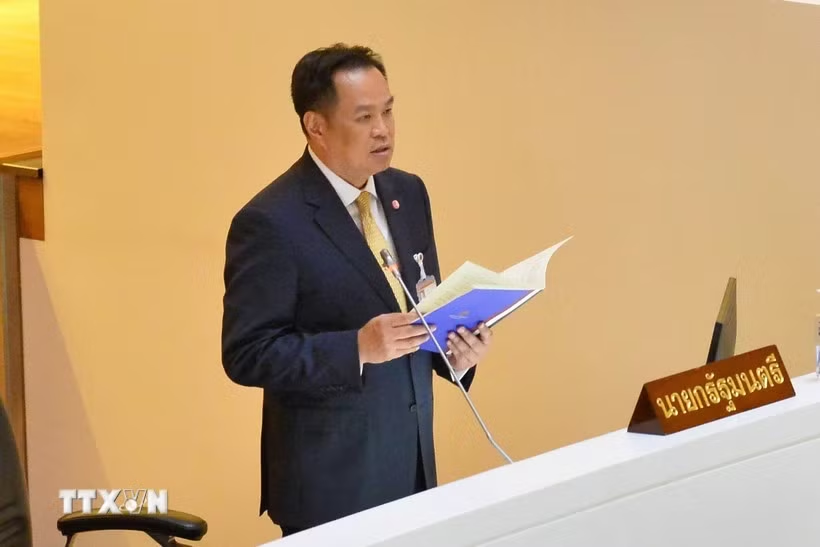
Thai Prime Minister Anutin Charnvirakul emphasised that the loan is not merely intended to address short-term energy price fluctuations but also serves as a crucial tool for restructuring the country's energy system, increasing the share of renewable energy, reducing dependence on fossil fuels, and mitigating risks arising from global energy price volatility over the long term.
According to the Thai government, projects under the second funding category will focus on improving energy efficiency and reducing greenhouse gas emissions; promoting the transition from internal combustion engine vehicles to electric vehicles and other clean energy vehicles, while investing in supporting infrastructure such as charging stations and battery-swapping stations; and developing the skills of workers, businesses, and the wider population to meet the requirements of a clean energy economy.
Projects must be feasible, ready for immediate implementation, and capable of delivering measurable results, such as reducing fuel and electricity consumption, increasing renewable energy use, cutting greenhouse gas emissions, and generating potential revenue from carbon credits.
The Thai government said project evaluation will be based on criteria including necessity, readiness, investment efficiency, transparency, and the potential to deliver tangible results. A specialised subcommittee will assess the suitability of each project and its proposed funding level to ensure that loan proceeds are used for their intended purposes, remain transparent and accountable, and generate long-term economic benefits./.