Hanoi (VNA) – Originating from the centuries-old village of Thanh Tri, today part of Vinh Hung ward in Hanoi, “Banh cuon Thanh Tri” (Thanh Tri steamed rice rolls) has evolved from a simple rural staple into a defining symbol of the capital’s culinary identity, now formally recognised as a national intangible cultural heritage.
From a humble traditional dish…
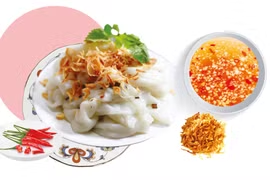
What began as a modest dish made from rice flour, water, and fried shallots gradually developed in both form and flavour. Over time, fillings such as minced pork and wood ear mushrooms were introduced, adding richness while preserving the dish’s signature lightness.
From street-side vendors carrying shoulder poles, banh cuon Thanh Tri has steadily moved into eateries across the city, becoming a breakfast mainstay for locals and a must-try experience for visitors.
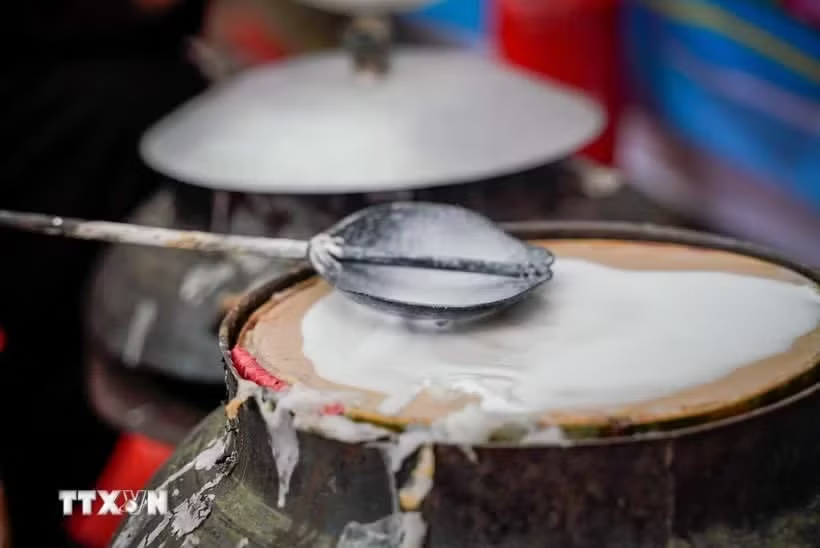
The preparation of Thanh Tri steamed rice rolls is also distinctive and meticulous. Regular rice is soaked overnight, ground into a fine batter using a natural stone mill, then mixed with water to achieve the right consistency. The batter is then spread thinly over a stretched cloth placed above a pot of boiling water, creating delicate, translucent sheets. A filling of minced pork and wood-ear mushrooms is stir-fried, wrapped inside the rice sheets and rolled up.
Served with a precisely balanced dipping sauce of fish sauce, vinegar, sugar, and chilli – often enhanced with a hint of ca cuong essence – and accompanied by herbs and Vietnamese pork rolls, the dish achieves a harmony of texture and flavour that few variations can match.
Beyond technique, the act of eating itself carries cultural nuance. Each bite - soft rice sheet, fragrant filling, fresh herbs, and a touch of dipping sauce - reflects the understated elegance of Hanoi’s culinary philosophy: light yet deeply expressive.
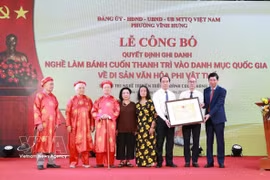
That cultural value was formally affirmed in 2025, when the craft of making “banh cuon Thanh Tri” was inscribed on Vietnam’s National List of Intangible Cultural Heritage under the category of traditional craftsmanship and folk knowledge.
…to national intangible heritage
The official recognition announced in March 2026 marks a significant milestone in preserving, honouring and more widely promoting the unique cultural and culinary values of the traditional craft village. It also enriches the gastronomic heritage of Hanoi, while providing a foundation for the city to develop craft village tourism, thereby creating sustainable livelihoods for local communities.
Amid rapid social transformation, the preservation of time-honoured cultural values passed down through generations has been actively advanced by the authorities and residents of Vinh Hung ward through practical, community-based initiatives. These efforts have helped embed heritage into daily life, turning it into a viable local economy that generates employment, raises incomes, and contributes to broader socio-economic development.
At the policy level, Resolution 80-NQ/TW dated January 7, 2026, issued by the Politburo on developing Vietnamese culture in a new era, is expected to provide fresh momentum. It positions culture in general, and cuisine in particular, not only as a pillar serving society and the economy, but also as an exportable asset and a source of national soft power.
More than a dish, banh cuon Thanh Tri now stands as both a cultural legacy and a living economy - an enduring testament to how everyday food can carry the weight of history, identity and national pride./.