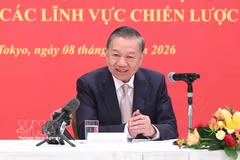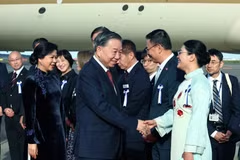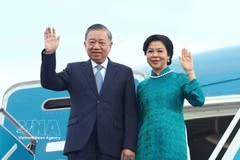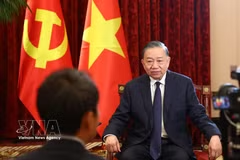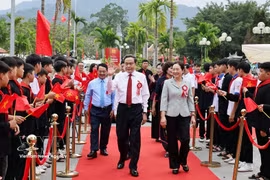
Hanoi (VNA) - Following his state visit to Denmark, General Secretary of the Communist Party of Vietnam (CPV) Central Committee and President To Lam and his spouse, together with a high-ranking Vietnamese delegation, will pay an official visit to the European Union (EU) and Belgium from October 21-24, at the invitation of President of the European Council Antonio Costa and Belgian Prime Minister Bart De Wever.
The trip to the EU comes as Vietnam-EU ties gain momentum. It aims to reaffirm the importance Vietnam attaches to the EU in its overall foreign policy, strengthen political trust and advance the Comprehensive Strategic Partnership in an increasingly substantive and effective manner.
Vietnam-EU ties on the rise
The EU is the world’s most deeply integrated regional bloc, with considerable political, economic, trade, scientific and technological clout. It has 27 members and about 450 million people, and is the world’s third-largest economy, with a GDP of 19.4 trillion USD in 2025. Its external trade accounts for about 14% of global trade.
Diplomatic ties between Vietnam and the EU date back to November 28, 1990. High-ranking leaders meet regularly, including on the sidelines of multilateral forums, and coordinate within the ASEAN-EU framework, the Asia-Europe Meeting (ASEM) and the United Nations.
More than 35 years of diplomacy have elevated ties between the two sides and widened Vietnam’s strategic room for cooperation across politics, economy, trade & investment, and science & technology, giving the country key resources for the new era.
The two sides signed a Partnership and Cooperation Agreement in 2012, which took effect on October 1, 2016. The deal gave the relationship a legal foundation and opened the way to broader, deeper engagement.
A 2019 Framework Participation Agreement allows Vietnam to join EU-led missions and activities. It was the first such deal the EU signed with an ASEAN member and a step toward joint contributions to global peace and security.
They elevated ties to a Comprehensive Strategic Partnership in January 2026 during Costa’s official visit to Vietnam. The upgrade made Vietnam the EU’s first comprehensive strategic partner in Southeast Asia and the only ASEAN member with all cooperation pillars in place with the bloc.
The EU views Vietnam as a priority partner in Southeast Asia and the Indo-Pacific and is courting it both at the bloc level and through individual member states.
Delegation exchanges and high-level contacts have picked up. The latest include Costa’s January visit and a meeting between General Secretary and President Lam and President of the European Commission Ursula von der Leyen on the sidelines of the International Space Summit in Paris in September 2026.
The Vietnam-EU Joint Committee and its subcommittees have also met annually.
Trade and investment stand out
Within ASEAN, Vietnam has the broadest cooperation framework with the EU and is now the bloc’s largest trade partner in the region.
The EU-Vietnam Free Trade Agreement, in force since August 1, 2020, was the EU’s first such deal with a developing country. It has been billed as a “highway” linking two dynamic economies and has given cooperation a broad, comprehensive framework.
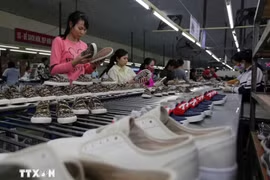
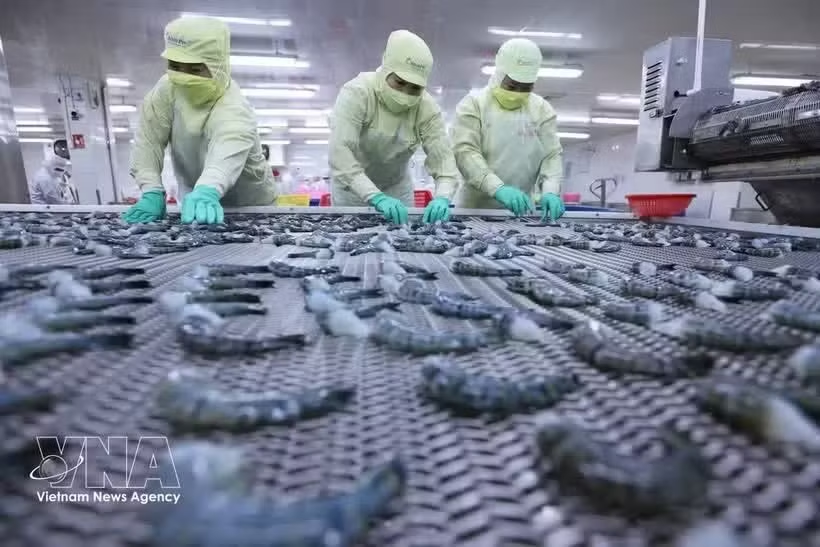
Six years on, Vietnam is the EU’s biggest ASEAN trade partner and one of its top 10 goods suppliers. The EU is Vietnam’s fourth largest trade partner and sixth largest foreign investor. Two-way trade hit 73.8 billion USD in 2025, up 8% from 2024, and 41.44 billion USD in the first half of 2026, up 16.3% from a year earlier.
Investment remains a bright spot. EU companies are an important source of quality foreign investment in Vietnam, concentrated in processing and manufacturing, infrastructure, logistics, finance and banking, high technology and sustainable agriculture. EU investment now exceeds 38.4 billion USD, ranking sixth among 140 countries and territories investing in Vietnam. The two sides signed an Investment Protection Agreement on June 30, 2019, which awaits ratification by several EU member states.
The EU is also a leading partner in Vietnam’s shift to a green, sustainable growth model. It is Vietnam’s largest provider of grant aid and coordinates the International Partners Group under the Just Energy Transition Partnership. It is also committed to helping Vietnam reach carbon neutrality by 2050, a pledge made at the 26th UN Climate Change Conference (COP26).
Collaboration in science and technology, innovation, green transition, digital transformation and marine economy is adding momentum to ties.
New air links from Vietnam to Europe, including Milan in July 2025, Munich in October 2025 and Copenhagen in December 2025, have driven record foreign arrivals, which topped 20 million in 2025.
Looking ahead, the two sides see ample room to cooperate, particularly in trade and investment, science & technology, innovation and digital transformation. Those areas play to EU strengths and meet Vietnam’s development needs, supporting the enforcement of major Party and State policies.
Deepening the Vietnam-EU Comprehensive Strategic Partnership
In 2025, Vietnam and the EU held numerous cultural and people-to-people events to mark the 35th anniversary of diplomatic ties on November 28. The exchanges served as a bridge of trust, building mutual confidence and understanding.
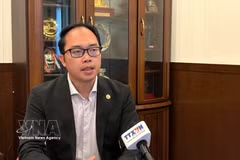
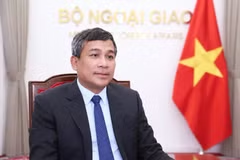
In light of that context, the visit by Vietnam’s top leader holds considerable importance. Deputy Minister of Foreign Affairs Le Thi Thu Hang said it is his first official trip to the EU, coming after Vietnam held its 14th National Party Congress and elected the 16th National Assembly, and after the upgrade in relations in Janurary.
General Secretary and State President Lam’s visit further underscores Vietnam’s pioneering role as a bridge between ASEAN and the EU. Building on the significant achievements of more than 35 years of bilateral relations, the visit will also provide an opportunity for both sides to deepen key areas of cooperation, particularly trade, investment, science and technology, and human resources development, Hang said.
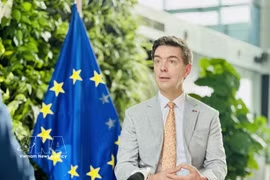
EU Ambassador to Vietnam Julien Guerrier noted that the visit highlights the significance of the relationship for both parties, as evidenced by the Vietnamese leader being welcomed at the highest level by the EU’s top two officials.
Guerrier said the two sides are expected to announce a letter of intent on cooperation in education and training, along with schemes to support Vietnam’s circular economy in industry, agriculture and development projects in Hanoi and other localities. Several business-to-business trade agreements are also expected to be signed, laying a base for long-term private sector cooperation./.