Hanoi (VNA) – The Vietnam Cooperative Alliance (VCA) aims to have over 5,000 cooperatives and 500 cooperative groups using high technologies by 2030, and about half of all agricultural cooperatives connected to businesses through value chains.
Under its development plan for the new term, at least 200 efficient cooperatives and cooperative unions will be selected for consolidation, improvement and replication.
The VCA will also build a professional ecosystem providing consultancy and support for members while renewing its operating methods and strengthening grassroots-oriented activities to protect member interests.
The alliance has identified stronger value-chain linkages as a key solution to enhancing the position of cooperatives. The application of farm produce traceability systems will also be enhanced to help improve product quality and meet increasingly demanding domestic and international market requirements.
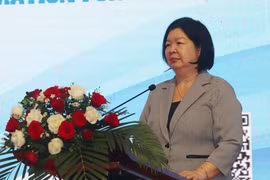
VCA Chairwoman Cao Xuan Thu Van said that in the next five years, the alliance will not only increase the number of cooperatives but also improve their quality, efficiency and competitiveness, helping affirm the substantive role of cooperatives in the economy.
Notaly, it aims to develop cooperatives large enough to enter the ranks of the world’s 300 largest cooperatives. The Party Central Committeee's Resolution No. 20 on the collective economy sets a goal of having three Vietnamese cooperatives among the world’s top 300 by 2045. Van said the VCA will strive to identify a candidate for the ranking as early as the 2026–2031 term.
VCA Vice Chairman Dinh Hong Thai said that by 2030, the alliance aims to have around 140,000 cooperative groups, 45,000 cooperatives, and 340 cooperative unions. It also targets having at least 60% of agricultural cooperatives classified as operating fairly or well./.
Turkish cooperatives open sourcing channel for Vietnamese businesses
The Vietnam Trade Office recommended that Vietnamese businesses in agriculture and food actively study cooperative networks in different localities in Türkiye and consider them an additional channel for accessing raw materials, processing partners, and distribution networks.