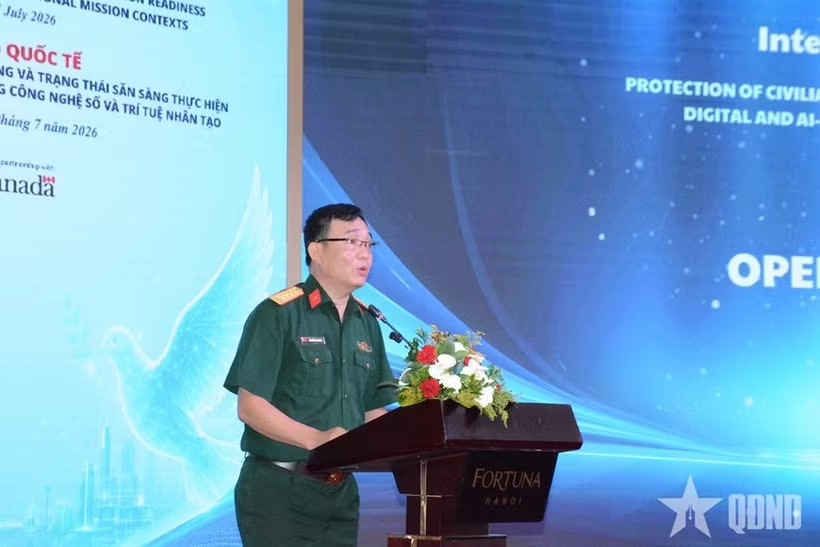
Hanoi (VNA) – Vietnam is stepping up efforts to equip its United Nations (UN) peacekeepers with digital skills as rapid advances in digital transformation and artificial intelligence (AI) reshape peacekeeping operations and mission environments, heard an international workshop in Hanoi on July 28.
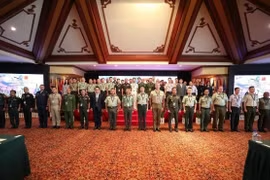
The workshop, themed “Protection of Civilians, Force Protection and Mission Readiness in Digital and AI-Enabled International Mission Contexts," was jointly organised by the Vietnam Department of Peacekeeping Operations and UN Women within the framework of Canada's Military Training and Cooperation Programme (MTCP).
Speaking at the workshop, Colonel Nguyen Ba Hung, Deputy Director of the Vietnam Department of Peacekeeping Operations, said UN peacekeeping operations are increasingly conducted across both physical and digital environments, where information, public perception and decision-making have a direct impact on mission success.
He noted that digital transformation and AI offer new opportunities to improve situational awareness, command and coordination, while enhancing operational effectiveness. However, they also bring new challenges regarding cybersecurity risks, disinformation, data protection and the responsible use of technology.
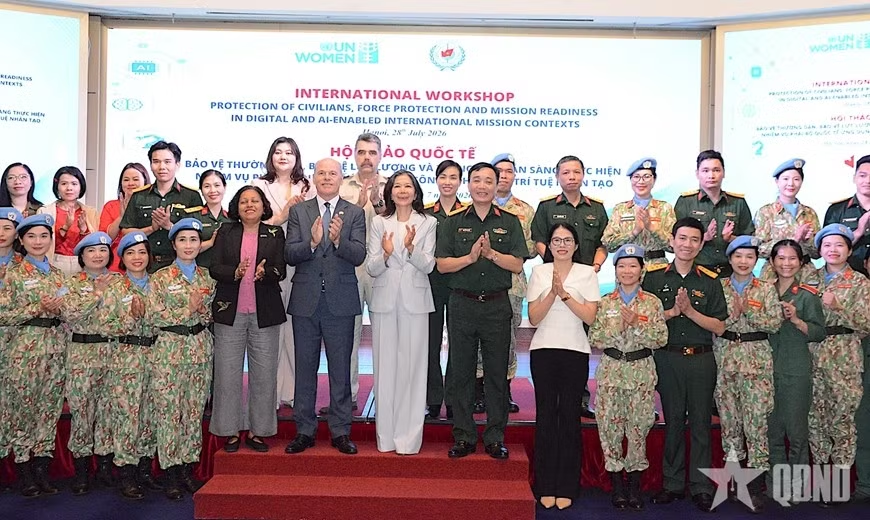
UN Resident Coordinator in Vietnam Pauline Tamesis said that technology must serve peace and must never define peace.
Protecting civilians and ensuring mission success ultimately depend on people, responsible leadership and trust in institutions, she added.
Dang Thu Ha, a public information officer serving at the UN Multidimensional Integrated Stabilisation Mission in the Central African Republic (MINUSCA), said digital communication and information verification have become essential parts of peacekeeping work.
Sharing her experience in carrying out duties, Ha said the MINUSCA communications unit had effectively implemented multimedia communication campaigns to counter misinformation claiming that the UN was "abandoning" local communities after closing several forward operating bases and handing them over to the host country's authorities.
The false narrative was addressed through factual visual materials, regular patrols and the continued presence of UN peacekeepers in areas where they were needed.
The unit also made effective use of digital platforms to reassure the public and debunk fake news that had sparked panic over attacks in Am-Dafock and Bangui.
According to Ha, every piece of information in a digital mission can help build trust, counter disinformation and protect civilians if it is delivered accurately and promptly.
Colonel Hung said digital competence has become a basic requirement for many Vietnamese peacekeeping positions, particularly communications officers, who must gather, verify and disseminate information while complying with UN security and communication standards.
Vietnam is also preparing candidates for specialised UN positions, including public information officers and unmanned aerial vehicle (UAV) operators, reflecting its determination to meet the evolving demands of peacekeeping operations.
To strengthen digital capacity, Vietnam is expanding cooperation with the UN, international organisations, troop-contributing countries and development partners in training, knowledge sharing, innovation and force development, while promoting science, technology and digital transformation in personnel preparation.
Canadian Ambassador to Vietnam Jim Nickel reaffirmed Canada's support for Vietnam in implementing its National Action Plan on Women, Peace and Security (2024–2030). Through the MTCP, in partnership with UN Women and the United Nations Development Programme (UNDP), Canada will continue supporting leadership development for women, civilian protection, humanitarian assistance, mine action, military medicine, training and mission readiness for peacekeepers./.