Vietnam launches two-tier local government model

Vietnam has entered a new chapter in public administrative reform as a nationwide shift to a two-tier local government structure officially took effect on July 1.

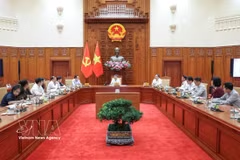
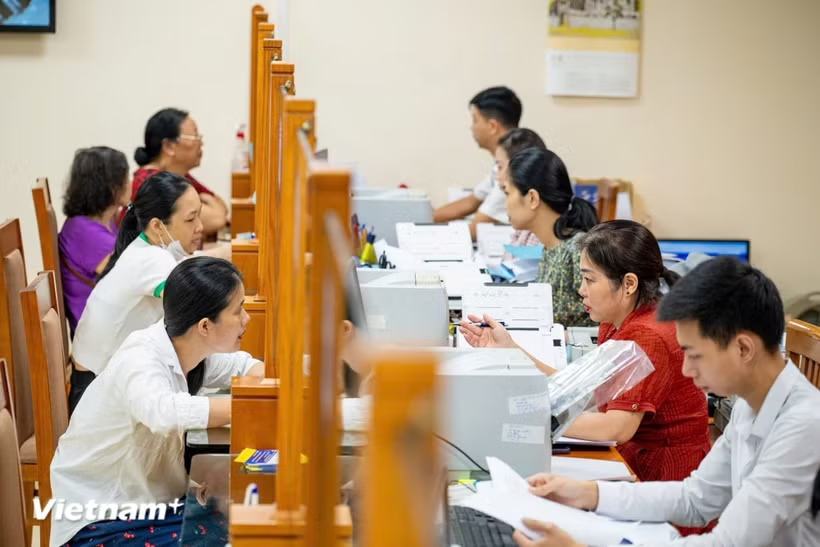
Vietnam rolls out two-tier local governance model for streamlined administration. (Photo: VietnamPlus)

Hanoi (VNA) – Vietnam has entered a new chapter in public administrative reform as a nationwide shift to a two-tier local government structure officially took effect on July 1. Under this model, only provincial and commune-level authorities remain, with the district level dissolved. The change marks not just an administrative adjustment, but a transformative step toward a more streamlined, citizen-focused governance system.

The reform follows eight years of strategic planning since the adoption of Resolution No.18-NQ/TW on streamlining the political apparatus for increased efficiency and effectiveness. Over the past eight months, the political system at all levels has implemented the change with urgency, driven by strong political will and a commitment to putting citizens at the heart of public service.

The elimination of the intermediate district level aims not merely at structural simplification but at unlocking resources, saving trillions of VND annually, reducing fiscal burden, and enhancing service delivery.

More importantly, this new structure is expected to bring local authorities closer to the people, enabling quicker and more synchronised policy implementation and direct communication between government and citizens.
thu-tuc-hanh-chinh-7.jpg
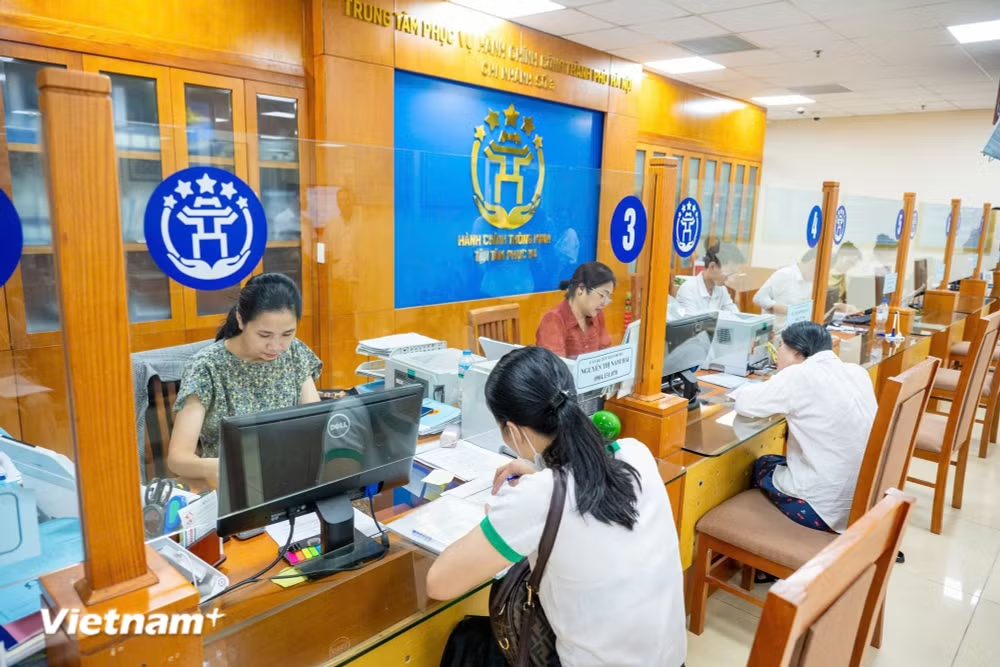
Under this model, only provincial and commune-level authorities remain, with the district level dissolved. (Photo: VietnamPlus)

Described as a comprehensive revolution, this reform is underpinned not by force but by innovation and determination to break with outdated practices. Civil servants at all levels are now seen as front-line agents of reform, tasked with building a modern, efficient, and service-oriented administration.

The Party’s leadership has been critical to the success of this transition. From strategic direction to implementation, consistent oversight and concrete actions reflect a unified political will.

Messages such as “move fast while staying in line,” “act without retreat,” and “ensure uninterrupted public service” have gone beyond slogans to become mandates during this critical transition.
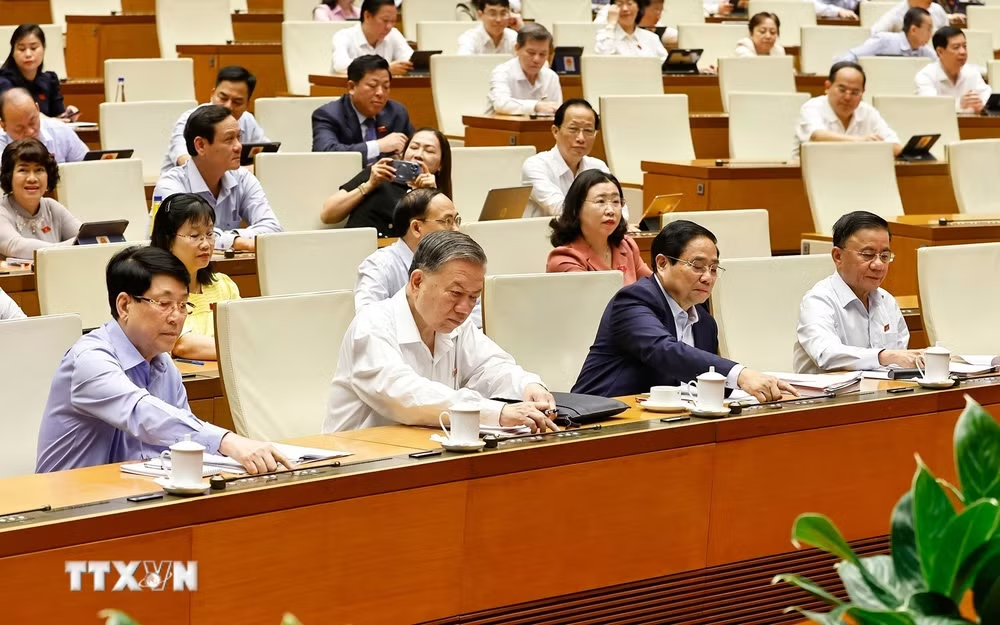
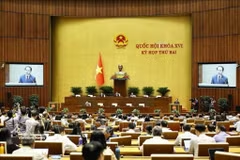
quoc-hoi-thong-qua-nghi-quyet-cua-quoc-hoi-sua-doi-bo-sung-mot-so-dieu-cua-hien-phap-nam-2013-8094026.jpg
Party General Secretary To Lam, President Luong Cuong, Prime Minister Pham Minh Chinh, and other legislators press the button to adopt the resolution amending and supplementing several articles of the 2013 Constitution. (Photo:VNA)

Party General Secretary To Lam said the existing shortcomings, limitations, and slow, lackluster actions in implementing the renewal policy and reorganising the political system have caused severe consequences. A cumbersome administrative apparatus leads to waste and hinders development, and it is one of the reasons why many of the Party's policies and guidelines are slow to be implemented in practice or, in some cases, are either not carried out or only superficially executed.

In this context, the transition to a two-tier local government model (provincial and commune levels) is not only a strategic decision but also an inevitable step. This is not merely a structural change; it is a true revolution in how the state apparatus is organised and operates, he noted.

According to the Party leader, with the removal of the intermediary level, the handling of administrative procedures will become simpler and faster. The people will no longer have to wait long or navigate through many "gates" to get their work done. The commune-level government, being closest to the people, will be empowered with more authority to truly address the most practical issues of the community.

Former Deputy Minister of Home Affairs Nguyen Tien Dinh remarked that Vietnam is in a critical demographic phase - a “golden population structure.” If not leveraged effectively, the opportunity could be lost as the country transitions to an aging population.

Dinh stressed that the main constraint now lies in an overly layered bureaucracy with excessive administrative procedures that hinder progress and squander national potential.

Technology is seen as a key enabler of this transformation. From the National Public Service Portal to the growing adoption of e-government tools, digital systems are replacing outdated, paper-based processes, cutting out unnecessary intermediaries and reducing dependency on human resources.

Vietnam’s efforts to modernise its public sector are also tied to its broader digital transformation strategy. Resolution No. 57 on scientific and technological advancement and national digital transformation provides strong institutional support for this shift.
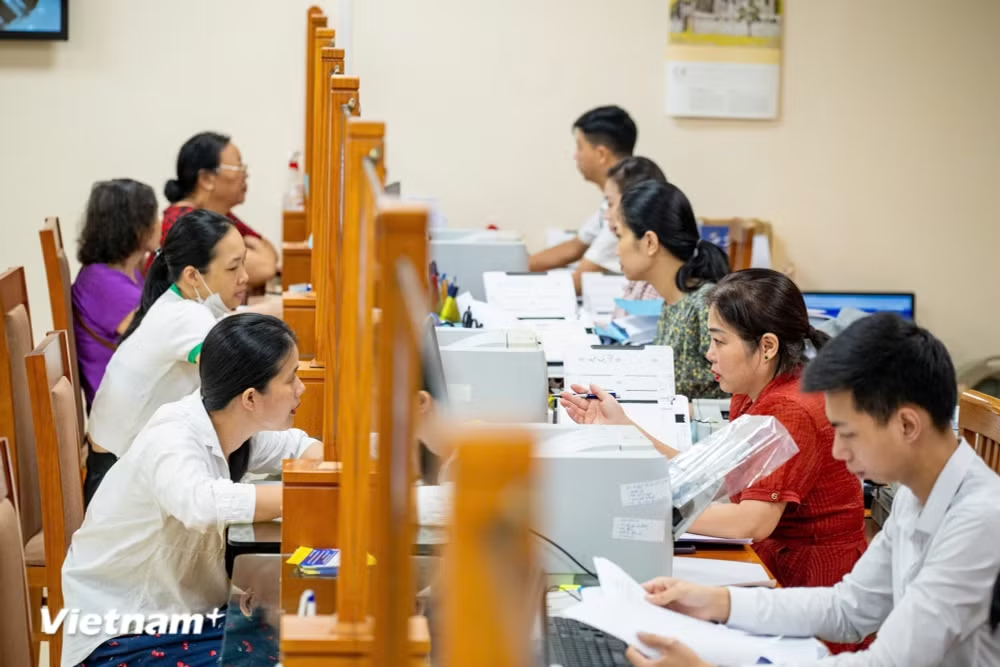
thu-tuc-hanh-chinh-6.jpg
Described as a comprehensive revolution, this reform is underpinned not by force but by innovation and determination to break with outdated practices. (Photo: VietnamPlus)

He said that the transition to two-tier governance has been methodically prepared. The Government has issued 28 decrees to guide decentralisation and devolution of power, laying a legal foundation for improved local governance. These are not merely regulatory texts but clear commitments to public service reform.

The 15th National Assembly’s ninth session laid the constitutional groundwork, while central and local agencies collaborated closely to ensure the smooth launch of the new system on July 1.

The Ministry of Home Affairs alone issued over 4,000 official documents in just the first half of the year, underscoring the urgency and scale of preparation.

Former Vice Chairman of the National Assembly Office Nguyen Si Dung called the rollout of 28 decrees a historic effort that addresses current administrative shortcomings while paving the way for a more responsive, modern governance model.

From July 1 onward, commune-level authorities are no longer an extension of provincial government, but its frontline representatives. Provincial authorities now play a coordinating and guiding role, with increased emphasis on decentralisation and local empowerment.

With nearly 2 million officials nationwide working tirelessly to ensure a seamless transition, including those involved in merging or dissolving administrative units, Vietnam has taken a decisive step toward building a leaner, more responsive, and citizen-centric public administration system.

This marks the start of a new governance era, one that is more transparent, efficient, and truly rooted in serving the people./.
See more

☕ Afternoon briefing on October 29

☕ Afternoon briefing on October 29

A ceremony marking the 30th anniversary of the Central Council for Theoretical Studies, Vietnam attending the 20th ASEAN Defence Ministers’ Meeting and related activities in the Philippines, and the national strategy on child development for 2026–2035 approved are among news highlights on October 29.

Prime Minister Le Minh Hung chairs a meeting on preparations for APEC Vietnam Year 2027 on October 28, 2026. (Photo: VNA)

PM pushes clear timelines for APEC Year 2027 preparations

PM Le Minh Hung said a successful APEC 2027, especially the Economic Leaders’ Week, will leave Vietnam’s mark on APEC and international friends, and help connect global resources for socio-economic development of the country, localities and businesses.

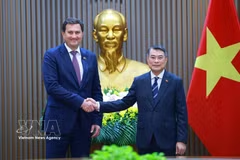
Prime Minister Le Minh Hung (R) meets with Belarusian Minister of Foreign Affairs Maxim Ryzhenkov in Hanoi on October 28, 2026. (Photo: VNA)

Vietnam wants deeper ties with Belarus: Prime Minister

Vietnam always follows and congratulates Belarus on its development gains under the leadership of President Aleksandr Lukashenko, PM Le Minh Hung said, praising positive results of bilateral cooperation, especially since General Secretary of the Communist Party of Vietnam Central Committee To Lam’s state visit to Belarus in May 2025.

The Party Central Committee’s Commission for Inspection has proposed the Secretariat discipline former Vice Chairman of the Cao Bang provincial People’s Committee Trinh Truong Huy. (Photo: thanhtra,com,vn)

Inspection commission proposes discipline against former Cao Bang officials

The former officials were said to have shown degradation in political thought, morality and lifestyle; violated Party rules and State law in performing their assigned duties, and in the fight against corruption, wastefulness and misconduct; and breached rules on what Party members are banned from doing and responsibility for setting an example, causing very serious consequences and badly damaging the reputation of the local Party Organisation and authorities to an extent that disciplinary action is required.

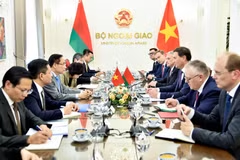
Minister of Foreign Affairs Le Hoai Trung holds talks with Belarusian Minister of Foreign Affairs Maxim Ryzhenkov in Hanoi on October 28, 2026. (Photo: Vietnamese Ministry of Foreign Affairs)

Vietnam, Belarus seek ways to strengthen strategic partnership

Trung affirmed that Vietnam attaches importance to its traditional friendship and strategic partnership with Belarus. He expressed appreciation for the valuable support and assistance extended by the Belarusian people to Vietnam during its past struggle for national independence and its current process of national construction and development.

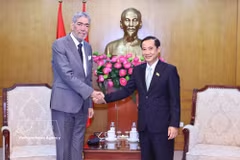
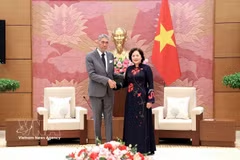
NA Vice President Nguyen Thi Hong meets with General Secretary of the United Left Movement (MIU) of the Dominican Republic Miguel Mejia in Hanoi on October 28, 2026. (Photo: VNA)

Vietnam, Dominican Republic strengthen parliamentary cooperation

To advance bilateral ties, NA Vice President Nguyen Thi Hong proposed increasing exchanges at all levels, maintaining contacts between leaders and legislators, boosting the effectiveness of the parliamentary friendship groups, sharing more legislative information and experience, and expanding economic, trade and investment partnerships in line with the strong political and diplomatic relationship.

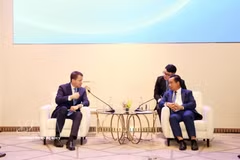
Chairman of the Ho Chi Minh City People’s Committee Nguyen Van Duoc (right) meets with Managing Director of the World Economic Forum (WEF) Stephan Mergenthaler on October 28, 2026. (Photo: VNA)

Ho Chi Minh City official welcomes WEF Managing Director

Ho Chi Minh City hopes the WEF will continue promoting this message among the global investment community. It also expects the WEF’s Annual Meeting in Davos, Summer Davos in China and Autumn Forum in Vietnam to form a more comprehensive and in-depth ecosystem.

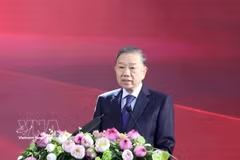
General Secretary of the Communist Party of Vietnam Central Committee and President To Lam speaks at the ceremony marking the 50th founding anniversary of the University of Economics Ho Chi Minh City. (Photo: VNA)

Top leader urges economics university to develop high-quality human resources, nurture talent

The university must strive to meet advanced standards in training, research and community service, and enhance its reputation regionally and internationally. Its growth must contribute to strengthening the country’s development capacity and bring tangible benefits to the people, said General Secretary of the Communist Party of Vietnam Central Committee and President To Lam.

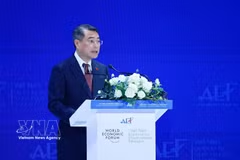
Prime Minister Le Minh Hung addresses a high-level plenary session of the Autumn Economic Forum 2026 (AEF 2026) in Ho Chi Minh City on October 28 (Photo: VNA)

Vietnam ready to innovate to create value together: PM

Vietnam wants international partners not merely to “invest in Vietnam”, but to “invest with Vietnam”; not merely to “manufacture in Vietnam”, but also to engage in research and development (R&D), promote innovation and create new value chains competitive at both regional and global levels.

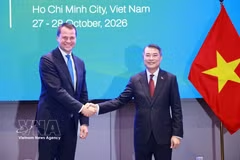
Prime Minister Le Minh Hung (R) receives Managing Director of the World Economic Forum (WEF) Stephan Mergenthaler in Ho Chi Minh City on October 28. (Photo: VNA)

Prime Minister receives WEF Managing Director

Prime Minister Le Minh Hung thanked Managing Director of the World Economic Forum Stephan Mergenthaler and WEF partners for their longstanding cooperation with Vietnam and contributions to making the Autumn Economic Forum an open and substantive platform for dialogue among governments, businesses and the scientific community.

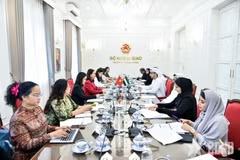
At the third political consultation between the Ministries of Foreign Affairs of Vietnam and the UAE. (Photo: qdnd.vn)

Vietnam, UAE hold third political consultation between foreign ministries

At the meeting, the two officials reviewed progress in bilateral relations in recent years and discussed measures to further deepen and broaden cooperation in a more effective and comprehensive manner in the time to come. They agreed to strengthen Vietnam-UAE cooperation to enhance each country’s autonomy and resilience and diversification of its partnerships amid rapid global changes, complexity and uncertainty.