Ca Mau (VNA) – The Ca Mau provincial authorities held a local working session on October 29 with budget carrier Vietjet and Ca Mau Airport to prepare for the launch of the Hanoi–Ca Mau route and its return leg.
Vietjet is set to launch the route with at least three weekly flights on Mondays, Wednesdays, and Fridays, using A320/A321 aircraft that can seat 180–186 passengers. The service will cater to both domestic and international travellers heading to Vietnam’s southernmost tip.
Vietjet wants local support policies and stronger promotion to make the route efficient and sustainable, its representative said, asking Ca Mau Airport to speed up the digital application for operations.
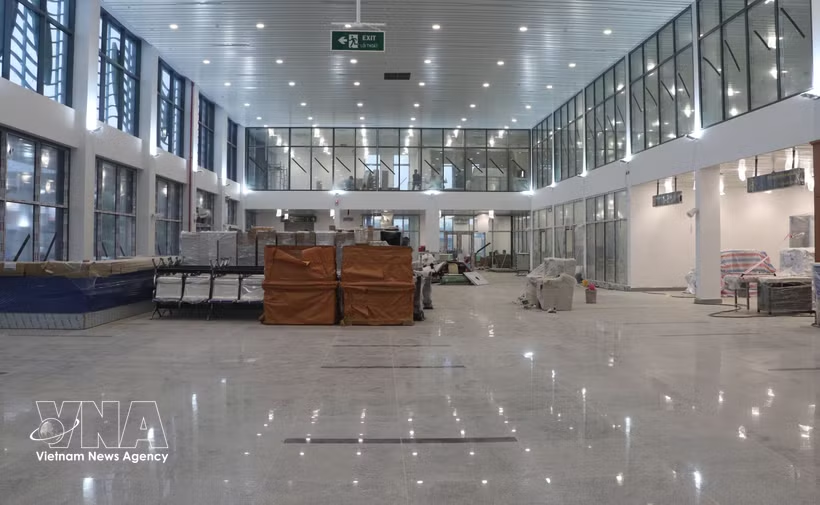
Ca Mau Airport’s management board said the upgrade and expansion project is in its final preparation stage and on schedule, with strict quality supervision to ensure flight safety.
The airport is working with the provincial Department of Public Security and the Department of Culture, Sports and Tourism on security checks and preparations to receive the first Hanoi–Ca Mau flight, expected on November 29, 2026.
Vice Chairman of the provincial People’s Committee Nguyen Minh Luan said the province is drawing big domestic and foreign investors, with potential in ecotourism, mangroves and spiritual tourism. The new route creates easier access for tourists and companies.
The provincial Party Committee and People’s Committee confirmed the necessary conditions would be in place for Vietjet to open the route, directing departments to speed up procedures and boost promotion to attract tourists and investors.
The airport expansion and upgrades carry a total investment of nearly 2.4 trillion VND (92.97 million USD), a key project meant to drive economic growth at Vietnam’s southern tip and improve Ca Mau’s trade links nationwide.
By 2030, Ca Mau Airport will reach level 4C with capacity for 1 million passengers and 1,000 tonnes of cargo a year, serving Code C aircraft such as A320/A321 or equivalent. By 2050, it targets 3 million passengers and 3,000 tonnes of cargo a year while remaining 4C./.