Vietnam considers electricity price cut from November 1, petrol excise tax cut to zero

Deputy Prime Minister Nguyen Van Thang urged the Vietnam Electricity (EVN) Group to review its costs and maximise savings to develop a plan to reduce the average retail electricity price from November 1, 2026, to March 31, 2027, in accordance with relevant regulations. The move aims to support people and businesses and ensure social welfare.

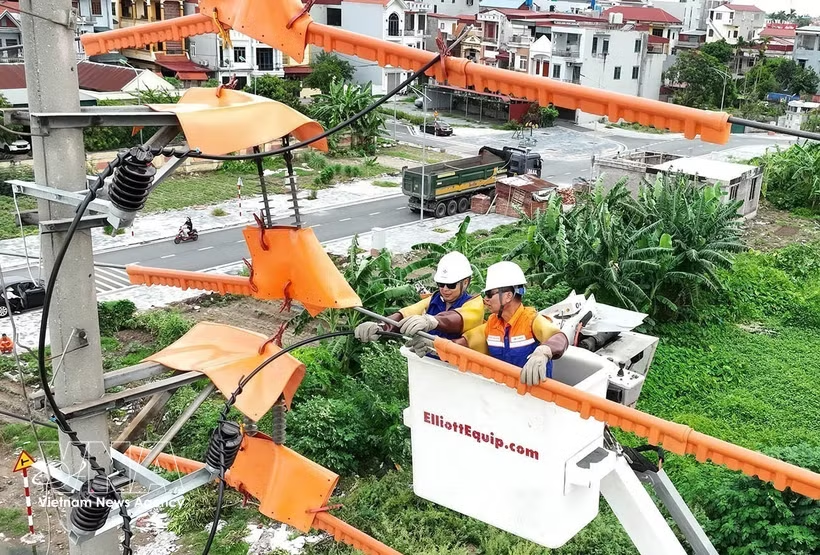
The application of live-line maintenance technology on a low-voltage power line in Pho Hien ward, Hung Yen province. (Illustrative photo: VNA)

Hanoi (VNA) - Deputy Prime Minister Nguyen Van Thang chaired a meeting at the Government headquarters on October 27 to discuss scenarios for managing petrol and electricity prices, according to the Government Office.

Thang urged the Vietnam Electricity (EVN) Group to review its costs and maximise savings to develop a plan to reduce the average retail electricity price from November 1, 2026, to March 31, 2027, in accordance with relevant regulations. The move aims to support people and businesses and ensure social welfare.

EVN was requested to submit the plan to the Ministry of Industry and Trade for review and feedback. The ministry will assess the proposal to ensure the price reduction can take effect on November 1 and promptly report matters beyond its authority to the competent authorities.

Meanwhile, the Ministry of Finance was tasked with coordinating with the Ministry of Industry and Trade, the Ministry of Justice and relevant agencies to urgently review the legal basis, authority, potential impacts and feasibility of reducing the special consumption tax rate on all types of petrol to zero from November 1, 2026, to March 31, 2027.

The ministry must submit the proposal to the competent authorities for consideration and decision in accordance with the law before November 1./.

VNA
See more

Experts discuss “Sustainable Global Value Chains: Green Logistics” at the event. (Photo: VNA)

Autumn Economic Forum 2026 promotes green logistics and advanced manufacturing

Bui Ba Nghiem, senior expert at the Ministry of Industry and Trade’s Import-Export Department, outlined five priorities, including improving institutions and coordination, promoting multimodal transport, applying digital technologies to emissions management, supporting SMEs in the green transition, and piloting measurable green logistics models.

The EFTA–Vietnam Free Trade Agreement is expected to open up significant business opportunities for Vietnamese enterprises. (Photo: baochinhphu.vn)

EFTA expects trade and investment with Vietnam to grow

Regarding market access and trade benefits, the EFTA countries expect the agreement to gradually eliminate tariffs on almost all goods exported by the four countries to Vietnam, either upon its entry into force or within a maximum period of 16 years.

Speakers at the discussion (Photo: VNA)

ASEAN digital pact key to facilitating cross-border business

At a panel discussion on policy frameworks for the digital economy, held as part of the Autumn Economic Forum 2026 on October 27, speakers said ASEAN needed to ensure national systems could work together while protecting data and facilitating business, rather than impose uniform rules across the region.

Vietnam exports nearly 800,000 tonnes of cashew nuts in 2025. (Photo: VNA)

Vietnam cashew sector looks to reshape global supply chains

According to VINACAS Chairman Pham Van Cong, Vietnam exported nearly 800,000 tonnes of cashew nuts in 2025, earning a record 5.4 billion USD. For nearly two decades, the country has led the world in cashew processing and exports, accounting for more than 80% of global exports.

An overview of the international conference themed “Supreme Audit Institutions in a Changing World: Vision – Institutional Framework – Innovation” in Hanoi on October 27 (Photo: VNA)

Vietnam seeks to modernise state audit amid emerging challenges

As public decisions grow more complex and risks become increasingly interconnected, SAIs must move beyond detecting irregularities to identify root causes, analyse emerging trends and issue early warnings to protect public resources and improve policy implementation, said INTOSAI Chair Mohamed el-Faisal Youssef.

Vietnam is stepping up sci-tech application in agriculture. (Illustrative photo: VNA)

Vietnam steps up sci-tech application in agriculture

The northern region has advantages in research institutes, universities, scientific expertise and technology businesses. However, links between research and production, as well as technology transfer and practical application, remain limited, an official has said.

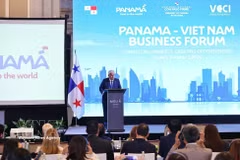
Panamanian President José Raúl Mulino speaks at the Panama - Vietnam Business Forum on October 7, 2026 (Photo: VNA)

Panama’s export processing zones offer opportunities for Vietnamese firms

After more than 15 years of operation, Panama’s system comprises 27 export processing zones, including 20 operational and seven under development. They host 201 companies conducting 282 business activities, nearly half of which involve logistics, services, and the processing of finished or semi-finished products.

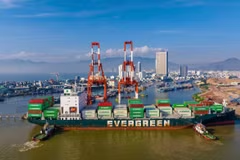
A container ship has cargo hadled at Quy Nhon Port, a key import-export gateway for goods from the Central Highlands and the starting point of Gia Lai province’s logistics system. (Photo published by VNA)

Measures sought to remove bottlenecks to reduce logistics costs

Experts emphasise that reducing logistics costs requires integrated planning, investment, operations and data sharing. Developing infrastructure projects separately, without considering regional demand and stable cargo flows, risks duplication and wasted resources.

Robots and tech products are on display at GRECO 2026 (Photo: VNA)

Ho Chi Minh City opens GRECO 2026 to push green growth

GRECO 2026 is meant to turn those goals into deals covering technology connectivity, trade and investment promotion and international cooperation. The show gives firms access to advanced technology and sustainable production models, helping build a green consumer market.