Vietnam, UK seek stronger investment ties to build high-value economy

Ho Chi Minh City hopes to work with British financial institutions, credit rating agencies and businesses to develop capital markets and the International Financial Centre, an official said, adding that British expertise in market standards, risk management and international fundraising could help connect Vietnam with global capital flows.

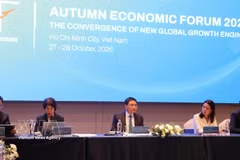
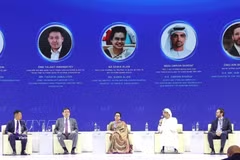
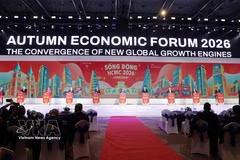
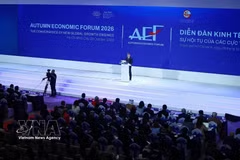
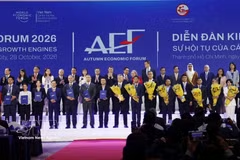
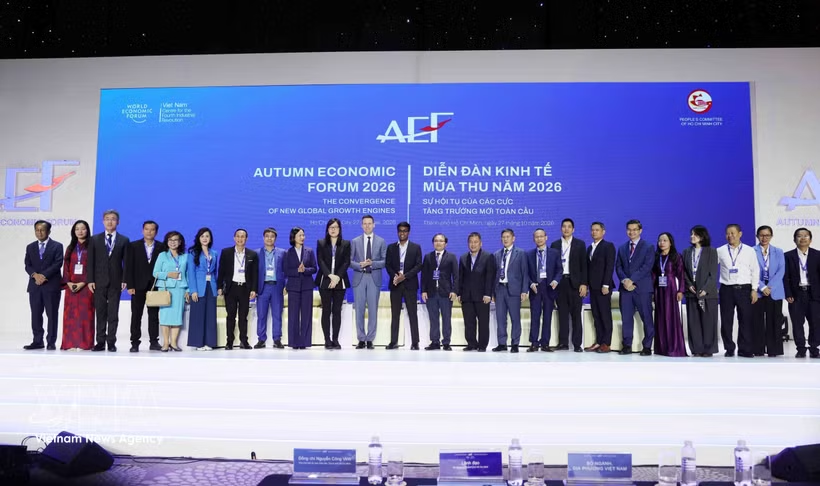
Participants pose for a group photo at a session of the Autumn Economic Forum 2026. (Photo: VNA)

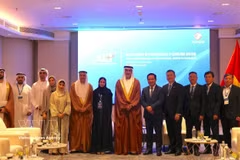
Ho Chi Minh City (VNA) – The British Chamber of Commerce Vietnam (BritCham Vietnam) organised the UK–Vietnam Business Forum in Ho Chi Minh City on October 29 as part of the Autumn Economic Forum 2026.

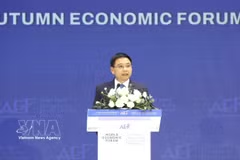
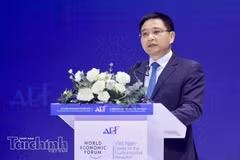
Speaking at the event, Nguyen Cong Vinh, Vice Chairman of the Ho Chi Minh City People’s Committee, said Vietnam pursues its goal of becoming a developed, high-income country by 2045. To that end, the country is shifting its foreign investment attraction strategy from attracting large amounts of capital to prioritising investment quality, technology transfer and stronger links with domestic businesses.

The UK has strengths complementary to Vietnam's in financial services, capital markets, professional consulting services, education and clean energy. The two countries’ Comprehensive Strategic Partnership, established in 2025, and the UK–Vietnam Free Trade Agreement provide a foundation for expanding cooperation.

Bilateral trade reached approximately 9.4 billion USD in 2025, up 11.3% year on year, he noted.

For Ho Chi Minh City, its merger with Binh Duong and Ba Ria–Vung Tau has created new development opportunities by connecting financial and service centres, industrial and high-tech hubs with seaports and logistics networks. The city aims to develop into a regional and international hub for finance, science – technology, and innovation.

It is seeking greater British investment in high-value-added sectors, including financial services, technology, research and development, and green industries, while encouraging partnerships with Vietnamese businesses in supply chains, technology transfer and management improvement, Vinh said.

Ho Chi Minh City also hopes to work with British financial institutions, credit rating agencies and businesses to develop capital markets and the International Financial Centre, the official went on, adding that British expertise in market standards, risk management and international fundraising could help connect Vietnam with global capital flows.

Other priorities include renewable energy, direct power purchase agreements, energy efficiency, eco-industrial parks, workforce training and urban planning.

The city will continue improving its investment climate, providing favourable procedural conditions and protecting investors’ legitimate rights and interests, Vinh affirmed.

British Ambassador to Vietnam Iain Frew said the elevation of bilateral relations to a Comprehensive Strategic Partnership in 2025 has opened up a new chapter after more than five decades of diplomatic ties.

The UK wants to help Vietnam integrate more deeply into the global economy, join high-tech supply chains and attract international capital, he added.

Denzel Eades, Chairman of BritCham Vietnam, said the 2045 goal requires Vietnam to develop a diversified and sustainable economy capable of generating greater value added. British businesses could contribute through their strengths in finance, professional services, education, pharmaceuticals and supply chains.

He also highlighted opportunities arising from Vietnam’s developing capital market, especially the development of the Vietnam International Financial Centre.

Kim Byoungho, Chairman of the Ho Chi Minh City Development Joint Stock Commercial Bank (HDBank), said many Vietnamese businesses have strong growth potential and global ambitions, but still face difficulties in accessing international capital.

He stressed the need to improve businesses' corporate governance, transparency and communication with international investors, and to create a support ecosystem helping them better prepare for accessing global capital markets.

Stronger financial links between London and Ho Chi Minh City could expand fundraising opportunities and promote two-way investment, drawing on London’s capital market experience while developing a model suited to Vietnam, Kim noted.

Mariam J. Sherman, World Bank Country Director for Vietnam, Cambodia and Laos, said the growth model that has brought Vietnam to its current position will not be sufficient for it to achieve high-income status.

During the Doi Moi (Renewal) process, Vietnam’s GDP per capita has increased about sixfold to more than 5,000 USD, while extreme poverty has been largely eliminated. However, the country faces three major challenges: its working-age population has peaked, productivity growth remains low, and links between foreign direct investment (FDI) enterprises and domestic businesses are limited.

Sherman called for more high-quality jobs, stronger connections between markets, people and regions, efforts to turn climate risks into growth opportunities, and stronger institutional capacity.

She said Vietnam is approaching a second major transformation: moving businesses up value chains, creating better jobs and shifting the State’s role from managing activities towards enabling development. The next phase of growth will create opportunities to move from assembly to engineering and services, replace imported energy with clean electricity, and mobilise more funding through capital markets.

Sherman also encouraged British investors to work more closely with Vietnamese suppliers and help domestic businesses meet governance, environmental and labour standards. Investment in local capabilities and policy dialogue will strengthen links between FDI and domestic firms, enabling Vietnam to engage more deeply in global value chains./.

VNA
See more

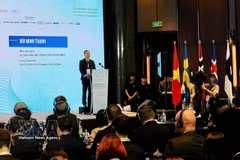
Vice Chairman of the Ho Chi Minh City People’s Committee Bui Minh Thanh addresses the Nordic - Vietnam Business Forum on October 29, 2026. (Photo: baoquocte.vn)

Vietnam, Nordics push to turn new frameworks into business deals

Chairman of the Nordic Chamber of Commerce in Vietnam (NordCham Vietnam) Thue Quist Thomasen said bilateral ties are gaining momentum through new agreements covering sci-tech and innovation cooperation, the Vietnam–Norway Green Strategic Partnership, and the newly-signed Vietnam–Europian Free Trade Association (EFTA) Free Trade Agreement (FTA).

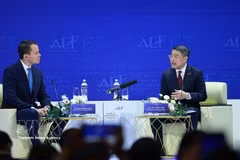
Speakers at the discussion held on October 28 as part of the Autumn Economic Forum (AEF) 2026 in Ho Chi Minh City (Photo: VNA)

Autumn Economic Forum 2026 seeks to establish new growth poles

Vietnam has built an impressive growth model, becoming a major manufacturing hub, an investment destination and an increasingly interconnected economy. It now needs to move beyond simply building connections and become a smartly connected economy.

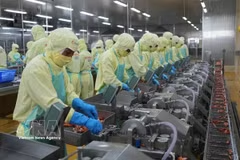
Workers process shrimp for export at the Minh Phu Seafood JSC in Ca Mau province. (Photo: VNA)

Vietnam’s export outlook holding firm

“The four EFTA markets do not import much Vietnamese seafood at present, but having a free trade agreement will make two-way trade easier and widen cooperation between Vietnamese companies and partners strong in fishing, processing and seafood technology,” said Deputy Secretary General of the Vietnam Association of Seafood Exporters and Producers (VASEP) Le Hang.

The free trade agreement between Vietnam and the European Free Trade Association (EFTA) opens up new opportunities for scientific and technological cooperation, high-quality investment and innovation. (Illustrative photo: VNA)

VEFTA opens opportunities for high-tech cooperation, innovation

According to Vice President of the Foreign Trade University Associate Professor Dr. Dao Ngoc Tien, the VEFTA’s long-term value lies largely in its non-tariff commitments, which establish institutional frameworks, principles and cooperation mechanisms with lasting economic impacts.

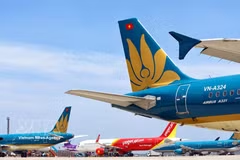
Aircraft of some Vietnamese airlines (Illustrative photo: VNA)

Vietnamese aircraft fleet climbs to 261

Among them, Vietjet registered 107 aircraft, including 16 Airbus A320s, 83 A321s and eight A330s. Vietnam Airlines has 94, including four A320s, 59 A321s, 14 A350s and 17 Boeing 787s.

Illustrative photo: VNA

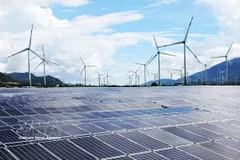
Ca Mau approves wind power project worth nearly 154.7 million USD

To ensure the project stays on schedule, Huynh Chi Nguyen, Vice Chairman of the provincial People’s Committee, has assigned the Department of Agriculture and Environment to take the lead and coordinate with relevant agencies in guiding procedures for land allocation and leasing, the allocation of marine areas, and environmental protection. Relevant departments and agencies are responsible for state management, inspection, supervision and handling issues arising within their respective jurisdictions.

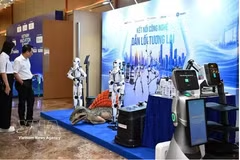
Within the framework of the Autumn Economic Forum 2026, Ho Chi Minh City launches a digital platform to support the year-end stimulus programme. (Photo: VNA)

Autumn Economic Forum 2026 connects economies into value chains

Over three working days, more than 20 in-depth sessions and dozens of technology showcases produced concrete results, showing cooperation moves beyond vision into substantive links and action. The sessions generated strategic insights and recast thinking on new growth forces, core drivers and breakthrough cooperation models as the global economy shifts deeply.

Illustrative image

Gold's headline price tells only part of trading story

Gold prices are often quoted as a single figure, making it easy to compare movements across different periods. However, a change in the quoted price does not translate into the same financial outcome for everyone exposed to the market. The result depends on how gold is traded, the size of the position, and the costs and contractual terms attached to the transaction.

A high-level plenary session of the Autumn Economic Forum 2026 in Ho Chi Minh City on October 28. (Photo: VNA)

Autumn Economic Forum 2026: Connecting new growth drivers to unlock potential

Global investment in new digital projects has nearly tripled since 2020, while the digital economy has recorded annual growth of 10–12% for several years, significantly outpacing global GDP growth, she said, adding that industrial digitalisation and cross-border digital services are also expanding rapidly.

Deputy Prime Minister Nguyen Van Thang speaks at the Autumn Economic Forum 2026 on October 28. (Photo: VNA)

Vietnam must strengthen domestic capacity to move up global supply chains: Deputy PM

Thang stressed that Vietnam could not remain a passive recipient or an outside observer. Instead, it must build its own capacity and actively define its role in global production networks. The goal is not simply to join existing or emerging value chains, but to create the conditions, mechanisms and capabilities for Vietnam and its international partners to participate more directly in value creation.

Deputy Prime Minister Nguyen Van Thang speaks at the Autumn Economic Forum 2026 (Photo: thoibaotaichinh,.vn)

AEF 2026 opens in-depth dialogue on cooperation framework in new era

For Vietnam, the urgent requirement now is not only to connect and bring the economy into existing or emerging value chains but, more importantly, to create the environment, mechanisms and capacity so that Vietnam and international partners could plug more deeply and directly into the process of creating and building value in the new value chains, said Deputy Prime Minister Nguyen Van Thang.

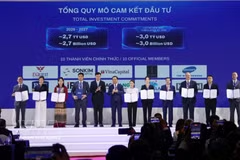
Membership certificates of the Vietnam International Financial Centre in Ho Chi Minh City (VIFC- HCMC) are presented to ten holding companies as its first members. on October 28, 2026 (Photo: VNA)

VIFC-HCMC announces first 10 official members

The 10 first members have a combined registered charter capital and committed capital contribution of 33.63 million USD. They plan to invest in and develop projects across infrastructure, education, energy, technology and financial services.