VEFTA opens opportunities for high-tech cooperation, innovation

According to Vice President of the Foreign Trade University Associate Professor Dr. Dao Ngoc Tien, the VEFTA’s long-term value lies largely in its non-tariff commitments, which establish institutional frameworks, principles and cooperation mechanisms with lasting economic impacts.

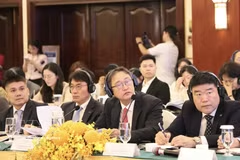
The free trade agreement between Vietnam and the European Free Trade Association (EFTA) opens up new opportunities for scientific and technological cooperation, high-quality investment and innovation. (Illustrative photo: VNA)

Hanoi (VNA) – The free trade agreement between Vietnam and the European Free Trade Association (EFTA) opens up new opportunities for scientific and technological cooperation, high-quality investment and innovation, in line with Vietnam’s development priorities under Politburo Resolution No. 57-NQ/TW.

The Vietnam – EFTA Free Trade Agreement (VEFTA) was officially signed on October 18, 2026, marking a new step in the country’s international economic integration and creating prospects for deeper cooperation in science, technology and innovation.

The agreement comes as Vietnam accelerates the implementation of Resolution No. 57-NQ/TW, dated December 22, 2024, which identifies breakthroughs in science and technology, innovation and national digital transformation as key drivers of development.

The EFTA comprises Switzerland, Norway, Iceland and Liechtenstein. Although relatively small in population, these economies have strong capabilities in technology, finance, research and development (R&D), particularly in knowledge-intensive industries.

Switzerland is known for pharmaceuticals, biotechnology and precision engineering; Norway for maritime technology, clean energy and aquaculture; Iceland for geothermal technology and seafood processing; and Liechtenstein for specialised manufacturing. These strengths complement Vietnam’s development needs, particularly in high-tech industries, supporting industries, energy, the marine economy and advanced processing.

According to Vice President of the Foreign Trade University Associate Professor Dr. Dao Ngoc Tien, the VEFTA’s long-term value lies largely in its non-tariff commitments, which establish institutional frameworks, principles and cooperation mechanisms with lasting economic impacts.

The agreement includes commitments on investment, intellectual property, cooperation and capacity building. Stronger intellectual property protection could encourage Swiss and Norwegian businesses to invest and transfer technology, while helping Vietnamese companies protect their inventions and trademarks and develop their brands.

Its cooperation and capacity-building provisions also provide a framework for technical assistance, allowing Vietnam to propose joint programmes on standards, technical regulations and intellectual property. These areas are important for research, technology application and commercialisation.

Meanwhile, tariff reductions on machinery, equipment, chemicals and materials imported from the EFTA could help Vietnamese businesses access high-quality production inputs and technology at more favourable costs. However, the benefits would be greater if equipment purchases were accompanied by workforce training, process improvements and efforts to master the technologies involved.

As of the end of 2025, Switzerland had 234 investment projects in Vietnam with registered capital exceeding 2.4 billion USD, while Norway had 62 projects worth more than 201 million USD. These investments provide a foundation for broader cooperation, particularly in technology-intensive sectors.

Economist Ngo Tri Long said the VEFTA’s strategic benefits should be assessed not only through trade growth but also through its ability to attract high-quality capital, technology and management expertise. Investment performance should be measured by technology transfer, the development of domestic suppliers and technical workforce training, rather than registered capital alone.

This approach would help Vietnamese businesses move into higher-value activities, strengthen their technological capabilities and improve their competitiveness in global value chains.

These opportunities align with Resolution 57 which sets a target for R&D spending to reach 2% of gross domestic product (GDP) by 2030, for more than 40% of businesses to engage in innovation activities, and for high-tech products to account for at least 50% of total export value.

Achieving these goals requires domestic resources as well as international partnerships, access to advanced technologies and a stronger innovation ecosystem. Resolution 57 also calls for greater scientific research and technology development cooperation with countries that have advanced technological capabilities, alongside capacity building and technology transfer through international agreements.

In this context, the VEFTA could provide an additional channel for Vietnam to access technological resources from developed economies. However, the agreement creates favourable conditions rather than guaranteeing automatic technology transfers.

Vietnam therefore needs to proactively promote joint R&D programmes, connect businesses with research institutes and universities in EFTA countries, and encourage joint ventures, production partnerships and technology applications in sectors with strong domestic demand and development potential.

Priority should also be given to investment projects that conduct R&D in Vietnam, train highly skilled workers, develop supporting industries and transfer knowledge to domestic businesses.

Nguyen Minh Khoi of the Tony Blair Institute for Global Change said the VEFTA’s long-term effectiveness should be measured not only by trade turnover but also by high-quality investment projects linked to innovation, participation in global value chains and the ability to retain added value in Vietnam.

Another priority is to strengthen Vietnamese businesses’ capacity to absorb and develop technology. Acquiring modern machinery is only the first step; the ability to operate, improve and develop technology into new products and services ultimately determines the effectiveness of innovation./.
VNA

See more

At the opening of the Food Expo Vietnam 2025 (Photo: VNA)

Vietnam Food Forum 2026 to take place soon

Vietnam Food Forum 2026 is scheduled for November 11 in Ho Chi Minh City as one of a series of specialised activities designed to help Vietnamese food businesses keep abreast of policy developments, improve their ability to meet international standards and expand opportunities to participate in global supply chains.

Many foreign-invested enterprises have chosen Yen Phong Industrial Park in Bac Ninh city as a destination for their manufacturing and business operations. (Photo: VNA)

Bac Ninh seeks to attract high-quality investment, create fresh appeal

Bac Ninh aims to attract projects that participate in global production and supply chains, apply advanced and green technologies, and support industries. Priority sectors include semiconductors, artificial intelligence, digital technology, robotics, new materials and renewable energy.

Col. Nguyen Ba Son, Deputy Director-General of the Ministry of Public Security’s Department of Cyber Security, speaks at the event. (Photo: thanhnien.vn)

Vietnam studies pilot system to trace cash flows in fraud cases

A representative of the Vietnam Banks Association said AI can help banks spot customer needs, detect unusual transactions and improve credit scoring. But poorly standardised input data or inadequately controlled AI models can create new risks in decision making and data protection.

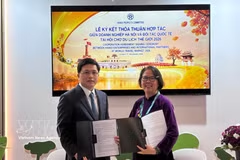
The Vietnam Culture and Tourism Association in Europe (VNCT) signs a memorandum of understanding on cooperation with the Hoan Kiem Tourism Association. (Photo: VNA)

Responsible tourism key to tapping European market

Tran Doan The Duy, General Director of Vietravel Tourism JSC (Vietravel), said Vietnam is seeing strong growth in international arrivals, with Europe among its fastest-growing source markets and the UK recording particularly positive results.

Tsuchibashi Akito, Chairman of the Japan Chamber of Commerce and Industry in Vietnam (JCCI) (Photo: VNA)

Japanese businesses pledge long-term partnership with Vietnam: expert

Tsuchibashi Akito said the upcoming official visit to Japan by General Secretary of the Communist Party of Vietnam Central Committee and President To Lam is expected to open a new vision for the next 50 years of bilateral cooperation and further deepen the Vietnam-Japan Comprehensive Strategic Partnership.

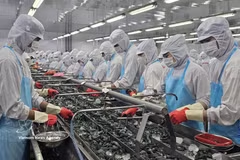
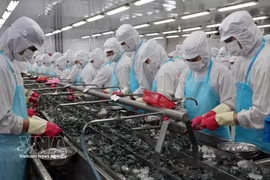
Processing shrimp for export (Photo: VNA)

VIFTA widens room for Vietnamese goods in Israel

Israel is a key Middle East market, with a developed economy, high per-capita income and demand for a diversified import mix. It is a potential outlet for Vietnamese farm produce, food, seafood, apparel, footwear and consumer goods.

Representatives of European businesses at the meeting with Vice President of the National Assembly (NA) Nguyen Hong Dien in Hanoi on November 5, 2026. (Photo: VNA)

Vietnam, European firms seek to boost investment, business links

NA Vice President Nguyen Hong Dien appreciated the European business community's contributions to Vietnam's socio-economic development, particularly in investment, technology transfer, production capacity building and high-quality human resources training.

Consumers shop at the 2026 Consumer Week. (Illustrative photo: VNA)

Drastic measures taken to protect consumer data in cyberspace

Under the Law on Personal Data Protection and the Law on Protection of Consumers' Rights, consumers are entitled to be informed, give or withdraw consent, and request the correction or deletion of their personal data, regardless of where it is processed.

A customer uses a smartphone to make a payment at a LOTTE mart in Tay Ninh province. (Photo: VNA)

Vietnam’s cross-border QR payments gain traction

Cross-border QR payments are widening Vietnam’s tourism, retail and services links to international markets. But turning cost and technology gains into business results requires a broader acceptance network, transactions tied to sales management and end-to-end operational security.

The German delegation and Can Tho officials poses for a group photo at the meeting on November 5, 32026. (Photo: VNA)

Can Tho, Germany step up cooperation in green economy, logistics

Can Tho hopes to continue receiving support from the German Ambassador, Consul General and GIZ in connecting it with cooperation programmes, experts and resources of Germany, particularly in sustainable agriculture and fisheries, water resource management, environmental protection, climate change response and circular economy development.

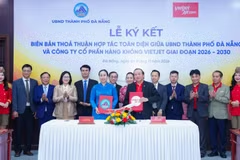
The signing ceremony for a comprehensive partnership between Da Nang and Vietjet for the 2026–2030 period on November 4, 32026. (Photo: Vietjet)

Da Nang, Vietjet sign comprehensive cooperation agreement for 2026–2030

This collaboration aims to strengthen the relationship between the two parties, leverage their respective strengths and resources, and jointly implement programmes and activities in areas of mutual interest—all in alignment with the city’s development orientation and Vietjet’s operational strategy.