Vietnam’s export outlook holding firm

“The four EFTA markets do not import much Vietnamese seafood at present, but having a free trade agreement will make two-way trade easier and widen cooperation between Vietnamese companies and partners strong in fishing, processing and seafood technology,” said Deputy Secretary General of the Vietnam Association of Seafood Exporters and Producers (VASEP) Le Hang.

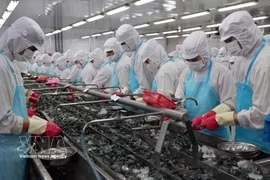
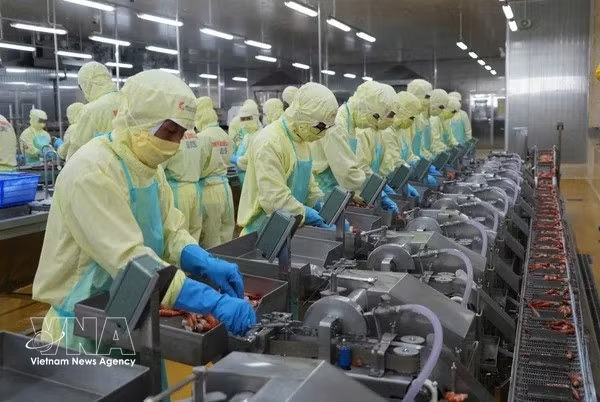
Workers process shrimp for export at the Minh Phu Seafood JSC in Ca Mau province. (Photo: VNA)

Hanoi (VNA) – Vietnam’s export outlook is holding firm despite unpredictable global trade, supported by stronger manufacturing capacity, higher realised foreign direct investment and a widening web of free trade agreements (FTAs).

Opening up more opportunities

Vietnam formally signed a FTA with the European Free Trade Association (EFTA) in mid-October, after 14 years of negotiations. The deal, known as VEFTA, opens a new chapter aimed at deepening economic, investment and trade ties with highly developed markets.

“The four EFTA markets do not import much Vietnamese seafood at present, but having a free trade agreement will make two-way trade easier and widen cooperation between Vietnamese companies and partners strong in fishing, processing and seafood technology,” said Deputy Secretary General of the Vietnam Association of Seafood Exporters and Producers (VASEP) Le Hang.

Switzerland stands out among EFTA markets for Vietnamese seafood, with high purchasing power and demand for quality, sustainably produced goods with transparent origins. Vietnam has a particular edge in eco-friendly shrimp, especially mangrove forest shrimp raised under the mangrove canopy.

The VEFTA is also expected to open more doors for tra fish, processed tuna and other added-value seafood. The opportunity goes beyond shipping more goods, with room to attract investment, absorb technology and move into higher-value stages of the production chain.

Once in force, the VEFTA will create more export opportunities and deepen seafood supply chain cooperation for Vietnamese companies. Tariff preferences under the deal will also give consumers more chances to buy quality goods at good prices, notably Norwegian salmon, whose import duties now 10% for whole fish and 15% for fillets, will fall to zero when the VEFTA takes effect.

Vietnam’s exports totalled 463.7 billion USD as of October 15, up 25.9% from the same period last year and far above the 15-16% target.

Le Hoang Tai, Deputy Director of the Vietnam Trade Promotion Agency at the Ministry of Industry and Trade, said Vietnam continues to attract shifting production as global supply chains restructure. That gives local companies room to take a deeper role in international manufacturing networks and expand exports of electronics, machinery, components, apparel, wooden furniture and processed industrial goods.

“Macroeconomic stability and deep economic links through 17 FTAs in force offer a major opportunity to evolve from a simple processing link into a key production and supply hub with higher value added”, Tai said.

Capital flowing into electronics, artificial intelligence and semiconductors from global technology groups is turning Vietnam into a hi-tech manufacturing hub of growing capacity. Electronics exports could contribute about 250 billion USD to Vietnam’s exports in 2026, according to estimates.

Alongside markets already covered by FTAs, closer economic and trade ties with countries in Europe, the Middle East, Africa, Latin America and other emerging markets are adding outlets for Vietnamese goods. That helps companies reduce reliance on a few traditional markets.
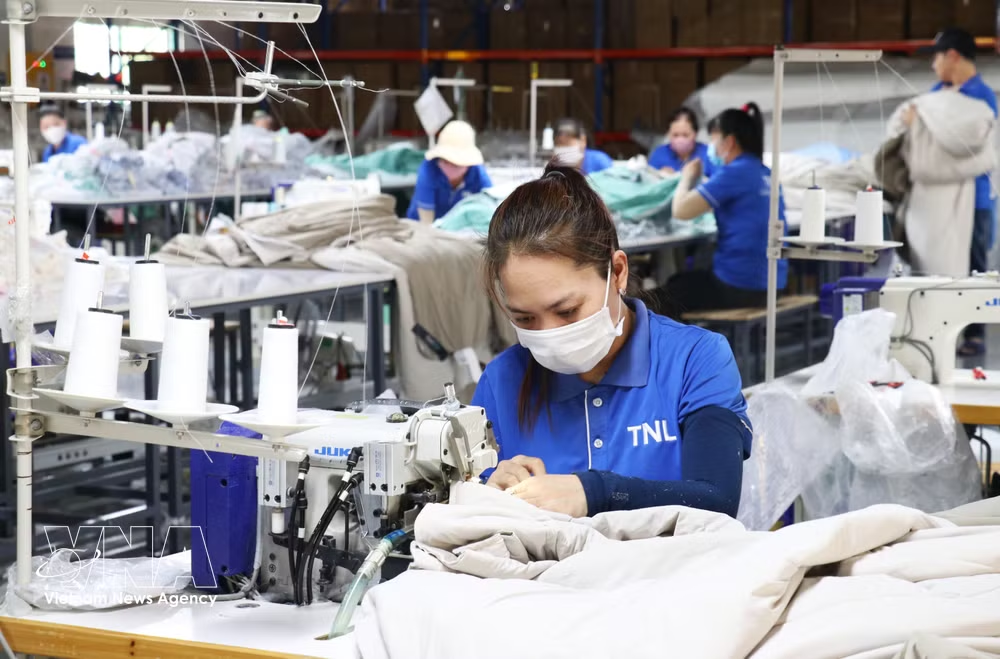
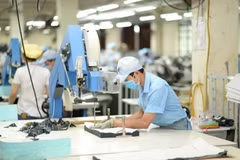
A garment factory in Tay Ninh province (Photo: VNA)

A garment factory in Tay Ninh province (Photo: VNA)

Stronger production base

Vietnamese goods are increasingly present in global markets, particularly electronics, textile and garments, agricultural products, and timber and wood products. But tighter requirements on the environment, emissions, raw material sourcing and supply chain responsibility are piling on pressure, forcing companies to revamp production processes and better meet international standards.

Tran Thanh Hai, Deputy Director of the Export-Import Department at the Ministry of Industry and Trade, said companies that stop at simple processing and assembly will struggle to withstand increasingly strict technical barriers. Real-world trade has already shown the risks when policies change.

Global trade trends in the coming time will favour products that can prove clear origin, use sustainable materials, save energy and meet environmental standards, giving them better access to customers in markets with high import requirements.

Competitiveness in global trade no longer rests on price and production scale alone. Meeting standards, providing transparent information and ensuring supply chain sustainability are increasingly the conditions for companies to keep markets and win more orders.

Ito Group Holdings Pte. Ltd. has made Vietnam its manufacturing hub since 2012, said its Chairman Peter James Opdahl. The group is now building a new 12,000 sq.m factory in Ho Chi Minh City’s Linh Trung Export Processing Zone to make equipment used in manufacturing across many industries.

According to him, Vietnam’s appeal goes beyond market access through FTAs to an increasingly clear role in regional production networks. To draw more quality projects and amplify spillover effects, the country needs to keep improving its industrial ecosystem, raise domestic supply capacity and develop technical talent, helping Vietnamese companies widen their international connections.

Vietnam’s trade outlook for 2026 remains upbeat, with a fairly realistic target of as much as 1.2 trillion USD in total export-import turnover and staying among the world’s 15 largest trading powers./.
VNA

See more

The free trade agreement between Vietnam and the European Free Trade Association (EFTA) opens up new opportunities for scientific and technological cooperation, high-quality investment and innovation. (Illustrative photo: VNA)

VEFTA opens opportunities for high-tech cooperation, innovation

According to Vice President of the Foreign Trade University Associate Professor Dr. Dao Ngoc Tien, the VEFTA’s long-term value lies largely in its non-tariff commitments, which establish institutional frameworks, principles and cooperation mechanisms with lasting economic impacts.

Aircraft of some Vietnamese airlines (Illustrative photo: VNA)

Vietnamese aircraft fleet climbs to 261

Among them, Vietjet registered 107 aircraft, including 16 Airbus A320s, 83 A321s and eight A330s. Vietnam Airlines has 94, including four A320s, 59 A321s, 14 A350s and 17 Boeing 787s.

Illustrative photo: VNA

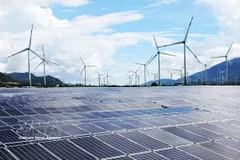
Ca Mau approves wind power project worth nearly 154.7 million USD

To ensure the project stays on schedule, Huynh Chi Nguyen, Vice Chairman of the provincial People’s Committee, has assigned the Department of Agriculture and Environment to take the lead and coordinate with relevant agencies in guiding procedures for land allocation and leasing, the allocation of marine areas, and environmental protection. Relevant departments and agencies are responsible for state management, inspection, supervision and handling issues arising within their respective jurisdictions.

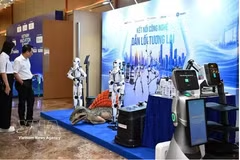
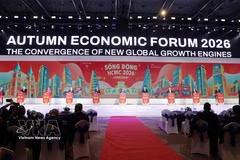
Within the framework of the Autumn Economic Forum 2026, Ho Chi Minh City launches a digital platform to support the year-end stimulus programme. (Photo: VNA)

Autumn Economic Forum 2026 connects economies into value chains

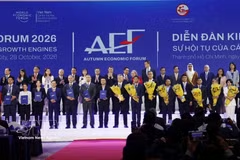
Over three working days, more than 20 in-depth sessions and dozens of technology showcases produced concrete results, showing cooperation moves beyond vision into substantive links and action. The sessions generated strategic insights and recast thinking on new growth forces, core drivers and breakthrough cooperation models as the global economy shifts deeply.

Illustrative image

Gold's headline price tells only part of trading story

Gold prices are often quoted as a single figure, making it easy to compare movements across different periods. However, a change in the quoted price does not translate into the same financial outcome for everyone exposed to the market. The result depends on how gold is traded, the size of the position, and the costs and contractual terms attached to the transaction.

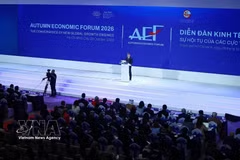
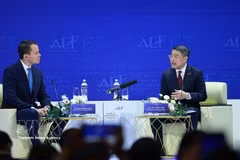
A high-level plenary session of the Autumn Economic Forum 2026 in Ho Chi Minh City on October 28. (Photo: VNA)

Autumn Economic Forum 2026: Connecting new growth drivers to unlock potential

Global investment in new digital projects has nearly tripled since 2020, while the digital economy has recorded annual growth of 10–12% for several years, significantly outpacing global GDP growth, she said, adding that industrial digitalisation and cross-border digital services are also expanding rapidly.

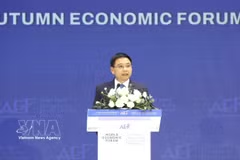
Deputy Prime Minister Nguyen Van Thang speaks at the Autumn Economic Forum 2026 on October 28. (Photo: VNA)

Vietnam must strengthen domestic capacity to move up global supply chains: Deputy PM

Thang stressed that Vietnam could not remain a passive recipient or an outside observer. Instead, it must build its own capacity and actively define its role in global production networks. The goal is not simply to join existing or emerging value chains, but to create the conditions, mechanisms and capabilities for Vietnam and its international partners to participate more directly in value creation.

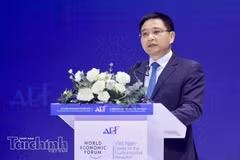
Deputy Prime Minister Nguyen Van Thang speaks at the Autumn Economic Forum 2026 (Photo: thoibaotaichinh,.vn)

AEF 2026 opens in-depth dialogue on cooperation framework in new era

For Vietnam, the urgent requirement now is not only to connect and bring the economy into existing or emerging value chains but, more importantly, to create the environment, mechanisms and capacity so that Vietnam and international partners could plug more deeply and directly into the process of creating and building value in the new value chains, said Deputy Prime Minister Nguyen Van Thang.

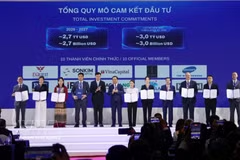
Membership certificates of the Vietnam International Financial Centre in Ho Chi Minh City (VIFC- HCMC) are presented to ten holding companies as its first members. on October 28, 2026 (Photo: VNA)

VIFC-HCMC announces first 10 official members

The 10 first members have a combined registered charter capital and committed capital contribution of 33.63 million USD. They plan to invest in and develop projects across infrastructure, education, energy, technology and financial services.

Innovation is key to helping SMEs enhance competitiveness and participate more deeply in global value chains (Photo: VNA)

Resolution opens new pathways for Vietnamese SMEs

Pham Van Viet, Chairman of the Board of Directors of Viet Thang Jean Co., Ltd. (VitaJean), said continued dependence on low labour costs will drive profit margins towards zero. The company has therefore invested in 3D design and laser-cutting technologies, reducing the time required for certain production stages from weeks to just hours. This has helped cut costs and meet the rapidly changing requirements of international orders.

Delegates attend Phu Tho province's investment promotion conference in Prague. (Photo: VNA)

Phu Tho promotes investment, trade in Czech Republic

Phu Tho, located in Vietnam’s northern midland and mountainous region, has considerable potential in industry, agriculture, services and tourism. Czech businesses’ strengths in manufacturing, engineering, technology, energy and environmental solutions offer promising opportunities for collaboration. Other potential areas include high-tech agriculture, food processing, tourism and human resources training.

Vietnam promotes green hydrogen investment opportunities in Europe

Vietnam promotes green hydrogen investment opportunities in Europe

The trade office introduced four investment priorities of Vietnam. These includes renewable hydrogen production, covering electrolysis, offshore wind-to-hydrogen, green ammonia and liquid hydrogen exports; storage, compression, pipelines, transport networks and port logistics; industrial decarbonisation and fuel switching in heavy transport and shipping; and hydrogen applications in steel, fertilisers, chemicals, cement, power generation and heavy transport.

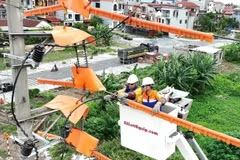
The application of live-line maintenance technology on a low-voltage power line in Pho Hien ward, Hung Yen province. (Illustrative photo: VNA)

Vietnam considers electricity price cut from November 1, petrol excise tax cut to zero

Deputy Prime Minister Nguyen Van Thang urged the Vietnam Electricity (EVN) Group to review its costs and maximise savings to develop a plan to reduce the average retail electricity price from November 1, 2026, to March 31, 2027, in accordance with relevant regulations. The move aims to support people and businesses and ensure social welfare.