Vietnam’s 28 years of ASEAN membership: Joining hands for strong, united, prosperous community

Twenty-eight years since officially joining the Association of Southeast Asian Nations (ASEAN) on July 28, 1995, Vietnam's membership has left a profound mark with her positive contributions to the bloc’s common development, laying the foundation for the establishment of an ASEAN community with political unity, economic integration, and social responsibility sharing.
Vietnam’s 28 years of ASEAN membership: Joining hands for strong, united, prosperous community ảnh 1At the opening ceremony of the 37th ASEAN Summit and Related Summits hosted by Vietnam in 2020 (Photo: baochinhphu.vn)
Hanoi (VNA) - Twenty-eight years since officially joining the Association of Southeast Asian Nations (ASEAN) on July 28, 1995, Vietnam's membership has left a profound mark with her positive contributions to the bloc’s common development, laying the foundation for the establishment of an ASEAN community with political unity, economic integration, and social responsibility sharing.

Vietnam's accession to ASEAN paved the way for other countries such as Laos, Myanmar, and Cambodia to join the association, turning ASEAN into a cooperative community regardless of political differences.

Vietnam’s 28 years of ASEAN membership: Joining hands for strong, united, prosperous community ảnh 2Flags raised at the admission ceremony of Vietnam as the seventh official member of ASEAN in Bandar Seri Begawan on July 28, 1995, Brunei (Photo: VNA)
With Vietnam's participation, the regional bloc entered a new era. Vietnam's role and contributions have been recognised in the process of shaping and forming ASEAN's strategies, directions, and development plans, especially in promoting regional cooperation with major partners such as the US, the European Union, China, and India.

In the current stage, Vietnam has made significant contributions in defining the goals, development orientations, and major policies of the bloc. The country has participated in building and adopting many important documents, including the ASEAN Vision 2020, ASEAN Charter, ASEAN Community Vision 2025, comprehensive roadmaps for building the community, and various other key pacts, especially those related to connectivity and narrowing development gaps. 

According to Ambassador Vu Ho, Acting Head of ASEAN SOM (Senior Officials Meeting) Vietnam, the nation initiated many operational mechanisms of the association, some of which continue to be the core ones, for example, the establishment of the ASEAN Defence Ministers' Meeting-Plus (ADMM-Plus) in 2010, ASEAN-Plus mechanisms, the inclusion of Russia and the US in the East Asia Summit (EAS) in 2010, and the establishment of the ASEAN Community in 2015.

Vietnam has held the ASEAN rotating chair position three times in 1998, 2010, and 2020. Especially in 2020, the country effectively led the association's activities from in-person to virtual meetings, with its flexibility and proactiveness helping ASEAN stand firm and overcome the difficulties caused by the COVID-19 pandemic.

Vietnam’s 28 years of ASEAN membership: Joining hands for strong, united, prosperous community ảnh 3Prime Minister Pham Minh Chinh speaks at the 42nd ASEAN Summit and related meetings in Indonesia this year. (Photo: VNA)(Photo: VNA)
In 2021, participating in the first post-COVID-19 in-person ASEAN Leaders' Meeting, Prime Minister Pham Minh Chinh presented a series of initiatives such as the plan to provide vaccines to the people, the establishment of the ASEAN Centre for Emergency Public Health Situations and Emerging Diseases, and promoting post-pandemic economic recovery and development, which demonstrated Vietnam's proactive and positive role.

Former ASEAN Secretary-General Dato Lim Jock Hoi praised Vietnam for showing strong leadership in leading a collective regional response to the pandemic.

Given complex global and regional developments, Vietnam has actively joined in the process of defining principles and "playing rules" for the region, thus together with ASEAN ensuring peace, security, stability, and promoting dialogue and cooperation. Vietnam has promoted the Treaty of Amity and Cooperation in Southeast Asia (TAC) to become the code of conduct for relationships between bloc member nations and with ASEAN's external partners. Vietnam has also made active contributions to the drafting and adoption of the ASEAN Outlook on the Indo-Pacific (AOIP), helping shape the bloc’s common position and promote cooperation based on its values, principles, and centrality.

Regarding the East Sea issue, Vietnam and other ASEAN member countries have engaged in the negotiation and signing of the Declaration on the Conduct of Parties in the East Sea (DOC) between ASEAN and China; as well as negotiations for an effective and legally-binding Code of Conduct in the water (COC).

Vietnam’s 28 years of ASEAN membership: Joining hands for strong, united, prosperous community ảnh 4Prime Minister Pham Minh Chinh (4th from left) in a group photo with leaders of ASEAN member countries.(Photo: VNA)
Cooperation with ASEAN has always been an important pillar in Vietnam's foreign policy of independence, self-reliance, diversification and multilateralisation, and international and regional integration over the past 28 years./.
VNA

See more

Vice President of the Vietnamese National Assembly Nguyen Hong Dien (right) receives Bok Gi-wang, vice head of the Korean National Assembly's Land, Infrastructure and Transport Committee in Hanoi on October 30, 2026. (Photo: VNA)

Vietnam, RoK step up economic, parliamentary cooperation

Speaking highly of the RoK's experience in railway development, NA Vice President Nguyen Hong Dien welcomed its businesses' interest in Vietnam’s railway projects and encouraged their participation as partners, investors or contractors in line with Vietnamese law.

General Secretary of the Communist Party of Vietnam Central Committee and President To Lam (right) receives Special Representative of the President of Azerbaijan Elchin Amirbayov Hanoi on October 30, 2026. (Photo: VNA)

Top leader receives Azerbaijani presidential envoy

Welcoming the Azerbaijani envoy to Vietnam, the Vietnamese leader affirmed that Vietnam treasures the friendship, valuable support and assistance extended by the State and people of Azerbaijan to Vietnam during its past struggle for national independence, as well as its current process of national construction and development.

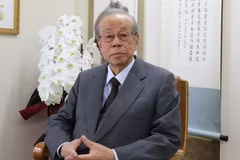
Former Japanese Prime Minister Fukuda Yasuo (Photo published by VNA)

Vietnam sends condolences on passing of former Japanese PM Fukuda Yasuo

In the message, Prime Minister Le Minh Hung extended his deepest condolences and expressed profound appreciation for Mr. Fukuda’s special affection for and valuable support to Vietnam and its people, as well as his contributions to the Comprehensive Strategic Partnership between Vietnam and Japan.

A view of Ho Chi MInh City (Photo: VNA)

Ho Chi Minh City’s 100-year master plan gets the green light

Under the overall development model, the megacity will comprise five growth poles, namely international financial services at the centre; innovation in the East; industry, high technology and logistics in the North; seaports, free trade, international logistics and energy in the South; and urban development, education and healthcare in the West.

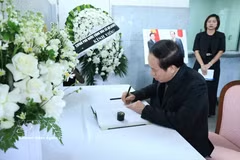
Deputy Prime Minister Le Tien Chau writes in the condolence book. (Photo: VNA)

Deputy PM pays tribute to former Japanese PM Fukuda Yasuo

The State and people of Vietnam are deeply saddened by the passing of Japan's former Prime Minister Fukuda Yasuo, a great and close friend of Vietnam. On behalf of the Government and people of Vietnam, Deputy Prime Minister Pham Tien Chau extended the deepest condolences to the Government and people of Japan, as well as his family.

General Secretary of the Communist Party of Vietnam Central Committee and President To Lam speaks at the meeting with female NA deputies in Hanoi on October 29. (Photo: VNA)

Top leader calls on female NA deputies to help shape national development policies

Top leader To Lam called on female NA deputies to contribute proactively to lawmaking from the earliest stages, ensuring that policies are grounded in practical evidence, constitutional, consistent and enforceable. They should identify shortcomings before laws are adopted, put forward initiatives in the common interest, maintain their independent judgement and uphold integrity to prevent group interests from distorting policymaking.