World Coffee Heritage Forum: A dialogue connecting coffee culture, knowledge

The recognition of "The knowledge of coffee cultivation and processing in Dak Lak” as a National Intangible Cultural Heritage marks an important milestone. It affirms the value of indigenous knowledge, creative labour, and the harmonious connection between local livelihoods, culture and nature in the Central Highlands.

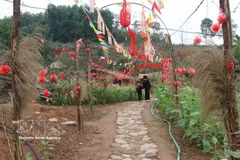
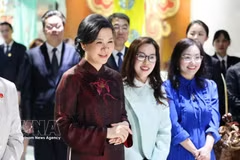
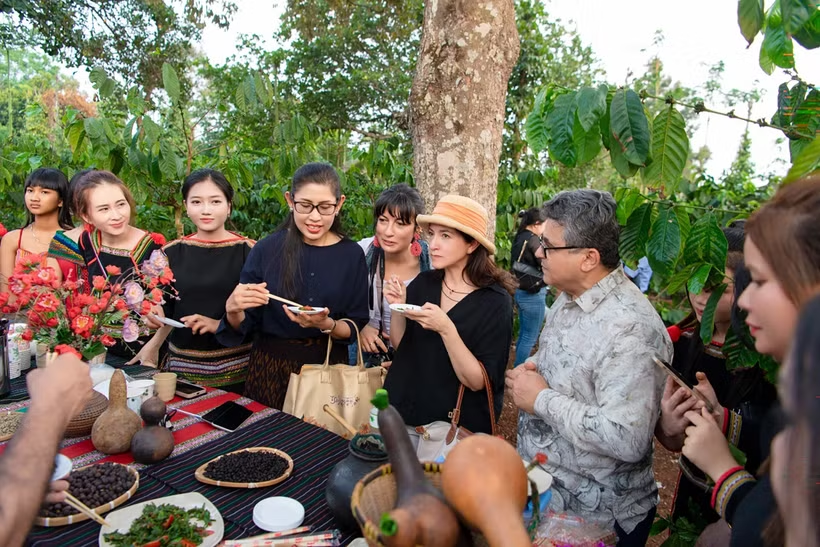
Urawadee Sriphiromya, Thai Ambassador to Vietnam (third from left); Camila Polo Florez, Colombodian Ambassador to Vietnam (C); and Saadi Salama, Ambassador of Palestine to Vietnam (fifth from left), experience indigenous coffee culture in a coffee garden in Dak Lak. (Photo: doanhnghiepkinhtexanh.vn)

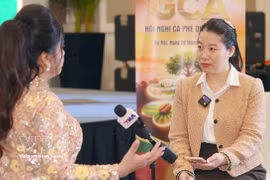
Dak Lak (VNA) – The World Coffee Heritage Forum, held from April 17 to 19 at the World Coffee Museum in Dak Lak province, underscored coffee as a “living heritage” capable of connecting people, communities and civilisations, and fostering harmony, creativity and sustainable development.

The forum, co-organised by the provincial People’s Committee, UNESCO, the Ho Chi Minh City University of Culture, and Trung Nguyen Legend Group, under the theme “From Diverse Traditions to a Living Global Heritage,” brought together policymakers, scholars and industry leaders to explore coffee as a shared cultural legacy of humanity.

It also attracted a wide array of participants, including representatives of ministries, ambassadors and consuls general from major coffee-producing nations, representatives from international organisations, and cultural experts.

According to Dao My, Vice Chairman of the Dak Lak People's Committee, the province is known as the 'capital' of Vietnamese coffee, with rich, fertile basalt red soil ideal for agriculture.

The coffee provides livelihoods for thousands of locals and has developed a unique cultural space, closely tied to the socioeconomic life, customs and identity of local communities.

The recognition of "The knowledge of coffee cultivation and processing in Dak Lak” as a National Intangible Cultural Heritage marks an important milestone. It affirms the value of indigenous knowledge, creative labour, and the harmonious connection between local livelihoods, culture and nature in the Central Highlands.

The event provided an opportunity to support the province in guiding the development of a UNESCO nomination dossier for the region's coffee cultivation and processing knowledge, fostering cross-sector cooperation and promoting the development of a coffee brand with a distinct local identity.
vnanet-cafe2.jpg
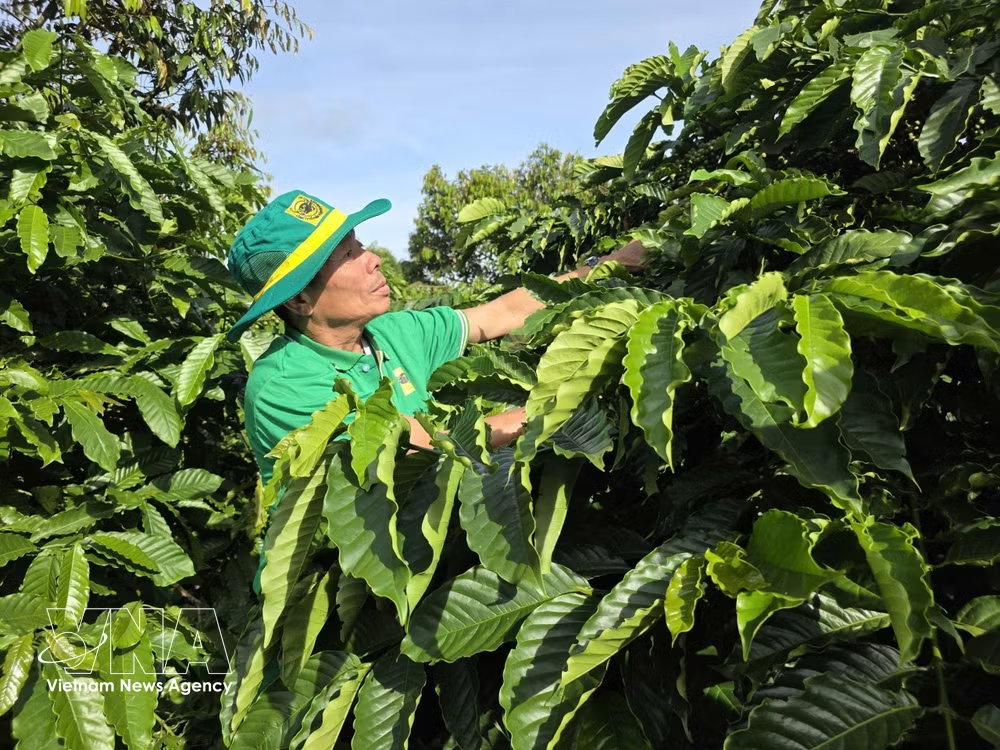
A coffee plantation applying smart farming practices in Gia Lai has delivered positive results, boosting yields while reducing input costs. (Photo: VNA)

Addressing the forum, Permanent Deputy Minister of Foreign Affairs Nguyen Minh Vu commended Dak Lak for its efforts to promote the traditional values and coffee culture of the locality as a resource for national sustainable development. He noted that introducing Dak Lak’s knowledge of coffee cultivation and processing to the international community not only helps showcase the land and people of the Central Highlands, but also fosters intercultural dialogue and enhances the added value of Vietnam’s coffee industry. This, he added, will gradually contribute to establishing a distinct position for Vietnamese coffee on the global coffee map.

Jonathan Baker, UNESCO Representative and Head of Office in Vietnam, affirmed that Vietnam holds a distinctive position, not only as one of the world’s leading producers and exporters of coffee, but also as a place where the conditions are uniquely suited to the formation and development of a rich and distinctive coffee culture.

In particular, in Dak Lak's Buon Ma Thuot, coffee is deeply intertwined with indigenous knowledge systems encompassing cultivation, care, harvesting, processing, enjoyment, cultural practices and community life organisation. These elements converge to embody the values of a “living heritage,” one that calls for preservation, safeguarding, and continued revitalisation in contemporary life.

In March 2025, the Ministry of Culture, Sports and Tourism officially recognised “Dak Lak coffee cultivation and processing knowledge” as a national intangible cultural heritage, affirming the value of coffee through indigenous knowledge, community creativity, and the harmonious relationship between humans, nature and culture./.
VNA

See more

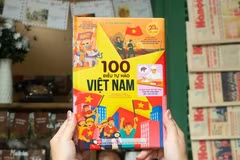
“100 Dieu tu hao Viet Nam” book (Photo: nhandan.vn)

Book introduces 100 remarkable facts about Vietnam

The illustrated book “100 Dieu tu hao Viet Nam” (100 Proud Facts about Vietnam) compiles 100 highlights of Vietnam’s legacy across 11 major themes, including heroic history, cultural beauty, literature and the arts, medicine, education, architecture, science, cuisine and community values.

Children perform Xoan folk singing at the cultural camp. (Photo: VNA)

Hung Kings festival opens with vibrant cultural, tourism activities in Phu Tho

Beyond its role as a sacred national commemoration, the event helps promote cultural values, strengthen national unity and enhance cultural exchanges. A notable feature is the flexible organisation in 18 commune and ward clusters, encouraging the localities' participation and enriching the festival’s content.

A corner of the Book Street in Hanoi (Photo: VNA)

Hanoi celebrates Reading Culture Day with book street activities

Organised by the Book Street’s management board in collaboration with publishers and distributors, the programme will brings together 14 publishing and distribution units across 15 booths, offering readers access to a rich and diverse selection of book titles spanning literature, children’s books, life skills, economics, history, science-technology and education, among others.

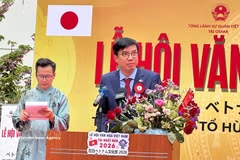
Vietnam’s Consul General in Osaka Nguyen Truong Son speaks at the 9th Vietnam cultural festival in Osaka on April 19, 2026. (Photo: VNA)

Vietnam cultural festival in Osaka draws tens of thousands of attendees

Saito Naoki, Mayor of Ikuno Ward – where the event took place, expressed his pleasure at the rapid growth of the Vietnamese community in the area. He praised such cultural festivals for helping Vietnamese residents maintain their traditions while fostering mutual understanding and closer ties with Japanese locals.

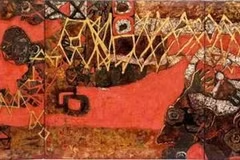
The artwork "Harvest Day" by Doan Thi Thu Huong. (Photo: cand.com.vn)

Vietnam to join Venice Art Biennale with first national showcase

As Vietnam makes its debut at the Biennale, the exhibition “Vietnam: Art in a Global Flow” does not seek to assert its position through scale or grand statements, but rather opens up a space for meaningful artistic dialogue - an invitation to listen to subtle voices, contemplate in stillness, and reflect on the capacity to nurture sustained creative energy in a dynamic and ever-evolving art world.

Viet Youth Readiness Hub debuts at the event (Photo: VNA)

Vietnamese Canadian youth hub launched to fight mother tongue erosion

The Viet Youth Readiness Hub is seen as a dedicated platform to connect, support, and empower Vietnamese-Canadian youth. It aims to emerge as a central force to host social events, advance heritage education, foster exchange and integration among young Vietnamese in Canada.

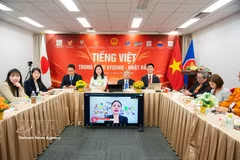
At the event “Vietnamese Language in the heart of Kyushu, Japan” (Photo: VNA)

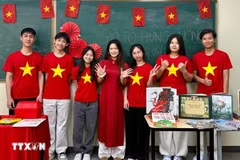
Vietnamese in Japan revive mother tongue among young generations

While the number of Vietnamese-origin children in Japan is surging, opportunities to actually speak Vietnamese in daily life are vanishing fast. Many children can understand the language but default to Japanese in response, gradually relegating their mother tongue to a secondary role, sometimes even treating it as a “second foreign language” inside their own houses.

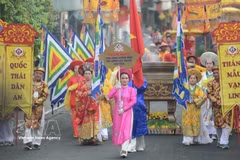
A tribute to Hung Kings in Ho Chi Minh City (Photo: VNA)

Hung Kings’ Commemoration Day 2026 to spread sacred values, foster national unity

Following the merger of Phu Tho, Vinh Phuc, and Hoa Binh provinces into the new Phu Tho province last year, the Hung Kings Temple Festival has taken on heightened significance. It now serves not only as a tribute to the ancestral homeland but also a unified cultural platform that extends sacred ancestral values to Vietnamese communities at home and abroad.

A traditional art performance at Bach Ma temple in Hanoi (Photo: VNA)

Traditional arts hold untapped economic power

Traditional arts embody deep aesthetic values, worldviews, and national identity, shaping the country’s distinctive “aesthetic identity” and foundational cultural tastes

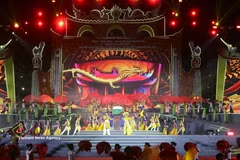
A performance at the opening ceremony of the Hung Kings Temple Festival and the 2026 Ancestral Land Culture and Tourism Week on late April 17 (Photo: VNA)

Hung Kings Temple Festival, associated tourism week kick off

The annual festival serves as a major national cultural event, offering an opportunity for people across Vietnam and overseas Vietnamese communities to pay tribute to their ancestors, express gratitude, and strengthen the great national solidarity.