Hanoi (VNA) - Vietnam boasts a rich and diverse heritage of traditional arts, but efforts to harness and transform cultural assets into genuine drivers of development have yet to match their full potential.
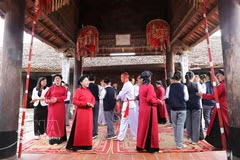
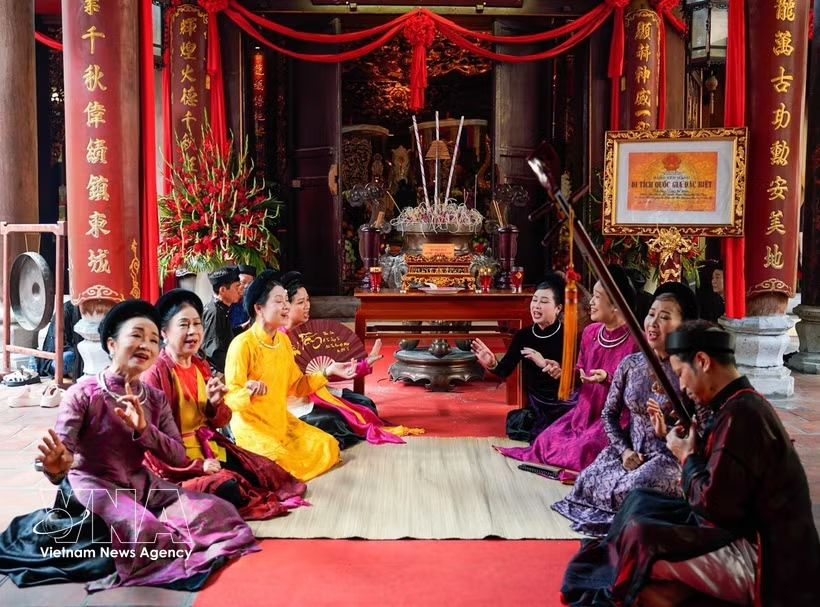
Traditional arts embody deep aesthetic values, worldviews, and national identity, shaping the country’s distinctive “aesthetic identity” and foundational cultural tastes. They also provide a vital source of creative raw material and play a direct role in fueling the cultural industries, from film and fashion to design, video games, and digital content.
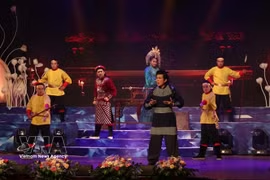
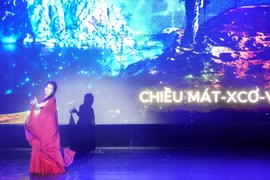
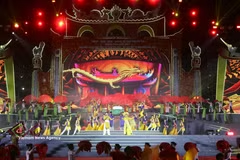
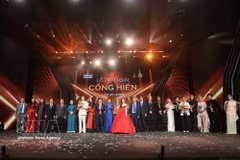
In music, a growing cohort of young artists is reinterpreting traditional heritage and taking it to major domestic stages and global platforms. By blending traditional elements with modern sounds, their work has earned both local acclaim and international recognition, often with strong digital traction. Rising stars include Duc Phuc’s “Phu Dong Thien Vuong,” which won the Intervision 2025 music competition; Phuong My Chi, whose fusion style secured second runner-up at Sing!Asia 2025; and Hoa Minzy, whose track “Bac Bling” swept multiple domestic music awards in 2025.
These successes are not isolated cases but part of a broader emerging creative trend fueled by talent and a willingness to excel in performance. When placed in the right creative context and backed by serious investment, traditional arts can clearly deliver meaningful impact in contemporary life.
According to UNESCO, linking cultural heritage with creative development offers a sustainable pathway that both preserves and unlocks cultural value. Cultural researcher Nguyen Quang Long, with more than 30 years of experience in traditional music, argued that in an era dominated by global cultural products, traditional arts are more important than ever.
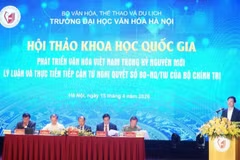
In Vietnam, the Party and State have translated broad cultural development guidelines into concrete documents, including for traditional arts. Key documents include the Resolution from the fifth plenum of the 8th Party Central Committee on building an advanced Vietnamese culture rich in national identity, and the Resolution from the ninth plenum of the 11th Party Central Committee on developing Vietnamese culture and people for sustainable national development.
More recently, the Prime Minister’s decision, dated November 14, 2025, approved the strategy for the development of Vietnam’s cultural industries to 2030, with a vision toward 2045. The strategy gives priority to selected traditional art forms aligned with market demand, leverages modern technology to enhance user experience, and aims to gradually build competitive cultural brands at both regional and global levels.
The Politburo’s Resolution 80 further underscores the role of traditional arts and appropriate policies to honour and support artisans.
Long noted that while traditional arts are no longer sidelined, they have yet to assume a truly central role in cultural life. Achieving that will require much stronger cross-sector linkages with education, media, tourism, creative cities, and the broader cultural industries.
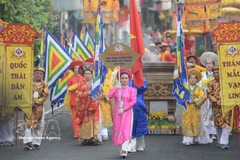
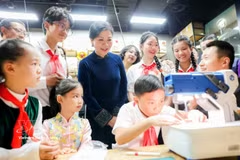
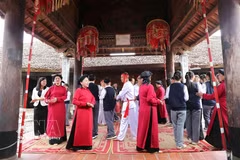
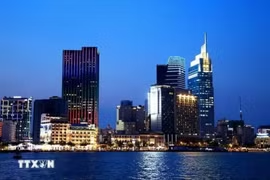
In education, school performances, workshops, and experiential curricula are starting to cultivate aesthetic awareness and cultural appreciation among younger generations. In urban spaces, incorporating traditional artistic elements into architecture and tourism products has enriched daily cultural life and shaped distinctive local branding in cities like Hanoi, Hoi An, and Hue.
Beyond pure economic value, traditional arts contribute to what experts term “cultural immunity”. In an age of intensifying global cultural flows, a robust cultural foundation helps societies resist being overwhelmed by transient trends and losing their core identity. When the public, especially the youth, can recognise and appreciate traditional values, it forms a “soft shield” that safeguards national identity amid deeper global integration.
Long observed that if “hard infrastructure” refers to institutional framework, policies, and economic resources, “soft infrastructure” consists of values, cultural memory, and aesthetic identity. In today’s world, national competition increasingly revolves around image and cultural influence, making strong “soft infrastructure” indispensable. Traditional arts, he said, form a cornerstone of that foundation.
Folk culture researcher Nguyen Hung Vi said that when traditional arts become an integral part of contemporary life, it signals that the cultural lifeblood of the nation is being sustained and enriched, creating internal strength for the future./.