Top leader lauds unsung contributions by ethnic minority figures to national culture

Only when culture is nurtured basing on the self-awareness and pride of each individual can it exist and develop sustainably, remarked Party General Secretary and State President To Lam.

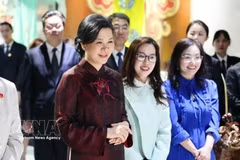
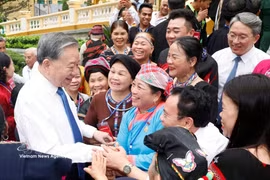
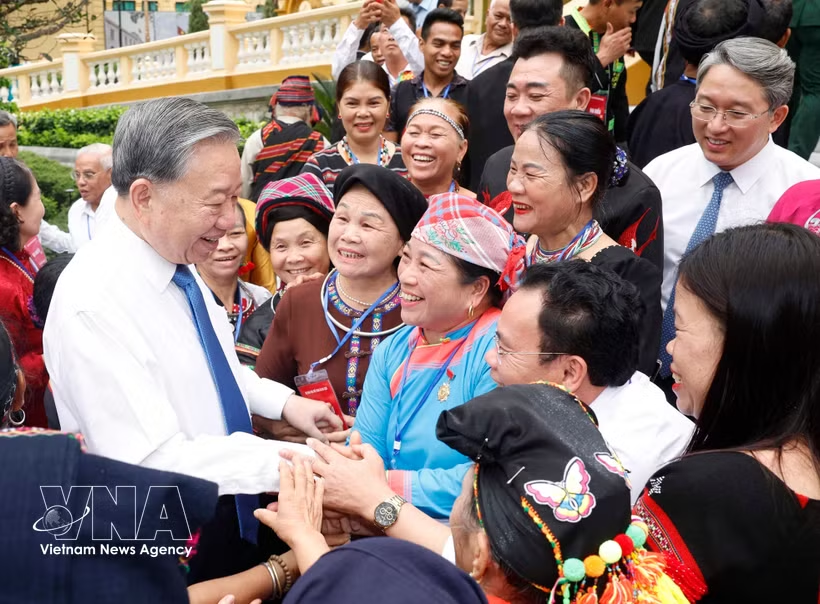
Party General Secretary and State President To Lam meets with village elders, community leaders, artisans, and prominent figures of ethnic minorities from nationwide in Hanoi on April 18. (Photo: VNA)

Hanoi (VNA) – Party General Secretary and State President To Lam on April 18 praised the persistent, silent, yet immense contributions by village elders, community leaders, artisans, and prominent figures among ethnic minorities nationwide – those who are preserving the roots of the nation and safeguarding the values that constitute the identity, depth, and enduring strength of Vietnam.

He made the commendation while receiving village elders, community leaders, artisans, and prominent figures from across the country on the occasion of the Vietnamese Ethnic Culture Day (April 19).

The Party and State leader emphasised that preserving the culture of ethnic groups is not only about preserving heritage, but also about safeguarding the spiritual foundation of society, strengthening the great national solidarity, and creating intrinsic strength for sustainable national development.

Within this foundation, elderly villagers, community heads, artisans, and respected individuals play a particularly important role. They are not only keepers of community memory but also spiritual anchors and places where trust converges, contributing to stability and cohesion at the grassroots level, he noted.

Over the past years, under the leadership of the Party and State, with coordinated efforts by the entire political system and endeavours by localities and the people, the preservation and promotion of ethnic groups’ cultural values have achieved many important results, creating positive changes in both public awareness and social life.

Besides the obtained achievements, General Secretary and President Lam also pointed out certain new difficulties and challenges in the preservation and promotion of the cultural values of ethnic groups, adding that some are long-term issues that directly impact the foundation of sustainable national development.

Only when culture is nurtured basing on the self-awareness and pride of each individual can it exist and develop sustainably, he remarked.
vnanet-top-leader-lauds-contributions-by-ethnic-minority-figures-2.jpg
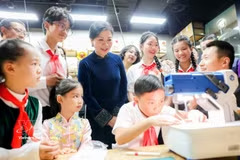
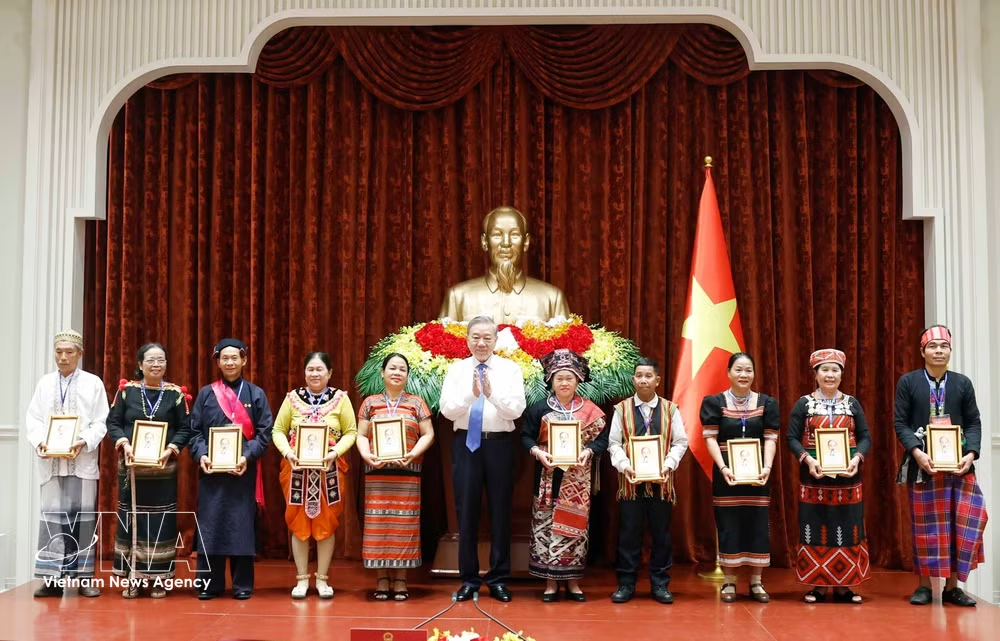
Party General Secretary and State President To Lam presents portraits of late President Ho Chi Minh to village elders, community leaders, artisans, and prominent figures of ethnic minorities at the meeting in Hanoi on April 18. (Photo: VNA)

He expressed confidence that village elders, community leaders, artisans, and prominent figures will continue to bring into play their particularly crucial roles to help uphold cultural identity, enhance the great national solidarity, and create a solid cornerstone for the sustainable development of the country.

The leader went on to say that cultural preservation should be closely linked to livelihood development, especially community-based tourism, so that local residents can both maintain their identity and improve their income, thereby generating long-term momentum for cultural preservation and promotion.

Development is not just about adding new things, but also about keeping and capitalising on the inherent positive values, he stated.

On this occasion, the General Secretary and President requested the Government, ministries, sectors, and local Party committees and authorities to continue to thoroughly grasp the Party's policy on cultural development in the new period, considering this a key task closely linked to the goal of fast and sustainable development of each locality and the country as a whole.

In 2008, the Prime Minister issued a decision designating April 19 as the Vietnamese Ethnic Culture Day. Since then, the day has truly become a major occasion for people of all ethnic groups to meet and immerse themselves in traditional festivals and unique cultural spaces of ethnic communities./.
VNA

See more

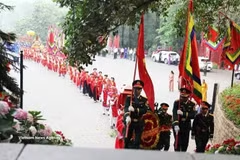
A performance at the opening ceremony of the Hung Kings Temple Festival and the 2026 Ancestral Land Culture and Tourism Week on late April 17 (Photo: VNA)

Hung Kings Temple Festival, associated tourism week kick off

The annual festival serves as a major national cultural event, offering an opportunity for people across Vietnam and overseas Vietnamese communities to pay tribute to their ancestors, express gratitude, and strengthen the great national solidarity.

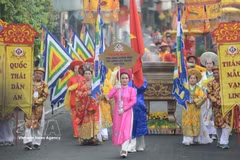
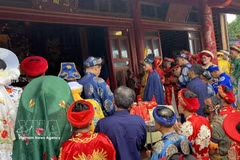
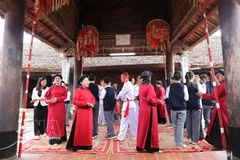
A ritual at Hue Nam Temple Festival (Photo: VNA)

Hue Nam Temple Festival: From imperial relic to distinctive cultural celebration in Hue

Historically known as Ngoc Tran Son Tu, the temple was renamed Hue Nam during the reign of King Dong Khanh in the late 19th century, symbolising royal gratitude to the Mother Goddess. It is also the only temple in Hue that harmoniously combines royal ceremonial elements with folk religious practices, creating a distinctive blend of court ritual and popular belief.

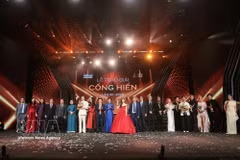
Participants in the 20th Cong hien (Devotion) Awards presentation ceremony in Hanoi on April 15 (Photo: VNA)

Devotion Awards mark two decades of honouring excellence in music, sports

Nguyen Thien Thuat, Editor-in-Chief of the The Thao & Van Hoa newspaper and Head of the organising board of the awards, said, noting that their achievements reflect the spirit of the Politburo’s Resolution No. 80, which emphasises preserving national cultural values while selectively absorbing the essence of world culture.

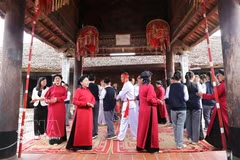
Artisans and students take part in cultural activities and exchanges in the Xoan singing performance space at Hung Lo ancient communal house in Phu Tho province (Photo: VNA)

Ancestral legends revived through contemporary performance

Beyond cultural value, well-organised festival programmes linked with tourism and media can contribute to the development of cultural industries and enhance Vietnam’s cultural soft power, positioning heritage-based events as distinctive national cultural brands in the international arena.

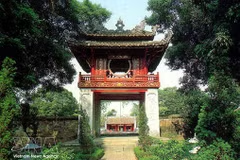
Khue Van Cac (Khue Van Pavilion) stands as a defining cultural symbol of Hanoi, closely associated with Vietnam’s long-standing tradition of valuing education and honouring knowledge. (Photo: VNA)

Greater efforts needed for heritage to shape Hanoi’s identity

As suggested by UNESCO experts, heritage should be approached as an integrated system encompassing space, people and everyday life. This perspective can inform urban planning, cultural tourism development and the creation of clear economic drivers.

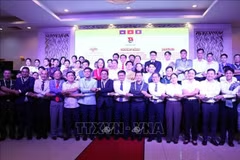
Participants at the gathering (Photo: VNA)

Lao, Cambodian students welcome traditional New Year in Ho Chi Minh City

In his speech, Vice Chairman of the municipal People’s Committee Nguyen Manh Cuong said the municipal Party organisation, authorities and people always value the close ties and solidarity among Vietnam, Laos and Cambodia. He described the three nations’ longstanding ties, forged through shared hardships, as an invaluable spiritual asset and a bedrock for sustainable development.

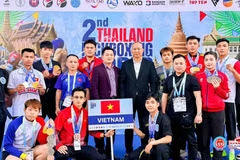
Vietnamese kickboxers win 32 gold medals at the Kickboxing World Cup 2026. (Photo: Vietnam Kickboxing Federation)

Vietnam finish third at Kickboxing World Cup 2026

According to Vu Duc Thinh, President of the Vietnam Kickboxing Federation, the strong results reflected careful preparation by local training centres and the determination of Vietnamese fighters. The team’s participation, funded largely through socialised and local resources, also demonstrated growing support for the development of kickboxing in Vietnam.

Politburo member, Secretary of the Party Central Committee and Head of the Party Central Committee’s Commission for Information, Education and Mass Mobilisation Trinh Van Quyet speaks at the event (Photo: VNA)

National Radio Festival opens in Quang Ninh

The opening night was combined with an artistic programme titled “sounds of the new era,” drawing around 50,000 spectators. The programme was structured in three chapters: Origins of Sound, Heritage Sound, and Sound of the New Era.