Spouse of top Vietnamese leader visits Guangxi Ethnic Music Museum

The museum is the first specialised cultural institution of its kind in the region, housing more than 1,600 valuable artifacts that reflect the rich musical traditions of 12 ethnic groups in Guangxi.

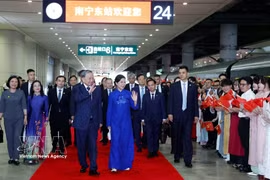
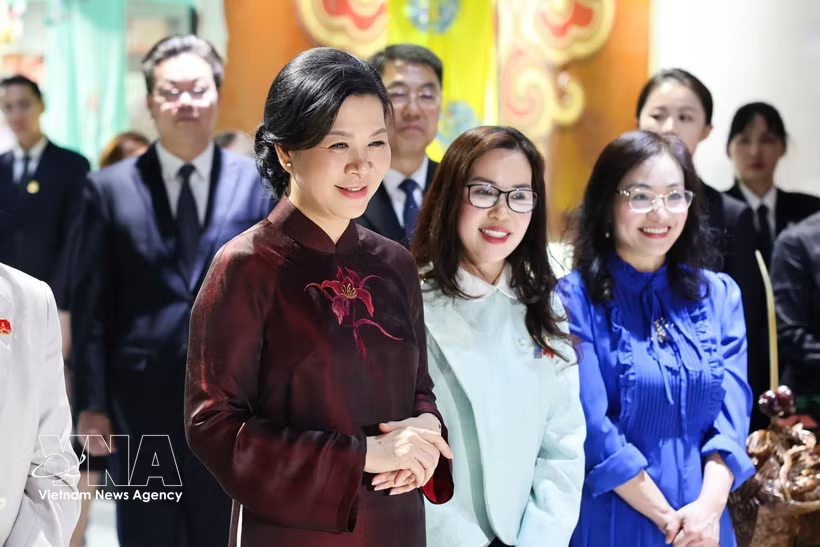
Ngo Phuong Ly, spouse of General Secretary of the Communist Party of Vietnam Central Committee and State President To Lam, visits the Guangxi Ethnic Music Museum on April 16. (Photo: VNA)

Nanning (VNA) – As part of the recent state visit to China by General Secretary of the Communist Party of Vietnam Central Committee and State President To Lam, his spouse Ngo Phuong Ly on April 16 visited the Guangxi Arts University's Guangxi Ethnic Music Museum in Nanning city.

Established in June 2015 and located within the Nanhu campus of the Guangxi Arts University, the museum is the first specialised cultural institution of its kind in the region. It houses more than 1,600 valuable artifacts, reflecting the rich musical traditions of 12 ethnic groups in Guangxi.

Notably, the museum also serves as a gathering space for traditional musical instruments from across Southeast Asia, including many items bearing strong Vietnamese cultural imprints.

During the visit, Ly was briefed on the museum’s development and toured its exhibition halls, where instruments such as Indonesia’s gamelan ensemble, Myanmar’s harp, and Vietnam’s monochord (Dan bau) are displayed, illustrating the diversity and continuity of regional cultural flows.

A highlight of the trip was a special artistic performance presented by Vietnamese and Southeast Asian students studying at the university.

On this occasion, Ly met with Vietnamese lecturers and students at the university, offering encouragement and expressing her hope that each individual will serve as a “cultural ambassador” using arts to further enrich the friendship between the peoples of Vietnam and China./.
VNA

See more

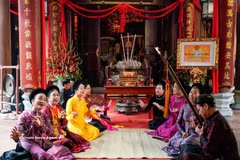
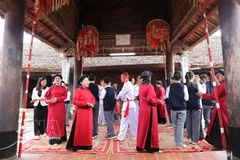
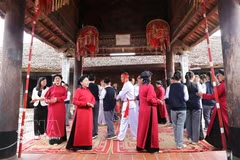
A traditional art performance at Bach Ma temple in Hanoi (Photo: VNA)

Traditional arts hold untapped economic power

Traditional arts embody deep aesthetic values, worldviews, and national identity, shaping the country’s distinctive “aesthetic identity” and foundational cultural tastes

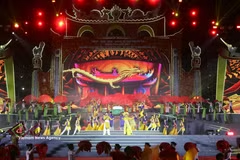
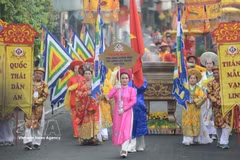
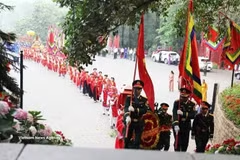
A performance at the opening ceremony of the Hung Kings Temple Festival and the 2026 Ancestral Land Culture and Tourism Week on late April 17 (Photo: VNA)

Hung Kings Temple Festival, associated tourism week kick off

The annual festival serves as a major national cultural event, offering an opportunity for people across Vietnam and overseas Vietnamese communities to pay tribute to their ancestors, express gratitude, and strengthen the great national solidarity.

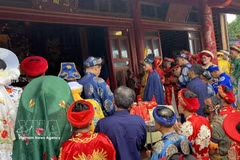
A ritual at Hue Nam Temple Festival (Photo: VNA)

Hue Nam Temple Festival: From imperial relic to distinctive cultural celebration in Hue

Historically known as Ngoc Tran Son Tu, the temple was renamed Hue Nam during the reign of King Dong Khanh in the late 19th century, symbolising royal gratitude to the Mother Goddess. It is also the only temple in Hue that harmoniously combines royal ceremonial elements with folk religious practices, creating a distinctive blend of court ritual and popular belief.

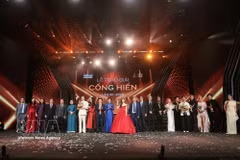
Participants in the 20th Cong hien (Devotion) Awards presentation ceremony in Hanoi on April 15 (Photo: VNA)

Devotion Awards mark two decades of honouring excellence in music, sports

Nguyen Thien Thuat, Editor-in-Chief of the The Thao & Van Hoa newspaper and Head of the organising board of the awards, said, noting that their achievements reflect the spirit of the Politburo’s Resolution No. 80, which emphasises preserving national cultural values while selectively absorbing the essence of world culture.

Artisans and students take part in cultural activities and exchanges in the Xoan singing performance space at Hung Lo ancient communal house in Phu Tho province (Photo: VNA)

Ancestral legends revived through contemporary performance

Beyond cultural value, well-organised festival programmes linked with tourism and media can contribute to the development of cultural industries and enhance Vietnam’s cultural soft power, positioning heritage-based events as distinctive national cultural brands in the international arena.

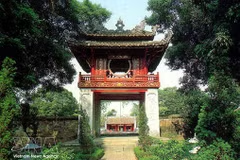
Khue Van Cac (Khue Van Pavilion) stands as a defining cultural symbol of Hanoi, closely associated with Vietnam’s long-standing tradition of valuing education and honouring knowledge. (Photo: VNA)

Greater efforts needed for heritage to shape Hanoi’s identity

As suggested by UNESCO experts, heritage should be approached as an integrated system encompassing space, people and everyday life. This perspective can inform urban planning, cultural tourism development and the creation of clear economic drivers.

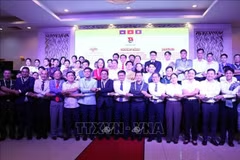
Participants at the gathering (Photo: VNA)

Lao, Cambodian students welcome traditional New Year in Ho Chi Minh City

In his speech, Vice Chairman of the municipal People’s Committee Nguyen Manh Cuong said the municipal Party organisation, authorities and people always value the close ties and solidarity among Vietnam, Laos and Cambodia. He described the three nations’ longstanding ties, forged through shared hardships, as an invaluable spiritual asset and a bedrock for sustainable development.

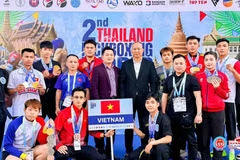
Vietnamese kickboxers win 32 gold medals at the Kickboxing World Cup 2026. (Photo: Vietnam Kickboxing Federation)

Vietnam finish third at Kickboxing World Cup 2026

According to Vu Duc Thinh, President of the Vietnam Kickboxing Federation, the strong results reflected careful preparation by local training centres and the determination of Vietnamese fighters. The team’s participation, funded largely through socialised and local resources, also demonstrated growing support for the development of kickboxing in Vietnam.

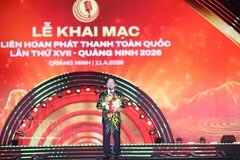
Politburo member, Secretary of the Party Central Committee and Head of the Party Central Committee’s Commission for Information, Education and Mass Mobilisation Trinh Van Quyet speaks at the event (Photo: VNA)

National Radio Festival opens in Quang Ninh

The opening night was combined with an artistic programme titled “sounds of the new era,” drawing around 50,000 spectators. The programme was structured in three chapters: Origins of Sound, Heritage Sound, and Sound of the New Era.