Ha Tinh Museum reconstruction targets heritage in peril

The Ha Tinh Museum reconstruction project, with a total investment of 305 billion VND (11.7 million USD), began on December 19, 202

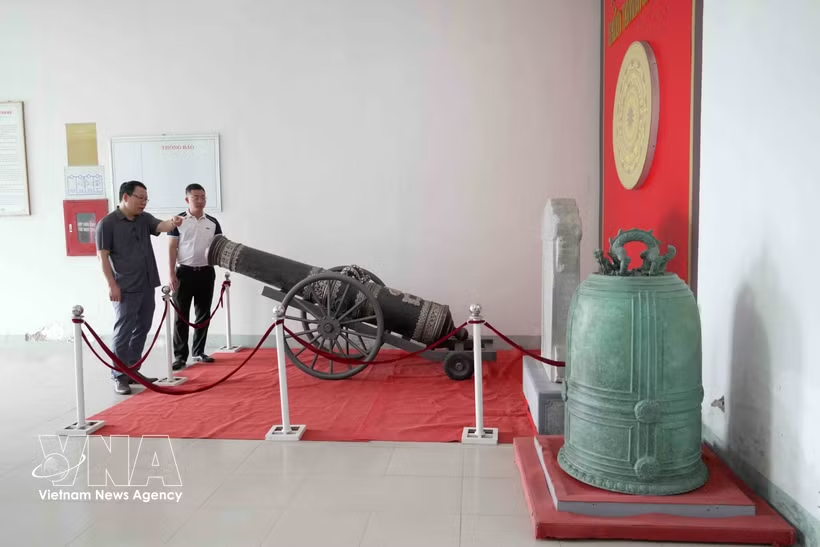
“Bao Quoc An Dan Dai Tuong Quan” cannon set and Roi Pagoda Bell are stored in Ha Tinh Museum (Photo: VNA)

Hanoi (VNA) – The reconstruction of Ha Tinh Museum, which began in December 2025, is considered an urgent effort to preserve and showcase the province’s fading cultural treasures before they are lost to time.

Inadequate preservation space for heritage

For generations, Ha Tinh has prided itself on its deep cultural roots and a treasure trove of valuable documentary heritage. But there’s a big problem: tonnes of important artefacts, including royal decrees and ancient manuscripts, are still scattered around family homes or locked away in private collections.

Truong Luu commune is now home to three documentary heritages recognised by UNESCO under the Memory of the World Register for Asia and the Pacific, namely the Phuc Giang School woodblocks, Hoang Hoa Su Trinh Do (royal envoy journey records), and the Han-Nom documents of Truong Luu village.

These priceless items are now “temporarily stored” in cramped spaces lacking proper fire suppression systems and humidity controls. Exposed to heat, moisture, and the slow wear of time, the treasures risk becoming damaged.

Professor and Academician Nguyen Huy My, a 16th-generation descendant of the Nguyen Huy lineage, shared: “This is a world-class heritage, but it has not been preserved under ideal conditions. Limited conservation funding has left us deeply concerned about its deterioration due to weather impacts. Having an ideal preservation space is the greatest wish of our family line.”

The same situation is happening at the existing Ha Tinh Museum, which is crammed with more than 14,000 artefacts. National treasures like the “Bao Quoc An Dan Dai Tuong Quan” cannon set and the massive Roi Pagoda Bell remain in poor conditions that provide minimal real protection.
vnanet-vna-potal-ha-tinh-no-luc-bao-ve-di-san-va-bao-vat-quoc-gia-8685297.jpg
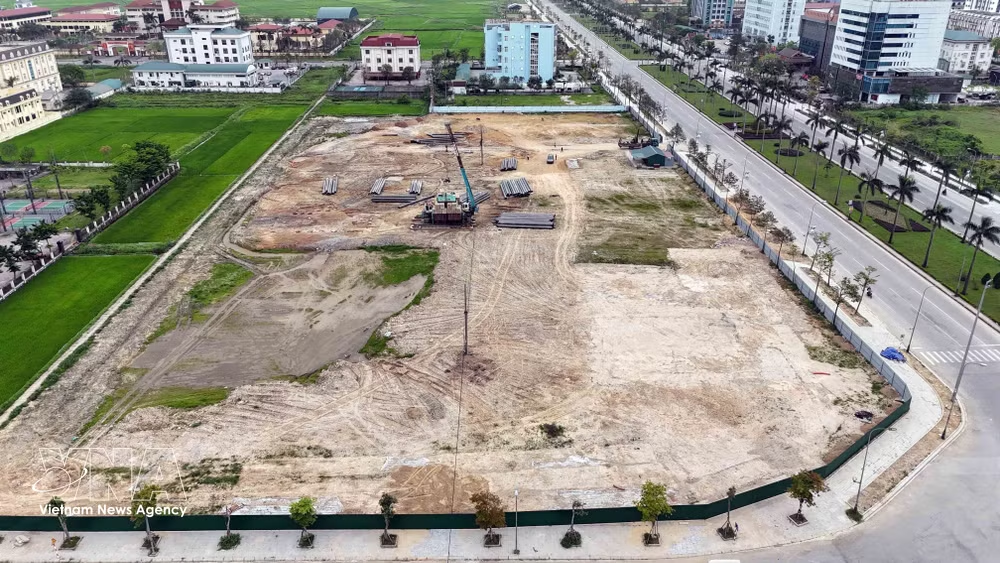
Construction site for Ha Tinh Museum (Photo: VNA)

According to Director Dau Khac Toan, the museum has been forced to rely on manual preservation techniques due to the lack of specialised equipment. On top of that, the tiny exhibition space makes it almost impossible to let visitors see these cultural gems. The reconstruction project is therefore considered a golden chance to finally fix the preservation mess, unlocking greater value from Ha Tinh’s historical legacy.

Accelerating the project

To fix these shortcomings, the Ha Tinh Museum reconstruction project, with a total investment of 305 billion VND (11.7 million USD), began on December 19, 2025. The new four-story main building is designed as a modern setup equipped to meet the stringent standards of heritage conservation.

After nearly four months of work, roughly 80% of site levelling and 60% of piling have been completed. Despite early setbacks from site clearance delays and poor weather, contractors are hustling hard to catch up.

Duong Dinh Anh, representing the provincial project management board for transport and urban development, said contractors have been told to update detailed timelines, prioritise the project’s critical path, and ensure everything is completed by the end of 2026.

When it’s complete, the new museum will provide proper storage and care for over 14,000 artefacts and many valuable documentary collections, while hosting well-organised exhibitions for both researchers and the public to enjoy.

Modern facilities will not only better preserve artefacts but also promote their heritage values, turning the museum into an attractive cultural and educational destination, said Dr Tran Phi Cong, Deputy Director of the museum./.
VNA

See more

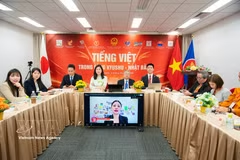
At the event “Vietnamese Language in the heart of Kyushu, Japan” (Photo: VNA)

Vietnamese in Japan revive mother tongue among young generations

While the number of Vietnamese-origin children in Japan is surging, opportunities to actually speak Vietnamese in daily life are vanishing fast. Many children can understand the language but default to Japanese in response, gradually relegating their mother tongue to a secondary role, sometimes even treating it as a “second foreign language” inside their own houses.

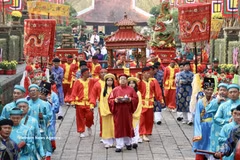
A tribute to Hung Kings in Ho Chi Minh City (Photo: VNA)

Hung Kings’ Commemoration Day 2026 to spread sacred values, foster national unity

Following the merger of Phu Tho, Vinh Phuc, and Hoa Binh provinces into the new Phu Tho province last year, the Hung Kings Temple Festival has taken on heightened significance. It now serves not only as a tribute to the ancestral homeland but also a unified cultural platform that extends sacred ancestral values to Vietnamese communities at home and abroad.

A traditional art performance at Bach Ma temple in Hanoi (Photo: VNA)

Traditional arts hold untapped economic power

Traditional arts embody deep aesthetic values, worldviews, and national identity, shaping the country’s distinctive “aesthetic identity” and foundational cultural tastes

A performance at the opening ceremony of the Hung Kings Temple Festival and the 2026 Ancestral Land Culture and Tourism Week on late April 17 (Photo: VNA)

Hung Kings Temple Festival, associated tourism week kick off

The annual festival serves as a major national cultural event, offering an opportunity for people across Vietnam and overseas Vietnamese communities to pay tribute to their ancestors, express gratitude, and strengthen the great national solidarity.

A ritual at Hue Nam Temple Festival (Photo: VNA)

Hue Nam Temple Festival: From imperial relic to distinctive cultural celebration in Hue

Historically known as Ngoc Tran Son Tu, the temple was renamed Hue Nam during the reign of King Dong Khanh in the late 19th century, symbolising royal gratitude to the Mother Goddess. It is also the only temple in Hue that harmoniously combines royal ceremonial elements with folk religious practices, creating a distinctive blend of court ritual and popular belief.

Participants in the 20th Cong hien (Devotion) Awards presentation ceremony in Hanoi on April 15 (Photo: VNA)

Devotion Awards mark two decades of honouring excellence in music, sports

Nguyen Thien Thuat, Editor-in-Chief of the The Thao & Van Hoa newspaper and Head of the organising board of the awards, said, noting that their achievements reflect the spirit of the Politburo’s Resolution No. 80, which emphasises preserving national cultural values while selectively absorbing the essence of world culture.

Artisans and students take part in cultural activities and exchanges in the Xoan singing performance space at Hung Lo ancient communal house in Phu Tho province (Photo: VNA)

Ancestral legends revived through contemporary performance

Beyond cultural value, well-organised festival programmes linked with tourism and media can contribute to the development of cultural industries and enhance Vietnam’s cultural soft power, positioning heritage-based events as distinctive national cultural brands in the international arena.

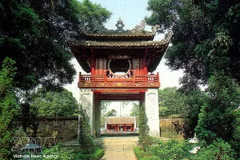
Khue Van Cac (Khue Van Pavilion) stands as a defining cultural symbol of Hanoi, closely associated with Vietnam’s long-standing tradition of valuing education and honouring knowledge. (Photo: VNA)

Greater efforts needed for heritage to shape Hanoi’s identity

As suggested by UNESCO experts, heritage should be approached as an integrated system encompassing space, people and everyday life. This perspective can inform urban planning, cultural tourism development and the creation of clear economic drivers.

Participants at the gathering (Photo: VNA)

Lao, Cambodian students welcome traditional New Year in Ho Chi Minh City

In his speech, Vice Chairman of the municipal People’s Committee Nguyen Manh Cuong said the municipal Party organisation, authorities and people always value the close ties and solidarity among Vietnam, Laos and Cambodia. He described the three nations’ longstanding ties, forged through shared hardships, as an invaluable spiritual asset and a bedrock for sustainable development.