Hung Kings’ Commemoration Day 2026 to spread sacred values, foster national unity

Following the merger of Phu Tho, Vinh Phuc, and Hoa Binh provinces into the new Phu Tho province last year, the Hung Kings Temple Festival has taken on heightened significance. It now serves not only as a tribute to the ancestral homeland but also a unified cultural platform that extends sacred ancestral values to Vietnamese communities at home and abroad.

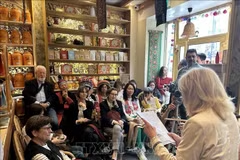
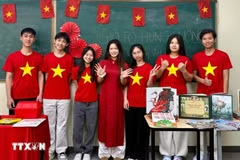
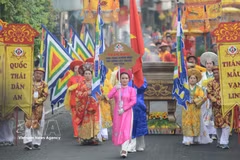
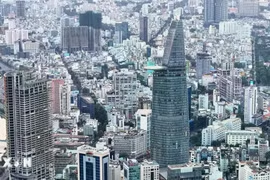
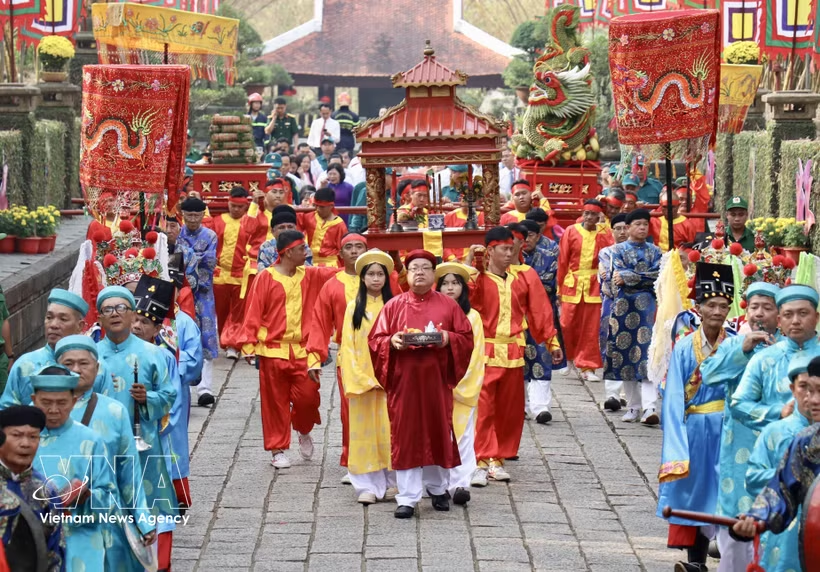
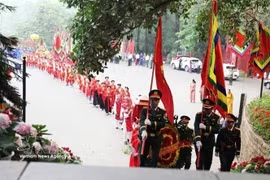
A tribute to Hung Kings in Ho Chi Minh City (Photo: VNA)

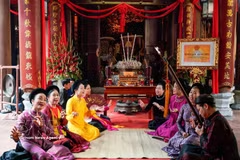
Phu Tho (VNA) - After years of refinement, the annual Hung Kings’ Commemoration Day and Hung Kings Temple Festival have solidified its status as a flagship national event, blending solemn, reverent, and exemplary ceremonial rites with vibrant, engaging festivities that capture the rich essence of Vietnam’s ancestral heritage.

Following the merger of Phu Tho, Vinh Phuc, and Hoa Binh provinces into the new Phu Tho province last year, the Hung Kings Temple Festival has taken on heightened significance. It now serves not only as a tribute to the ancestral homeland but also a unified cultural platform that extends sacred ancestral values to Vietnamese communities at home and abroad.

To address growing public demand and better accommodate pilgrims and visitors, provincial departments and agencies have moved swiftly to finalise detailed plans for the Hung Kings’ Commemoration Day, the Hung Kings Temple Festival, and the Ancestral Land Culture and Tourism Week 2026.

The ceremonial segment will unfold with solemnity and reverence, featuring traditional rituals such as incense offerings to the Hung Kings; ceremonies honouring Lac Long Quan, the legendary national father; tributes to ancestral mother Au Co; a floral tribute at the bas-relief depicting President Ho Chi Minh with Vanguard Division officers and soldiers, incense offerings by 148 communes and wards, and simultaneous ceremonies on the 10th day of the third lunar month at Hung Kings-related relic sites nationwide.

A key highlight this year is the continued push for every Vietnamese family to prepare a commemorative offering tray on the occasion of the Hung Kings’ death anniversary.

The festive part will be staged on an expanded scale, reflecting the integration of the newly merged province. It creates a dynamic, multi-coloured cultural space that weaves together distinctive cultural values within a single festival setting, contributing to preserving heritage while fostering exchanges, mutual learning, and deeper community bonds. The format follows broader regional tourism trend and capitalises on the area’s rich cultural and historical assets.
vnanet-nguyen-huy-ngoc.jpg
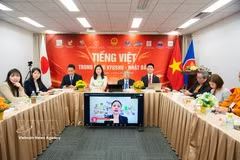
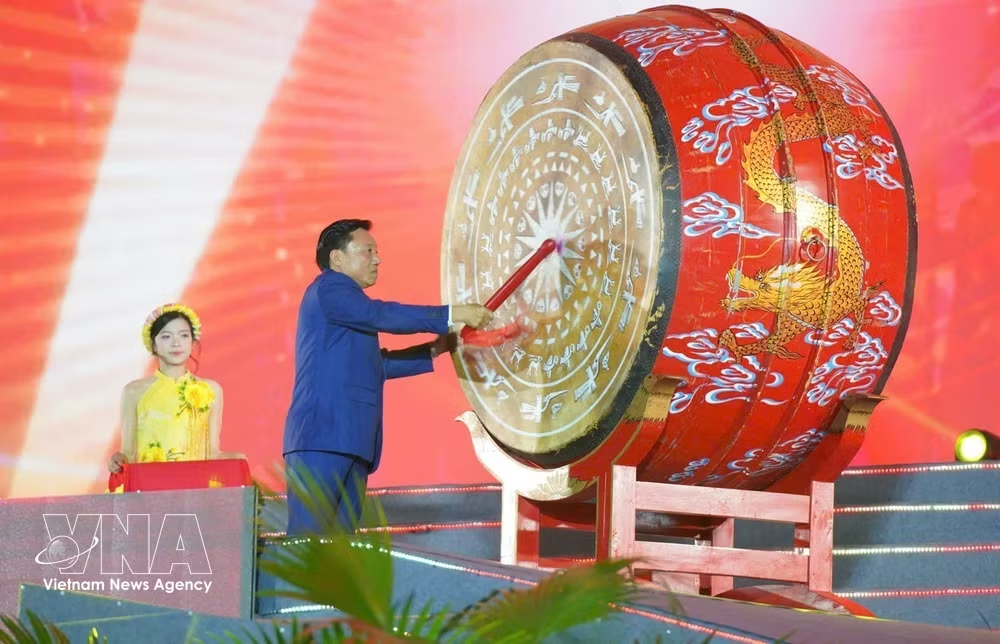
At the opening of Hung Kings Temple Festival and the Ancestral Land Culture and Tourism Week 2026 (Photo: VNA)

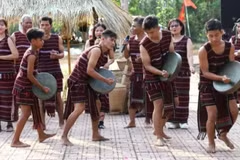
Activities during the Ancestral Land Culture and Tourism Week will vividly recreate the spiritual practices and creative labour of earlier generations. Highlights will include bronze drum performances, Xoan and Soong Co singing performances, Muong folk songs, street festivals, cultural camps of 18 commune and ward clusters, competitions for making traditional banh chung (square glutinous rice cakes) and banh day (pounding round sticky rice cakes), demonstrations of ancient crafts, and folk sports such as boat racing, crossbow shooting, and traditional wrestling.

Infrastructure, environmental landscaping, security, and traffic management preparations have been made early by relevant agencies to prevent congestion and guarantee absolute safety for both domestic and foreign visitors.

Construction and renovation projects at the temple complex have been accelerated and completed on schedule. These include the inauguration of the restored communal guest house, the new stairway to Au Co Temple, renovation of Cay Khe Lake, upgrades to transportation routes, refurbishment of public sanitation facilities, improvements to lighting, greenery, environmental landscaping, and tourism support services.

With meticulous planning and strong community involvement, the Hung Kings’ Commemoration Day and Hung Kings Temple Festival 2026 are set to reaffirm their role as a sacred focal point for the Vietnamese people, honouring the foundational legacy of the Hung Kings while reinforcing national unity, bridging cultural regions, and driving sustainable, identity-driven development in the new era./.
VNA

See more

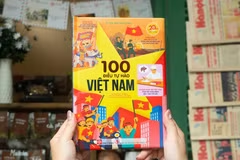
“100 Dieu tu hao Viet Nam” book (Photo: nhandan.vn)

Book introduces 100 remarkable facts about Vietnam

The illustrated book “100 Dieu tu hao Viet Nam” (100 Proud Facts about Vietnam) compiles 100 highlights of Vietnam’s legacy across 11 major themes, including heroic history, cultural beauty, literature and the arts, medicine, education, architecture, science, cuisine and community values.

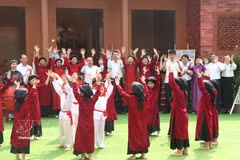
Children perform Xoan folk singing at the cultural camp. (Photo: VNA)

Hung Kings festival opens with vibrant cultural, tourism activities in Phu Tho

Beyond its role as a sacred national commemoration, the event helps promote cultural values, strengthen national unity and enhance cultural exchanges. A notable feature is the flexible organisation in 18 commune and ward clusters, encouraging the localities' participation and enriching the festival’s content.

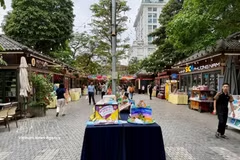
A corner of the Book Street in Hanoi (Photo: VNA)

Hanoi celebrates Reading Culture Day with book street activities

Organised by the Book Street’s management board in collaboration with publishers and distributors, the programme will brings together 14 publishing and distribution units across 15 booths, offering readers access to a rich and diverse selection of book titles spanning literature, children’s books, life skills, economics, history, science-technology and education, among others.

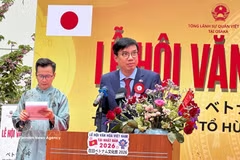
Vietnam’s Consul General in Osaka Nguyen Truong Son speaks at the 9th Vietnam cultural festival in Osaka on April 19, 2026. (Photo: VNA)

Vietnam cultural festival in Osaka draws tens of thousands of attendees

Saito Naoki, Mayor of Ikuno Ward – where the event took place, expressed his pleasure at the rapid growth of the Vietnamese community in the area. He praised such cultural festivals for helping Vietnamese residents maintain their traditions while fostering mutual understanding and closer ties with Japanese locals.

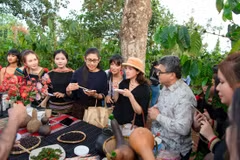
Urawadee Sriphiromya, Thai Ambassador to Vietnam (third from left); Camila Polo Florez, Colombodian Ambassador to Vietnam (C); and Saadi Salama, Ambassador of Palestine to Vietnam (fifth from left), experience indigenous coffee culture in a coffee garden in Dak Lak. (Photo: doanhnghiepkinhtexanh.vn)

World Coffee Heritage Forum: A dialogue connecting coffee culture, knowledge

The recognition of "The knowledge of coffee cultivation and processing in Dak Lak” as a National Intangible Cultural Heritage marks an important milestone. It affirms the value of indigenous knowledge, creative labour, and the harmonious connection between local livelihoods, culture and nature in the Central Highlands.

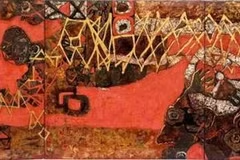
The artwork "Harvest Day" by Doan Thi Thu Huong. (Photo: cand.com.vn)

Vietnam to join Venice Art Biennale with first national showcase

As Vietnam makes its debut at the Biennale, the exhibition “Vietnam: Art in a Global Flow” does not seek to assert its position through scale or grand statements, but rather opens up a space for meaningful artistic dialogue - an invitation to listen to subtle voices, contemplate in stillness, and reflect on the capacity to nurture sustained creative energy in a dynamic and ever-evolving art world.

Viet Youth Readiness Hub debuts at the event (Photo: VNA)

Vietnamese Canadian youth hub launched to fight mother tongue erosion

The Viet Youth Readiness Hub is seen as a dedicated platform to connect, support, and empower Vietnamese-Canadian youth. It aims to emerge as a central force to host social events, advance heritage education, foster exchange and integration among young Vietnamese in Canada.

At the event “Vietnamese Language in the heart of Kyushu, Japan” (Photo: VNA)

Vietnamese in Japan revive mother tongue among young generations

While the number of Vietnamese-origin children in Japan is surging, opportunities to actually speak Vietnamese in daily life are vanishing fast. Many children can understand the language but default to Japanese in response, gradually relegating their mother tongue to a secondary role, sometimes even treating it as a “second foreign language” inside their own houses.

A traditional art performance at Bach Ma temple in Hanoi (Photo: VNA)

Traditional arts hold untapped economic power

Traditional arts embody deep aesthetic values, worldviews, and national identity, shaping the country’s distinctive “aesthetic identity” and foundational cultural tastes