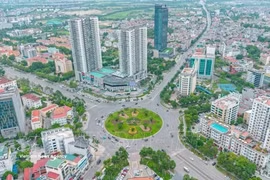
Bac Ninh (VNA) – The northern province of Bac Ninh province is working to upgrade technical infrastructure, improve residents’ quality of life and accelerate digital transformation while building a dynamic and professional workforce capable of meeting the demands of modern urban governance.
These efforts are part of the province’s preparations to become a centrally run city, with Bac Ninh officially set to assume this status from September 20, 2026.
Beyond meeting the requirements for infrastructure, population and socio-economic development, the province is focusing on strengthening the capacity of local administrations, improving public services and better responding to the needs of residents and businesses.
In Hiep Hoa commune, local authorities are reviewing infrastructure conditions and preparing an investment roadmap for 2026–2030 as part of a plan to establish Hiep Hoa ward.
Bui Huy Khanh, Secretary of the Hiep Hoa Party Committee, said the commune has reviewed relevant criteria and prepared conditions for its next stage of development.
Hiep Hoa plans to expand urban areas, social housing projects and concentrated commercial and service zones. It also aims to develop civilised streets that are “bright, green, clean and beautiful” and explore a night-time service economy linked to the local cultural identity.
Digital transformation has been identified as a key task to modernise leadership and administration methods. The commune launched a “100-day digital transformation” plan in August. It is also expanding smart public broadcasting, extending online meetings to village Party cells and equipping local authorities with digital devices to support the processing of administrative procedures, Khanh added.
In Nenh ward, the need for stronger urban governance is particularly evident amid rapid industrialisation. The ward is home to four industrial parks currently operating and major projects under construction such as the Quang Chau 2 Industrial Park and the second phase of the Viet Han Industrial Park. Nenh contributes about 30% to the province’s growth.
However, rapid population growth is placing heavy pressure on urban infrastructure. While the ward has about 60,000 permanent residents, its temporary population has reached around 130,000, creating urgent demand for transport, housing, schools and social facilities.
Le Hoang Bach, Chairman of the Nenh People’s Committee, said the ward plans to develop under a compact urban model with high-rise apartment complexes and modern urban areas while still reserving land for schools, green spaces and commercial facilities serving workers seeking long-term residence.
Nenh is also accelerating the digitisation of grassroots data, studying the use of artificial intelligence in public administration and applying key performance indicators (KPIs) to assess officials’ responsibilities and performance in a fair and transparent manner, Bach noted.
Meanwhile, Viet Yen is working to meet the criteria for a Tier-II urban area. Despite inheriting infrastructure from the former administrative centre, the ward has yet to meet two criteria concerning population density and average per capita income. Rapid urbanisation has also increased pressure on land and construction order management.
Tran Manh Xam, Vice Chairman of the Viet Yen People’s Committee, said industrial development will remain the main growth driver while social welfare will receive greater attention. The ward aims to eliminate poor households by 2027 as part of its sustainable development goals.
Building a workforce for modern governance

A civil servant guides a resident in Tam Son ward, Bac Ninh province, through administrative procedures. (Photo: VNA)
Alongside infrastructure investment and digital transformation, Bac Ninh considers developing a qualified contingent of officials and civil servants a key factor in improving the effectiveness and efficiency of state management during urbanisation.
Nguyen Dang Khang, Deputy Director of the provincial Department of Home Affairs, said personnel quality will determine the effectiveness and efficiency of the administrative apparatus and the quality of services provided for residents as urbanisation accelerates.
Bac Ninh is moving toward a streamlined, professional, modern, transparent and development-oriented urban administration model. It plans to continue reorganising agencies according to job positions, with particular attention to advisory personnel and commune-level civil servants who directly handle residents’ daily affairs.
The province is also investing efforts in specialised training in urban governance, digital government, data management and land-use planning, while seeking to attract high-quality personnel, including experts and scientists in technology, innovation and public administration.
Khang stressed that officials in the new period should have strong political qualifications, professional ethics, solid expertise and digital skills. More importantly, they should stay close to residents and measure their performance by the effectiveness of public services./.