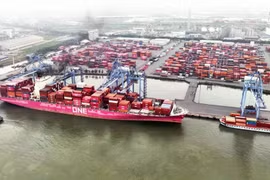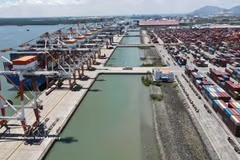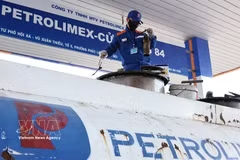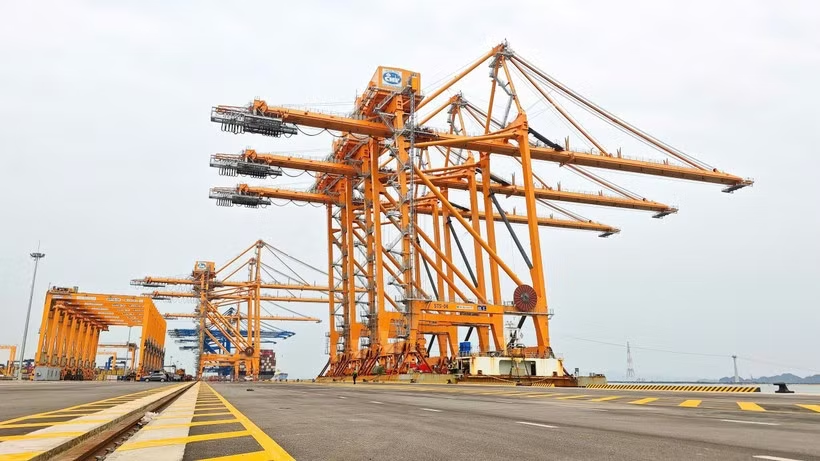
Despite global economic uncertainties and rising trade tensions in many countries and regions, Vietnam’s import-export value achieved positive results in the first half of 2025. Exports continued to grow at double-digit rates, while the trade balance maintained a surplus.
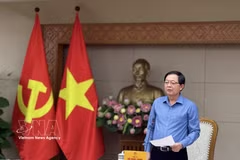
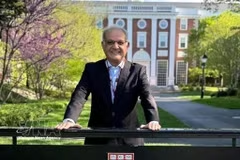
According to Tran Thanh Hai, Deputy Director of the Agency of Foreign Trade under the Ministry of Industry and Trade, total import-export turnover in the period was estimated at 426–430 billion USD, up about 15.5–15.8% year-on-year. Of this, export value was around 215–217 billion USD (up 13.8–14%), and imports were 211–213 billion USD (up 17–17.2%). The trade surplus was estimated at 3.4–4 billion USD.
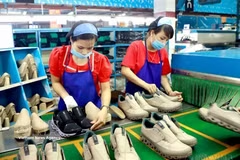
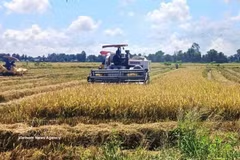
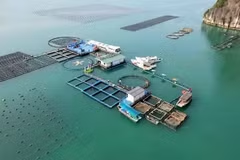
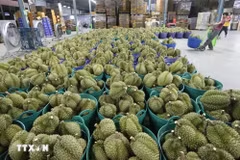
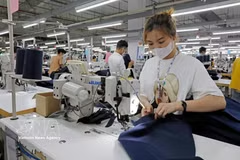
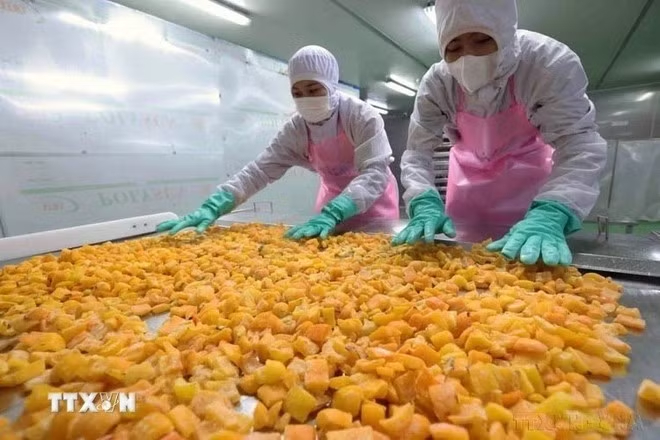
According to insiders, export items have achieved fairly good and balanced growth across both industrial products (such as electronics, textiles and garments, footwear, wooden products, chemicals, etc.) and agricultural goods. Although there was a slight decline in fruit and vegetable exports, coffee recorded very strong growth. Overall, the country’s export performance and targets in the first six months showed highly positive results.
However, from the second quarter, Vietnam has been facing major challenges. The United States announced a 46% countervailing tariff on all Vietnamese products, not just on specific items or groups. This poses a significant challenge for all categories of Vietnamese exports, from industrial goods to agricultural products.
Meanwhile, global geopolitical developments remain complex, further affecting trade activities. This presents considerable difficulties for the second half of 2025, with Vietnamese authorities working to find solutions.
Hai said Vietnam will strive to negotiate with the US to achieve a mutually acceptable tariff rate. At the same time, market expansion and diversification will continue to be key tasks. Vietnam is also ready to pursue negotiations on free trade agreements with regions such as South Asia, the Middle East, Africa, and Latin America — markets with large populations and growing demand for Vietnamese products.
Efforts must also be made to enhance communication to help businesses maximise benefits from free trade agreements (FTAs), particularly by ensuring proper certificates of origin for exports.
Going forward, it is necessary to further promote trade promotion activities. Through regular monthly meetings with Trade Offices, as well as trade fairs, exhibitions, and business-matching events supported and guided by the Ministry of Industry and Trade, enterprises, associations, and localities have been able to expand their markets.
In addition, other aspects such as strengthening information provision, training, workshops, and communication for enterprises and associations have also been given attention by the Ministry of Industry and Trade in recent times. This requires the active involvement and support of state management agencies and business associations in order to make better use of opportunities.
Hai stressed that in addition to taking advantage of FTAs, Vietnam must establish a sustainable and transparent production foundation. These are crucial factors in today’s trade context to demonstrate that Vietnamese goods are not illegally transshipped or involved in origin fraud.
Only in this way can trade relations remain both healthy and sustainable, he noted./.