Deputy PM urges stronger push for smart city development

The Deputy PM applauded the task force’s preparation, stressing that smart urban development is not a choice but an inevitable trend for countries aiming for sustainable growth, improving the quality of life for people, and strengthening urban governance and operation.

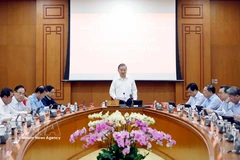
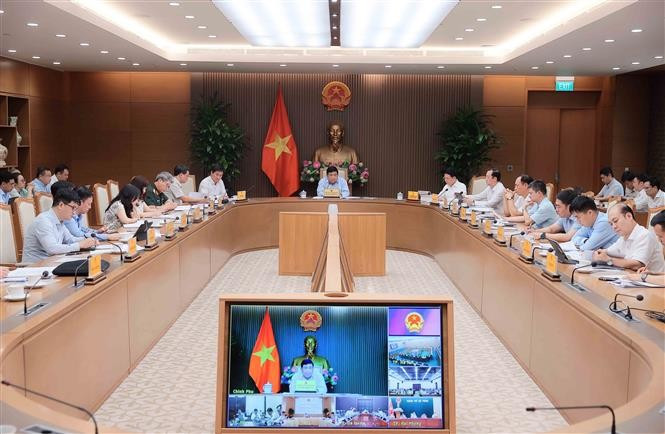
Deputy Prime Minister Nguyen Chi Dung chairs the first meeting of the inter-agency task force for coordinating smart city construction and development in Hanoi on July 16. (Photo: VNA)

Hanoi (VNA) - Greater focus on smart urban development is key to advancing the digital and urban economy, Deputy Prime Minister Nguyen Chi Dung stated at the first meeting of the inter-agency task force for coordinating smart city construction and development in Hanoi on July 16.

The Deputy PM applauded the task force’s preparation, stressing that smart urban development is not a choice but an inevitable trend for countries aiming for sustainable growth, improving the quality of life for people, and strengthening urban governance and operation.

If developed effectively, the digital economy can significantly boost national growth, he noted, adding that with proper planning and the integration of IT and digital transformation, the urban economy can also become a strong driver of economic development.
dung.jpg
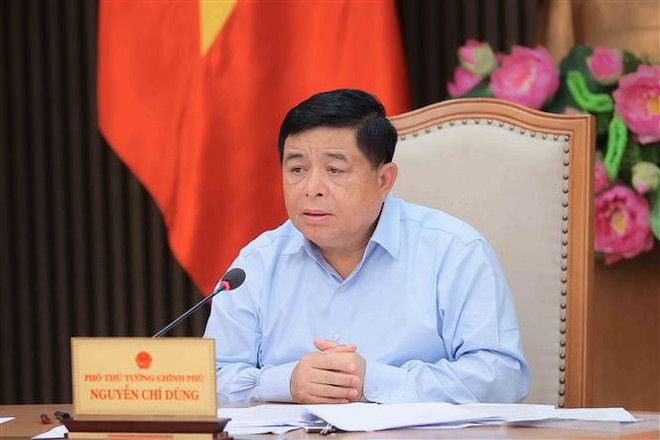
Deputy Prime Minister Nguyen Chi Dung speaks at the meeting (Photo: VNA)

According to the deputy PM, the formation of the inter-agency task force is timely and crucial, serving as a central coordinator to advance institutional development, resolve arising challenges, and assist localities, especially the six centrally-run cities, in implementing pilot smart urban projects.

He assigned the Ministry of Construction to lead and coordinate with the Ministry of Science and Technology and other relevant ministries and agencies to draft a decree under fast-track procedures and submit it to the Government before August 15.

The meeting gave the go-ahead to the establishment of a task force responsible for coordinating and guiding eligible localities in implementing smart city development plans in line with the established roadmap. The task force will also supervise the implementation of relevant projects, and report to the Prime Minister on arising challenges, and propose solutions and policy improvements.

Delegates also reviewed a preliminary report on the implementation of Vietnam’s sustainable smart urban development project for 2018–2025, with a vision to 2030 (Project 950), and provided input on the Government’s draft decree on smart city development.

Ministries, agencies, and localities are required to develop their action plans based on assigned functions and responsibilities and submit them to the task force before July 25. They are also asked to thoroughly review the draft decree and send their feedback to the Ministry of Construction no later than July 20.

The Ministry of Construction is asked to coordinate with the Government Office to collect feedback on the draft decree, and conduct study tours to learn experience of countries with successful smart urban development. Regarding the review of Project 950, the Ministry of Construction is tasked with working with the Ministry of Science and Technology to prepare for the final evaluation by the end of this month.

The Deputy PM called for a clear roadmap to promote smart city-related industries, aiming to boost domestic production and reduce reliance on imports.

He proposed integrating digital transformation with smart city development by selecting several pilot communes or wards and establishing a clear investment roadmap to avoid a “scattered and overlapping” approach that could lead to waste, delays, and missed opportunities for localities.

He also highlighted the role of public-private partnerships in smart urban development./.
VNA

See more

Trio of core drivers of new growth model highlighted at 14th National Party Congress

Trio of core drivers of new growth model highlighted at 14th National Party Congress

Member of the Party Central Committee and Minister of Science and Technology Nguyen Manh Hung emphasised that in moving from middle-income to high-income status, Vietnam must rely on science and technology, innovation, and digital transformation. These three drivers have been expanded and redefined by the Party under a new approach, creating broader development space and unlocking new resources for growth. With this trio, Vietnam has the potential to achieve double-digit growth.

A view of the site where the Ninh Thuan 1 Nuclear Power Plant is located in Phuoc Dinh commune, Khanh Hoa province (Photo: VNA)

Gov’t rolls out communication scheme for nuclear energy development

By 2027 around 60% of leaders, managers, civil servants and public employees in relevant ministries and localities will acquire basic knowledge of nuclear energy development and application. In parallel, the professional capacity of reporters, editors and information officers covering the sector will be strengthened.

According to Minister of Science and Technology Nguyen Manh Hung, Vietnam has established a new framework in which science, technology, innovation and digital transformation are judged by outcomes, with socio-economic effectiveness as the core benchmark. (Photo: baochinhphu.vn)

Science, technology and innovation elevate Vietnam’s standing in new era

The most significant achievement in recent years has not been a single technological success, but a fundamental shift in awareness, mindset and ways of doing. Vietnam has established a new framework in which science, technology, innovation and digital transformation are judged by outcomes, with socio-economic effectiveness as the core benchmark.

Dr. Heng LiHong, Permanent Vice Chairman and Secretary-General of the Vietnam-Cambodia Business Association. (Photo: VNA)

New growth model helps position Vietnam on global technology map: expert

Heng LiHong, who is also a member of the Standing Board of the Business Association of Overseas Vietnamese (BAOOV), expressed his confidence that this new growth model will help Vietnam move beyond a development path reliant on low-cost labour and resource extraction, enabling the country to gradually climb to higher levels in the global value chain.

Deputy Prime Minister Nguyen Chi Dung receives a delegation of Seoul Semiconductor Co., Ltd. led by its CEO Lee Chung-hoon in Hanoi on January 16. (Photo: Government Portal)

Vietnam seeks stronger sci-tech cooperation with international partners

Informing the UN official about some of Vietnam’s achievements in sci-tech development, innovation, and digital transformation, Deputy PM Nguyen Chi Dung highlighted that the country and the UN have recorded progress in their sci-tech relations, with cooperation in strategic areas matching global trends and bilateral cooperation demand.

The ASEAN Digital Awards 2025 ceremony is held in Hanoi on January 15 (Photo: VietnamPlus)

Vietnam wins three awards at ASEAN Digital Awards 2026

In the digital startup category, MedCAT’s Idus platform, developed by MedCAT, won the gold award. Designed for reading, classifying and structuring documents, the platform has been applied in banking, public administration and healthcare, supporting automated insurance claims processing, smart healthcare services and the development of personal electronic health records.

Illustration of part of the digital technology and mixed-use park project in Hanoi Tay Tuu and Phu Dien wards. (Photo: FPT)

Hanoi breaks ground on digital technology, mixed-use park

The digital technology and mixed-use park in Hanoi is envisioned as a key nucleus of the capital’s innovation ecosystem, aligned with its goal of becoming a major national hub for science, technology and the digital economy.

Illustrative photo (Photo: Ampshireflag)

Promoting cooperation aligned with ASEAN digital priorities

The sixth ASEAN Digital Senior Officials’ Meeting (ADGSOM) and related meetings took place from January 12 to 14 in Hanoi. Delegations exchanged views and reviewed progress in priority cooperation areas, focusing on enhancing coordination and harmonisation of digital policies across ASEAN.