Diplomacy must connect global resources for national development: Ambassador

Vietnamese Ambassador to France Trinh Duc Hai stressed the importance of translating high-level political trust and cooperation frameworks into practical programmes, projects and measurable outcomes that directly support national development and benefit people and businesses. This requires representative offices to stay aligned with Vietnam's development priorities while understanding the strengths, interests and operating environments of host countries to identify long-term opportunities, connect the right partners and persistently advance cooperation initiatives.

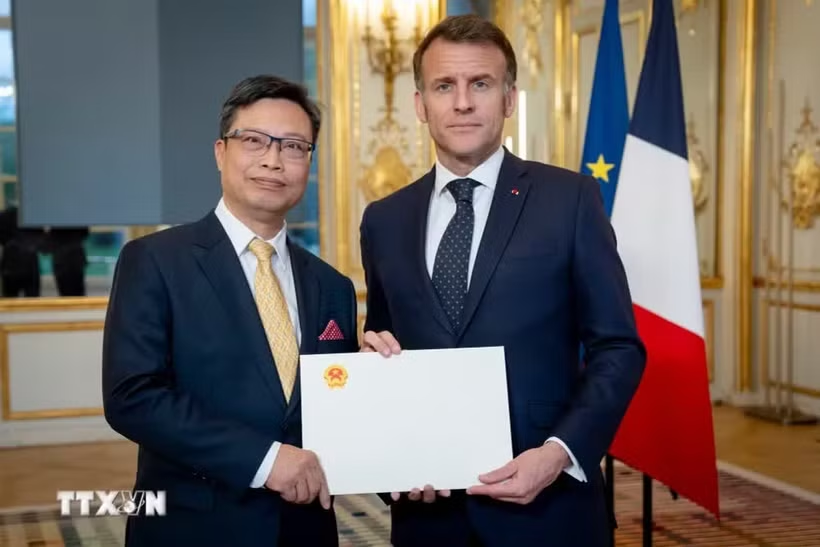
Vietnamese Ambassador to France Trinh Duc Hai (L) presents his credentials to French President Emmanuel Macron in March 2026. (Photo published by VNA)

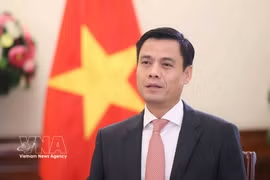
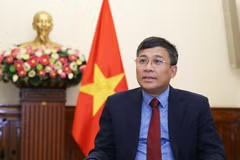
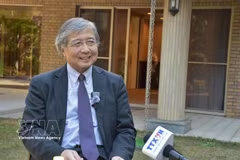
Paris (VNA) - As Vietnam enters a new phase of development, diplomatic missions abroad must become more proactive in identifying trends, forecasting developments and advising on long-term cooperation priorities, stated Vietnamese Ambassador to France Trinh Duc Hai.

Speaking to Vietnam News Agency correspondents in Paris ahead of the 33rd Diplomatic Conference, Hai held that by doing so, the diplomatic sector can maintain its pioneering role in preserving peace and stability while attracting external resources for national development.

The ambassador noted that Vietnam still has significant untapped cooperation potential with international partners in areas including the economy, science and technology, education, culture and innovation.

Diplomatic missions abroad should therefore go beyond traditional political and diplomatic functions to become trusted links connecting Vietnamese localities, businesses, universities and research institutes with foreign partners.

He stressed the importance of translating high-level political trust and cooperation frameworks into practical programmes, projects and measurable outcomes that directly support national development and benefit people and businesses.

This requires representative offices to stay aligned with Vietnam's development priorities while understanding the strengths, interests and operating environments of host countries to identify long-term opportunities, connect the right partners and persistently advance cooperation initiatives.

Against the backdrop of the Fourth Industrial Revolution, Hai highlighted diplomacy's role in linking Vietnam with global knowledge networks, innovation ecosystems and leading science and technology centres.

Expanding cooperation with research institutes, universities, technology firms and international experts will help bring advanced knowledge, technologies and development models to Vietnam, creating new momentum for rapid and sustainable growth, he held.

Regarding external resources mobilisation, he said the Vietnam-France Comprehensive Strategic Partnership has created favourable conditions for expanding cooperation in sectors critical to Vietnam's development.

France has strong capabilities in transport infrastructure, aerospace, science and technology, artificial intelligence (AI), digital and green transformation, innovation, energy, healthcare and high-quality human resources development - all areas that align closely with Vietnam's development priorities and offer strong complementarities.

Many leading French companies are keen to deepen their participation in Vietnam's major projects in energy, transport infrastructure, aerospace, healthcare, AI and digital transformation.

The ambassador said the priority is to identify strategic sectors and focus resources on implementing high-impact projects that generate broad economic spillovers. Well-prepared projects that match Vietnam's needs with French strengths will create fresh momentum for bilateral ties and deliver tangible development benefits.

Beyond investment and financing, he emphasised the need to prioritise human resources training, knowledge transfer, governance expertise, technology absorption and localisation, and greater integration of Vietnamese enterprises into global production and supply chains.

The Vietnamese Embassy in France, he said, will continue working closely with ministries, localities and businesses to identify partners, develop projects and resolve implementation challenges, helping transform cooperation potential and commitments into concrete, sustainable results that support Vietnam's industrialisation and modernisation.

On improving the effectiveness of Vietnam's missions abroad, Ambassador Hai said reform must begin with new thinking and working methods. Representative offices need to become more proactive, responsive and professional in research, policy advice, networking and implementing diplomatic activities.

He underlined that every diplomat should not only understand the host country but also be able to identify cooperation opportunities, connect resources and accompany Vietnamese localities, businesses and citizens in international integration.

Missions abroad should also strengthen external communications, cultural diplomacy and engagement with overseas Vietnamese communities, helping project the image of a peaceful, stable, innovative and dynamic Vietnam that is a trusted partner and responsible member of the international community.

He added that Vietnam's prestige and standing are built not only on domestic achievements but also on its contributions to peace, cooperation and development regionally and globally. The true value of a mission abroad lies not merely in carrying out routine diplomatic duties, but in providing sound policy advice, effectively connecting partners and persistently advancing cooperation programmes until they deliver concrete outcomes.

This requires every diplomat to continuously strengthen political resolve, professional expertise, foreign language proficiency, research capabilities and adaptability to the evolving international environment, he stated.

According to the ambassador, when missions abroad become trusted bridges linking Vietnam with international partners and effectively support ministries, localities and businesses at home, they make a practical contribution to enhancing the country's international standing and reputation./.

VNA
See more

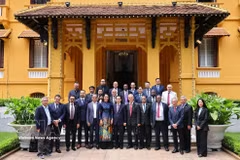
Minister of Foreign Affairs Le Hoai Trung and Vietnam’s honorary consuls abroad at the meeting (Photo: VNA)

Foreign Minister receives Vietnam's honorary consuls abroad

Minister of Foreign Affairs Le Hoai Trung congratulated the delegates on the conference's success and thanked the honorary consuls for their longstanding contributions to citizen protection, as well as trade, investment, education, tourism and cultural exchanges.

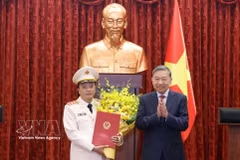
Party General Secretary and State President To Lam (R) presents the decision promoting Deputy Minister of Public Security Dang Hong Duc from the rank of Lieutenant General to Senior Lieutenant General. (Photo: VNA)

Deputy Public Security Minister Dang Hong Duc promoted to Senior Lieutenant General

Presenting the decision, Party General Secretary and State President To Lam, who is also Commander-in-Chief of the Armed Forces and Chairman of the National Defence and Security Council, said the promotion reflects the Party, State and people's trust in the armed forces and recognises Duc's contributions to the development of the People's Public Security force and national defence.

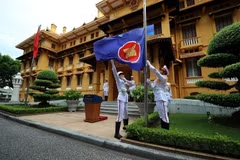
The ASEAN flag-hoisting ceremony takes place in Hanoi on July 31, 2026. (Photo published by VNA)

Flag-hoisting ceremony marks ASEAN’s 59th anniversary in Hanoi

Minister of Foreign Affairs Le Hoai Trung said ASEAN has grown from a historic decision to replace division with dialogue and confrontation with cooperation into a community of peace, progress, and shared prosperity, with an economy worth 3.9 trillion USD and a population of nearly 700 million.

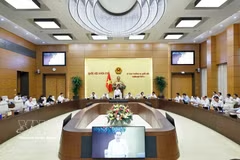
The National Assembly (NA) Standing Committee gives opinions on preparations for the NA first extraordinary session at its 4th session in Hanoi on July 8, 2026. (Photo: VNA)

First extraordinary session of 16th National Assembly to open on August 3

During the 16th National Assembly (NA)’s first extraordinary session, lawmakers will consider and decide on 33 agenda items, including the passage of 15 draft laws and four draft normative resolutions, provide first opinions on seven other bills, and deliberate on seven major national issues.

Party General Secretary and State President To Lam (right) and visiting Minister of Land, Infrastructure and Transport of the Republic of Korea (RoK) Kim Yun-duk. (Photo: VNA)

Party General Secretary and State President receives Korean minister

Vietnam attaches great importance to its relationship with the RoK and wishes to further foster the Comprehensive Strategic Partnership, especially in politics, economy, trade, investment, science and technology, culture, and people-to-people exchanges, said Party General Secretary and State President To Lam.

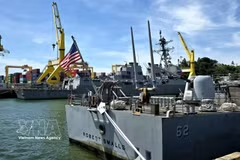
The guided-missile cruiser USS Robert Smalls (CG 62) and the guided-missile destroyer USS Shoup (DDG 86) dock at Tien Sa Port in Da Nang city. (Photo: VNA)

US Navy Carrier Strike Group visits Da Nang

The strike group consists of the flagship aircraft carrier USS George Washington, the guided-missile cruiser USS Robert Smalls (CG 62) and the guided-missile destroyer USS Shoup (DDG 86).

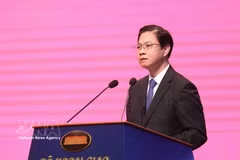
Deputy Minister of Foreign Affairs Ngo Le Van (Photo: VNA)

Local diplomacy proactively creates development space: Deputy FM

Deputy Minister of Foreign Affairs Ngo Le Van said Party, State and people-to-people diplomacy are now tightly coordinated at the local level. With support and coordination local foreign affairs agencies, more than 900 international agreements at the local level have been signed, renewed or kept in force, while over 2,500 international conferences and seminars have been licensed and staged in localities.

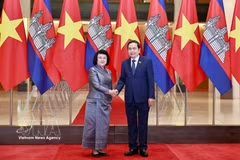
NA Chairman Tran Thanh Man (R) meets with President of Cambodian NA Samdech Maha Rathsapheathika Thipadei Khuon Sudary in Hanoi on July 28. (Photo: VNA)

Cambodian scholar spotlights strategic messages of traditional friendship with Vietnam

Leaders from both sides have demonstrated consistent political will to turn the motto of good neighbourliness, traditional friendship, comprehensive cooperation and long-term sustainability into concrete results, based on the principles of respect for sovereignty and territorial integrity and non-interference in each other’s internal affairs, according to Assoc. Prof. Dr. Neak Chandarith.

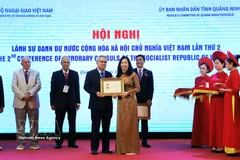
Deputy Minister of Foreign Affairs Le Thi Thu Hang (R) presents the “For the Cause of Vietnam’s Diplomacy” insignia and the Minister of Foreign Affairs’ certificates of merit to outstanding honorary consuls at the conference in Quang Ninh province on July 30. (Photo: VNA)

Vietnam expands honorary consul network to support development in new era

The foreign ministry said it will continue expanding the honorary consul network by identifying qualified candidates while providing them with updated information on Vietnam’s economic potential and investment opportunities, enabling them to make greater contributions to the country’s development in the new era.

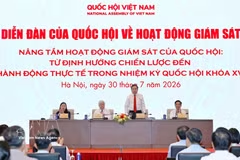
National Assembly Chairman Tran Thanh Man (standing) chairs the legislature's forum on supervision in Hanoi on July 30, 2026. (Photo: VNA)

Ultimate value of oversight lies in delivering tangible change: top legislator

Addressing the NA forum on supervision in Hanoi, the top legislator said it is one of the legislature's three constitutional functions. Supervision serves as a key mechanism for exercising control over State power, ensuring the strict implementation of the Constitution and the law, while also driving institutional reform, strengthening national governance and reinforcing public confidence.

Deputy Minister of Foreign Affairs Le Thi Thu Hang (in yellow) and participants in the Vietnam Summer Camp 2026. (Photo: VNA)

OV resources: From diplomacy's pioneering role to driver of local development

As an inseparable part of the Vietnamese nation, OVs represent a vital source of capital, knowledge, science and technology, management expertise, international networks and influence in their host countries. They are both beneficiaries of the State's support and protection policies and active contributors to Vietnam's foreign affairs, helping connect international resources with the country's and each locality's development needs.