Hanoi (VNS/VNA) - Vietnam needs a more comprehensive approach to the care economy to unlock its labour potential in this critical sector and elevate it as a core component of workforce development policy, experts said at a recent seminar in Hanoi.
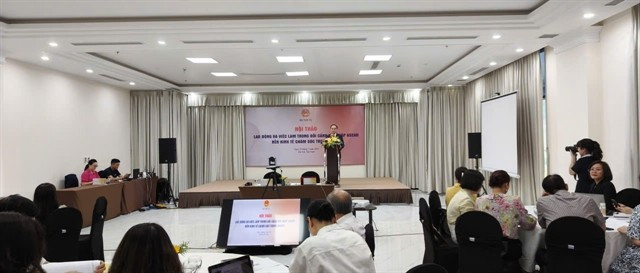
The Jul 29 event, organised by the Ministry of Home Affairs, focused on strengthening regional labour cooperation and addressing the growing importance of the care economy amid rapidly ageing populations across many ASEAN countries.
At the seminar, Deputy Director of the Department of International Cooperation Ha Thi Minh Duc highlighted the pivotal role of the ASEAN Labour Ministers' Meeting in policy coordination and promoting initiatives to improve labour conditions and advance the care economy.
From 2020 to 2025, ASEAN has committed to preparing its workforce for the future of labour through key frameworks, such as the 2017 ASEAN Consensus on the Protection and Promotion of the Rights of Migrant Workers, the 2018 Kuala Lumpur Declaration on Green Jobs for Equity and Inclusive Growth, the 2019 Singapore Statement on the Future of Work, and the 2020 Hanoi Declaration and Roadmap on Workforce Development in a Changing World.
According to Duc, demand for migrant labour is on the rise due to global uncertainties, ranging from great-power competition and armed conflicts to supply chain disruptions and ageing populations in countries such as Japan, the Republic of Korea, Australia, Germany, and the Czech Republic.
ASEAN is currently formulating its 2026–2030 work programme to ensure productive employment and workforce adaptability in response to emerging labour demands and to raise overall quality of life in the region.
The growing demand for care, spanning elder care, childcare and support for people with disabilities, has placed increasing pressure on social welfare systems. Much of the care burden still falls disproportionately on women, especially within households, necessitating more equitable and sustainable care systems and labour policies.
Dr Navarat Temsumrit from Kasetsart University in Thailand, speaking on the care economy and care workers in ASEAN, defined care work as encompassing both paid and unpaid labour. Healthcare services form a critical part of the care economy, supporting physical and mental well-being, while unpaid care work such as education and domestic tasks helps sustain families and communities.
In ASEAN, however, unpaid and informal care work remains under-recognised and insufficiently protected by social safety nets. Significant gender disparities also hinder access to care-related employment and social protections across member states.
Sharing findings from a recent joint study by UN Women and Vietnam’s Institute of Labour Science and Social Affairs, expert Nguyen Thi Bich Thuy noted that the term 'unpaid care work' is rarely used in Vietnam’s official discourse, which tends to refer instead to 'housework' or 'domestic tasks.'
Women continue to shoulder the majority of care responsibilities in Vietnamese households, including childcare, elder care, and care for people with disabilities. In 2022, women spent an average of over 2.3 hours per day on unpaid care work, 1.8 times more than men, who spent 1.3 hours.
Although time spent on unpaid care is gradually declining for both genders, the unequal division persists, limiting women’s participation in the labour market and access to quality jobs, education and training. It also negatively affects their health and increases their vulnerability to gender-based and domestic violence, she said.
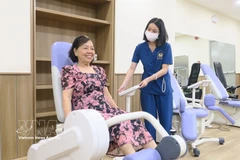
In the paid care sector, which includes services for children, the elderly, and people with disabilities, women account for 72.8% of the workforce. However, they are predominantly employed in low-skill and mid-level technical roles.
In 2023, only 59.3% of women in the paid care economy were enrolled in social insurance, compared to 80.3% of men. Gender income gaps persist, with women earning an average of 7.5 million VND per month, compared to 9.6 million VND for men.
Experts emphasised the urgent need for a societal transformation in how care work is recognised, valued and distributed. They recommended that greater efforts be made to raise awareness among women, families and the broader public about the critical role of care work in sustaining communities and economies. They also called for policies that encourage a more equitable sharing of care responsibilities within households, reducing the disproportionate burden placed on women.
In addition, the experts urged governments to invest in public care services that are high in quality, widely accessible and affordable for all. They stressed the importance of expanding care infrastructure to meet the growing demand resulting from ageing populations, and advocated for the integration of care economy development into national policy frameworks.
Finally, they underscored the need to continue conducting research on both paid and unpaid care work in Vietnam to inform evidence-based policymaking and ensure more inclusive and effective care systems.
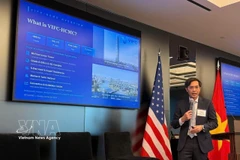
Speaking at the seminar, Deputy Minister of Home Affairs Vu Chien Thang emphasised that intra-ASEAN labour migration is a defining feature of the region's labour market.
Migrant workers not only make important contributions to the care economies of ASEAN countries, but also frequently take on caregiving jobs that local workers are either not skilled enough or unwilling to perform. Their presence helps ease pressure on domestic care systems while also facilitating the transfer of new skills and experiences.
According to reports by the International Labour Organisation and the ASEAN Secretariat, intra-regional labour migration has been on the rise in recent years, with around 10 million migrant workers currently living and working across ASEAN countries.
In the context of growing global integration, Thang noted that Vietnam faces stiff competition in the regional labour market due to relatively low technical qualifications, limited foreign language proficiency and gaps in meeting international labour standards. Increasingly stringent requirements for skills, language ability and labour certification demand coordinated policy and practical efforts.
He said Vietnam is implementing a range of policies to enhance the quality of its workforce and improve its integration into the regional labour market. These include institutional reforms, improved vocational training and upskilling, strengthened regional and international cooperation, promotion of mutual recognition agreements, and adoption of the ASEAN Qualifications Reference Framework, which consists of eight levels.
According to the Ministry of Home Affairs, Vietnam currently has around 53 million workers aged 15 and above, of whom nearly 24.7 million are women. While the national unemployment rate is still low at 2.2%, the quality of the labour force remains a major challenge. Only 28.3% of Vietnamese workers have formal qualifications or certifications, far behind countries like Singapore (50–60%), Malaysia (40–50%), and Thailand (30–45%)./.

Vietnam, Japan's Kyushu region explore labour cooperation opportunities
Vietnamese Consul General in Fukuoka Vu Chi Mai highlighted the growing demand for Vietnamese workers in Kyushu, especially in Fukuoka, Oita, and Saga prefectures. Currently, the region employs about 35,000 Vietnamese manual workers and over 5,000 IT engineers.