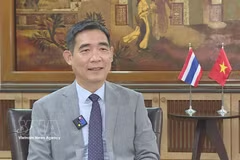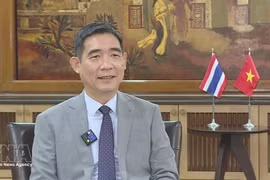
Hanoi (VNA) - Independence, peace, cooperation, development, multilateralisation, and diversification remain the core principles of Vietnam’s foreign policy, said Deputy Minister of Foreign Affairs Nguyen Manh Cuong.
In an interview granted to the press on the country’s major external relations orientations set at the 14th National Party Congress, he stated that these principles have served as a stable foundation for safeguarding Vietnam’s peaceful environment and supporting national development over the decades.
At the same time, he noted, new elements were introduced to respond to profound changes in the global and regional landscape as Vietnam seeks to achieve breakthrough growth, pursue double-digit economic expansion, and successfully realise its two centenary development goals.
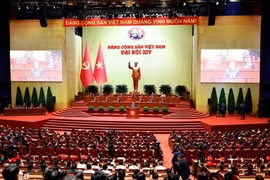
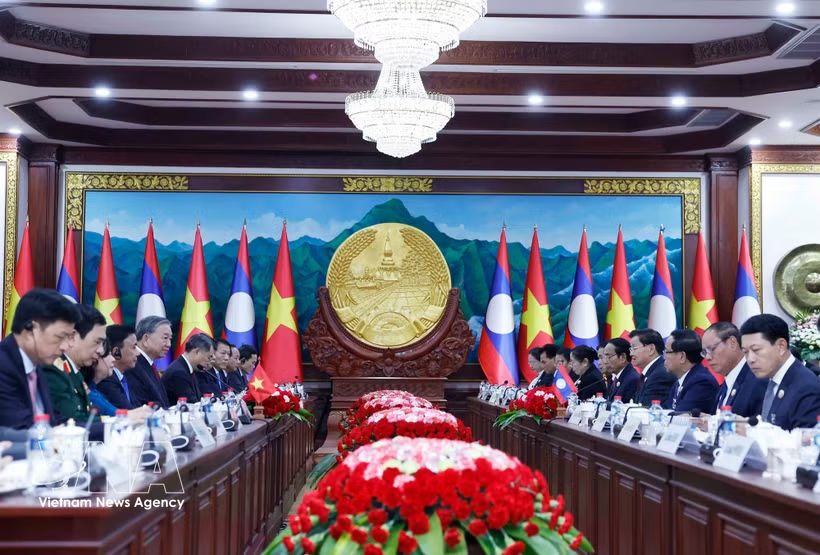
The congress highlighted the objective of developing foreign affairs in a manner commensurate with Vietnam’s historical stature, cultural identity, and rising international position. Vietnam will not only deepen existing partnerships to ensure stability but also participate in addressing global challenges and contribute to international cooperation mechanisms.
Cuong stressed that Vietnam’s contributions and growing voice in multilateral forums reflect the country’s identity, culture, and diplomatic style.
A notable addition to the congress’s foreign policy thinking is the emphasis on “strategic autonomy” and “self-strengthening,” which he described as essential conditions for maintaining independence, proactiveness, and resilience in external relations amid global volatility. This approach, he said, is consistent with President Ho Chi Minh’s long-standing principle of relying primarily on national strength while valuing international cooperation.
The congress also affirmed that foreign affairs and international integration, alongside defence and security, constitute regular and vital tasks in national construction and protection. Foreign affairs were identified not only as an instrument for safeguarding sovereignty and national interests but also as a key channel for creating favourable conditions and mobilising resources for development. As such, external relations and international integration are regarded as a shared responsibility of the entire political system, requiring close coordination among ministries, sectors, and localities.
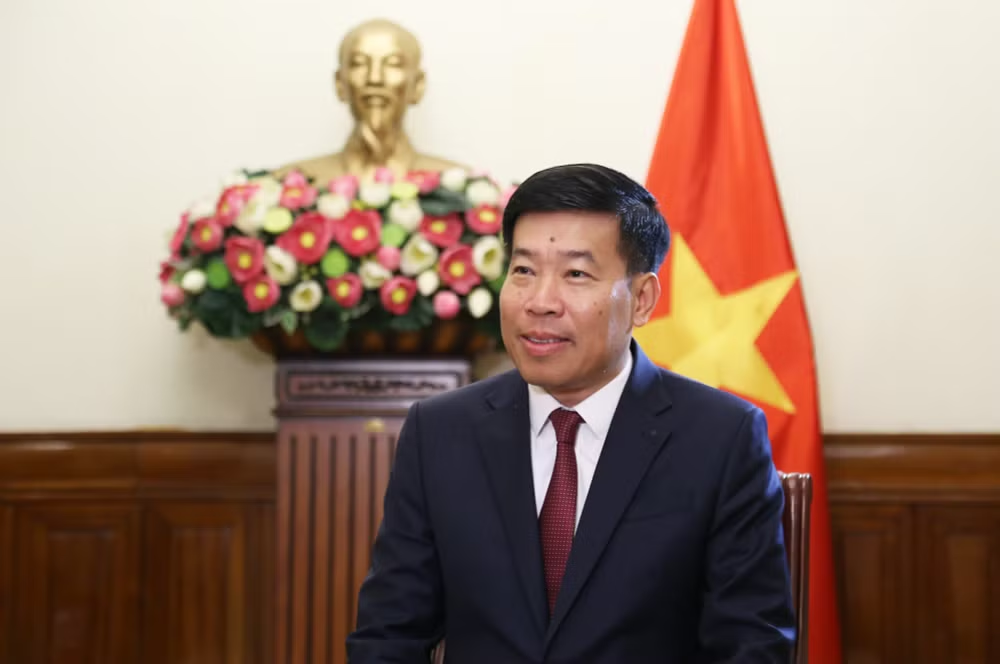
Regarding implementation, the official said priority would be given to building unified awareness across the political system about the mission and strategic importance of foreign affairs. Communication and dissemination efforts will be expanded domestically and internationally, including among Vietnam’s overseas representative missions and the more than 6 million Vietnamese living abroad, to strengthen national solidarity.
Vietnam also aims to build a comprehensive, modern, and professional diplomatic service featuring a streamlined organisational structure and a contingent of officials who are politically steadfast, professionally competent, innovative, and capable of meeting the demands of a new era.
Institutionalisation of the foreign policy line through improved Party regulations and effective implementation of Politburo Regulation 392 on unified management of external relations will be accelerated to ensure synchronised coordination nationwide. Ministries, sectors, and localities are expected to develop action plans aligned with strategic orientations to translate policy directions into practical outcomes.
The Deputy FM added that Vietnam will deepen its network of partnerships, not only with traditional partners but also with potential ones, including major global technology corporations, to mobilise resources for development.
Attention will also be paid to allocating resources commensurate with the country’s growing position, modernising diplomatic infrastructure, and accelerating digital transformation. Training high-quality human resources, improving evaluation mechanisms, and enhancing policies to attract and utilise talent, particularly strategic-level officials, will remain key priorities.
Greater coordination among government agencies, local authorities, enterprises, and citizens will be strengthened, alongside expanded local diplomacy and specialised forms of diplomacy such as technology, environmental, and energy diplomacy. Overseas Vietnamese representative missions will further enhance their role in supporting citizens abroad, protecting the legitimate interests, and promoting Vietnam’s image as a peaceful, innovative, and responsible nation.
Cuong said the Party Committee of the Ministry of Foreign Affairs has proactively developed an integrated “three-in-one” action programme to implement the 14th Congress Resolution alongside resolutions of the Government Party Committee and the ministry’s Party Congress. The programme covers major areas including bilateral and multilateral diplomacy, economic diplomacy, cultural diplomacy, border and territorial affairs, overseas Vietnamese work, citizen protection, external information, and strategic research.
He expressed confidence that under the close leadership of the Party and State and with coordinated efforts across sectors and levels, Vietnam’s diplomatic sector will successfully implement the Resolution of the 14th National Party Congress, contributing to strong and sustainable national development in the new era./.