Four regional coordinating councils established

Prime Minister Pham Minh Chinh has signed decisions on the establishment of the coordinating councils for the northern and coastal central region, the southeastern region, the Red River Delta region, and the Central Highlands region.
Four regional coordinating councils established ảnh 1Nhat Tan Bridge in Hanoi, which is located in the Red River Delta region (Photo: VMA)
Hanoi (VNA) – Prime Minister Pham Minh Chinh hassigned decisions on the establishment of the coordinating councils for thenorthern and coastal central region, the southeastern region, the Red RiverDelta region, and the Central Highlands region.

They are inter-sectoral bodies helpingthe PM with considering, directing, coordinating, and handling important andinter-sectoral issues on the connectivity and sustainable development of thefour regions.

According to the decisions, the PM acts as the chairperson ofthe coordinating councils for the southeastern and Red River Delta regions, while Deputy PM Tran Hong Ha chairs the coordinating council for the northern andcoastal central region, and Deputy PM Tran Luu Quang leads thecoordinating council for the Central Highlands.

The councils are tasked with researching and advising the PMabout orientations, solutions, mechanisms, and policies for implementing thetargets and tasks set in the Politburo’s resolutions on socio-economicdevelopment and defence - security safeguarding for the four regions. They alsoassist the Government leader in directing, promoting, and guiding theimplementation of targets, tasks, programmes, projects, and activities ofregional connectivity to ensure consistency, efficiency, and compliance withlegal rules and approved plans.

Four regional coordinating councils established ảnh 2An aerial view of Buon Ma Thuot city in the Central Highlands province of Dak Lak (Photo: VNA)
Thecouncils coordinate the building, amendment, and implementation of the NationalMaster Plan, the four regional plans, and the plans of localities in theregions for 2021 - 2030, with a vision to 2050.

They alsoconsider and propose regulations, mechanisms, and policies on regionaldevelopment and connectivity; organise investment promotion, resource mobilisation,and investment attraction activities; coordinate the use of public investmentto attract non-state investment (foreign direct investment and capital frombusinesses and the private sector); and facilitate investments in the form the public- private partnership (PPP) to develop strategic, urgent, and importantinfrastructure facilities of the regions.

Besides,the councils coordinate activities for developing socio-economicinfrastructure, with priority given to transport infrastructure; considersetting up regional infrastructure development funds; helping localities in theregions deal with inter-locality issues; and work with other regions insocio-economic development issues concerning different regions./.
VNA
See more

Vice President of the Vietnamese National Assembly Nguyen Hong Dien (right) receives Bok Gi-wang, vice head of the Korean National Assembly's Land, Infrastructure and Transport Committee in Hanoi on October 30, 2026. (Photo: VNA)

Vietnam, RoK step up economic, parliamentary cooperation

Speaking highly of the RoK's experience in railway development, NA Vice President Nguyen Hong Dien welcomed its businesses' interest in Vietnam’s railway projects and encouraged their participation as partners, investors or contractors in line with Vietnamese law.

General Secretary of the Communist Party of Vietnam Central Committee and President To Lam (right) receives Special Representative of the President of Azerbaijan Elchin Amirbayov Hanoi on October 30, 2026. (Photo: VNA)

Top leader receives Azerbaijani presidential envoy

Welcoming the Azerbaijani envoy to Vietnam, the Vietnamese leader affirmed that Vietnam treasures the friendship, valuable support and assistance extended by the State and people of Azerbaijan to Vietnam during its past struggle for national independence, as well as its current process of national construction and development.

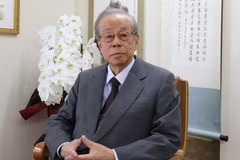
Former Japanese Prime Minister Fukuda Yasuo (Photo published by VNA)

Vietnam sends condolences on passing of former Japanese PM Fukuda Yasuo

In the message, Prime Minister Le Minh Hung extended his deepest condolences and expressed profound appreciation for Mr. Fukuda’s special affection for and valuable support to Vietnam and its people, as well as his contributions to the Comprehensive Strategic Partnership between Vietnam and Japan.

A view of Ho Chi MInh City (Photo: VNA)

Ho Chi Minh City’s 100-year master plan gets the green light

Under the overall development model, the megacity will comprise five growth poles, namely international financial services at the centre; innovation in the East; industry, high technology and logistics in the North; seaports, free trade, international logistics and energy in the South; and urban development, education and healthcare in the West.

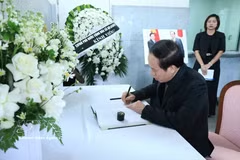
Deputy Prime Minister Le Tien Chau writes in the condolence book. (Photo: VNA)

Deputy PM pays tribute to former Japanese PM Fukuda Yasuo

The State and people of Vietnam are deeply saddened by the passing of Japan's former Prime Minister Fukuda Yasuo, a great and close friend of Vietnam. On behalf of the Government and people of Vietnam, Deputy Prime Minister Pham Tien Chau extended the deepest condolences to the Government and people of Japan, as well as his family.

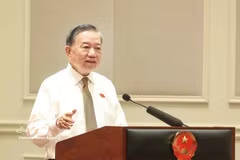
General Secretary of the Communist Party of Vietnam Central Committee and President To Lam speaks at the meeting with female NA deputies in Hanoi on October 29. (Photo: VNA)

Top leader calls on female NA deputies to help shape national development policies

Top leader To Lam called on female NA deputies to contribute proactively to lawmaking from the earliest stages, ensuring that policies are grounded in practical evidence, constitutional, consistent and enforceable. They should identify shortcomings before laws are adopted, put forward initiatives in the common interest, maintain their independent judgement and uphold integrity to prevent group interests from distorting policymaking.