Hai Phong port looks to global trends with strategic development plan

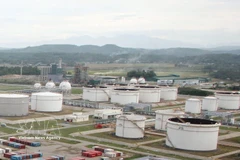
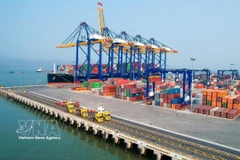
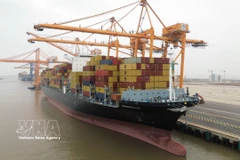
From 2025 to 2030, Hai Phong aims to complete the development of international gateway ports at Lach Huyen and Nam Do Son, capable of receiving large container vessels. Plans also include logistics hubs and inland ports linked to road, rail and air networks; a free trade zone connected to seaports; digital transformation and AI applications in management; and the development of green and smart ports.

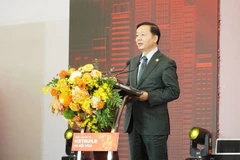
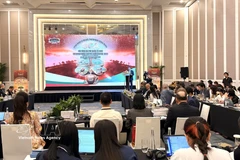
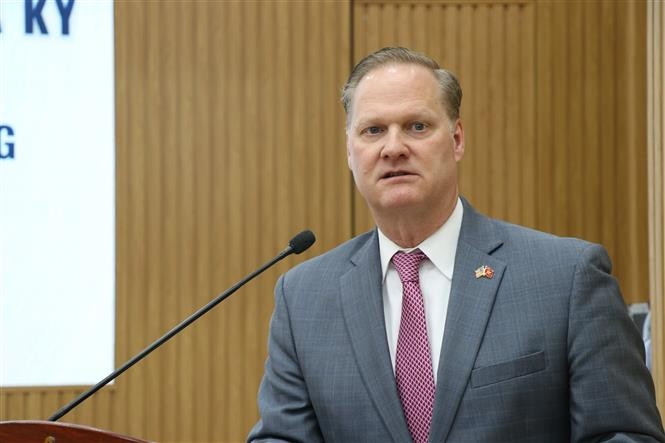
Stephen L. Green, Commercial Counsellor at the US Embassy in Vietnam, speaks at the workshop. (Photo: VNA)

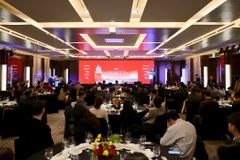
Hai Phong (VNA) – International and domestic experts, policymakers and businesses convened in Hai Phong for a two-day forum to exchange experience and discuss strategic solutions to boost competitiveness and modernise the city’s seaport system.

The September 11–12 Vietnam–US Seaport Activities Cooperation workshop was organised by the Hai Phong Economic Zone Authority (HEZA) in partnership with the Commercial Law Development Programme (CLDP) under the US Department of Commerce.

Stephen L. Green, Commercial Counsellor at the US Embassy in Vietnam, said the workshop was a practical initiative under the Vietnam–US Comprehensive Strategic Partnership, adding that Hai Phong in particular would gain valuable insights to guide its port development.

Nguyen Thi Bich Dung, HEZA Deputy Head, said that from 2025 to 2030 the city aims to complete the development of international gateway ports at Lach Huyen and Nam Do Son, capable of receiving large container vessels. Plans also include logistics hubs and inland ports linked to road, rail and air networks; a free trade zone connected to seaports; digital transformation and AI applications in management; and the development of green and smart ports. The city will also work to revive shipbuilding and supporting industries as a foundation for its maritime economy.

Experts and port authorities shared experiences in state management and port operations, while the US delegation introduced international port models.

Erik Wehl, a public–private partnership and port finance expert, presented the development and governance model of the Port of Rotterdam, Europe’s largest port, which he noted shares similarities with Hai Phong and could serve as a reference for establishing port governance in the future.

Bui Ngoc Nam, Deputy Director of Hai Phong Maritime Administration, highlighted that the city has already developed sea encroachment models over the past two decades to support port construction – long-term planning informed by successful international examples, including Rotterdam.

According to Le Trung Kien, HEZA Head, the workshop was a step towards implementing the Vietnam-US Comprehensive Strategic Partnership, bringing together policymakers, experts and businesses from both countries to address challenges and lay the foundation for Hai Phong’s strategic port development in 2025–2026.

Strategic recommendations focused on multimodal transport synchronisation, renewable energy integration towards net-zero targets, and optimising supply chains.

HEZA affirmed its commitment to facilitating the implementation of agreed initiatives, turning Hai Phong into a modern international logistics hub. The next phase of cooperation will concentrate on completing legal frameworks and technical plans, strengthening Hai Phong’s role as the northern gateway for Vietnam’s trade./.
VNA

See more

The latest approvals underscore the growing presence of Vietnamese rice in one of the world’s most demanding markets. (Photo: VNA)

Fragrant rice deepens EU market presence

Although the volume of individual shipments remains relatively modest, industry experts say the steady flow of exports reflects stable demand in the EU for high-quality rice.

Promoting stronger foreign direct investment (FDI) inflows is considered an important solution to help drive economic growth. (Photo: VNA)

Vietnam emerges as hub for high-quality FDI

Vietnam is gradually becoming a strategic destination for high-quality global FDI. Investment flows are increasingly directed toward sectors such as high-tech manufacturing, electronics, digital infrastructure, modern logistics, and industries that are closely linked to global supply chains.

Shrimp processing for export at Huy Nam company, An Giang province. (Photo: VNA)

Fisheries sector proactively adjusts to emerging challenges

In addition to food safety regulations, the US continues to closely monitor the origin of imported seafood through the Seafood Import Monitoring Programme (SIMP) administered by the National Oceanic and Atmospheric Administration (NOAA). Requirements linked to the Marine Mammal Protection Act (MMPA) are also a major concern for businesses.

Pham Van Cong, Chairman of the Vietnam Cashew Association, speaks in a conference reviewing the industry’s 2025 performance and deploying procurement plans for 2026 in HCM City on March 13. (Photo: VNA)

Cashew sector braces for challenges in 2026 amid global uncertainties

Vietnam’s cashew industry recorded export turnover of about 5.5 billion USD in 2025, the highest level ever. He noted that the result reflects the industry’s remarkable development, dynamism and timely adaptation to complex and unpredictable challenges both domestically and globally.

An Phát Complex Industrial Park in Hai Phong City is one of the eco-friendly industrial parks. (Photo: VNA)

Green industrial parks become new magnet for FDI

Statistics show that about 80% of FDI enterprises prioritise investing in industrial parks with green energy infrastructure, reflecting a growing shift in investment preferences amid tightening global environmental standards.