Lang Son (VNA) – The growing volume of goods passing through border gates in Lang Son is driving demand for skilled workers in logistics, import-export, transport and technology, prompting the northern border province to seek solutions to improve training and attract and retain qualified workers.
As the province promotes investment in logistics services and infrastructure at border gates, businesses are increasingly shifting from relying on manual labour for loading and transshipment to workers capable of operating modern equipment and handling specialised tasks.
From manual labour to skilled workers
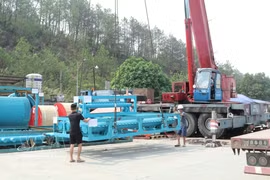
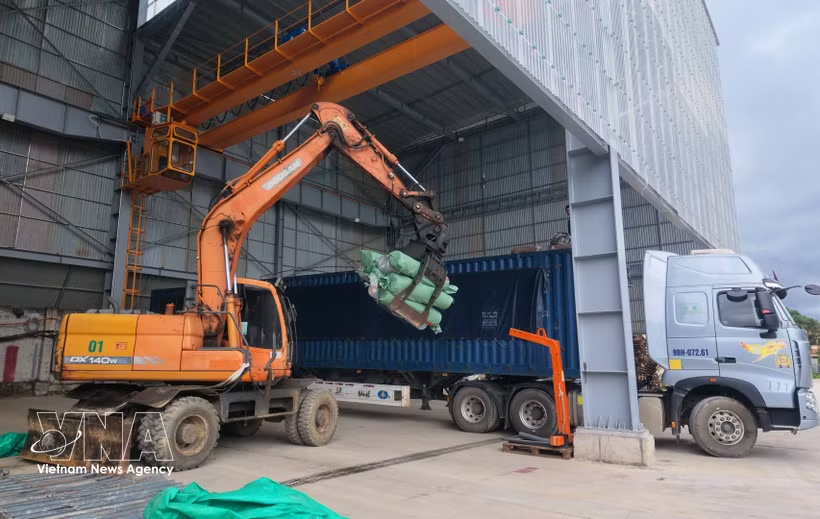
At border gates such as Tan Thanh, Huu Nghi and Chi Ma, the expansion of import-export activities has been accompanied by changes in the organisation and movement of goods. Modern machinery and equipment are increasingly used for loading, transshipment and transportation, reducing manual work and improving productivity.
Hoang Thi Coi, who has worked for a cargo-handling business at Chi Ma border gate for years, said the introduction of forklifts and automated conveyor systems had significantly reduced the physical burden on workers and shortened transshipment times.
The increasing use of equipment has also created new requirements for workers, who need technical knowledge, operational skills and the ability to handle situations arising during work.
Meanwhile, businesses operating logistics yards are increasingly seeking personnel with expertise in logistics, import-export and technology to improve service quality and the competitiveness of border-gate economic activities.
Vu Van Dung, Deputy Director of Operations at Viettel Lang Son Logistics Park said the facility has about 200 employees, with 20% serving as key operational personnel working in shifts to ensure 24-hour operations. The company regularly provides training to recruit and improve the quality of its workforce, he said.
Creating an environment to retain workers
Statistics from the Lang Son Department of Home Affairs show that about 55,000 people are currently participating in the local labour market. While the workforce at border-gate yards generally meets demand for loading and unloading workers, there is a shortage of skilled personnel across many positions. Businesses need to recruit around 100-200 skilled workers each year.
However, Lang Son does not yet have specialised training establishments for operating certain equipment, such as cranes and heavy-duty lifting machinery. The supply of personnel for business management, logistics and transport also falls short of demand.
Vi Hoai Nam, director of the provincial Employment Service Centre under the Department of Home Affairs, said workers recruited by logistics yard and import-export businesses still have limited professional skills, particularly for positions requiring high-level expertise in operating lifting equipment and super-heavy cranes.
Mai Duc Trung, General Director of the HTT Chi Ma General Import-Export Services JSC, said training for specialised positions should focus on practical skills and be closely linked to actual equipment and operating procedures. The company has applied this approach to newly recruited workers, he said.
Besides initial training, businesses should provide retraining and skills upgrading for existing workers. Training should also expand into logistics, warehouse management, transport coordination, import-export, business administration and technology applications in goods circulation.
Businesses also need to develop appropriate wage policies, benefits and working environments to attract and retain workers, experts said.
Nam said the provincial Employment Service Centre will continue coordinating with businesses to ensure an adequate workforce and meet their needs./.