Legislature weighs on abolishing death penalty for drug trafficking

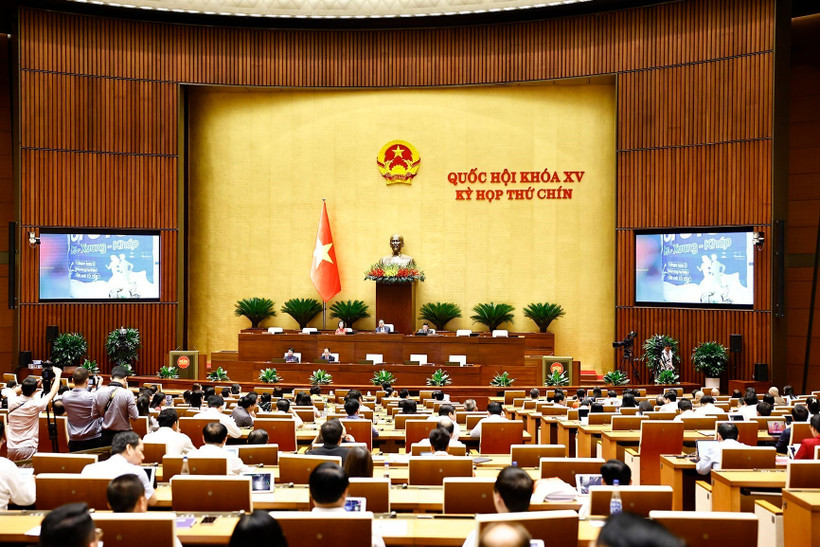
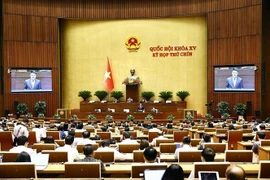
Legislators engaged in the 9th session’s deliberations on May 27 morning over the proposed amendments to the Penal Code that would eliminate the death penalty for illegal drug transport, replacing it with a life imprisonment without sentence reductions.

At the 15th National Assembly's 9th session on May 27. (Photo: VNA)

Hanoi (VNA) – Legislators engaged in the 9th session’s deliberations on May 27 morning over the proposed amendments to the Penal Code that would eliminate the death penalty for illegal drug transport, replacing it with a life imprisonment without sentence reductions.

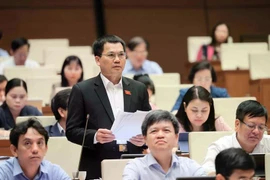
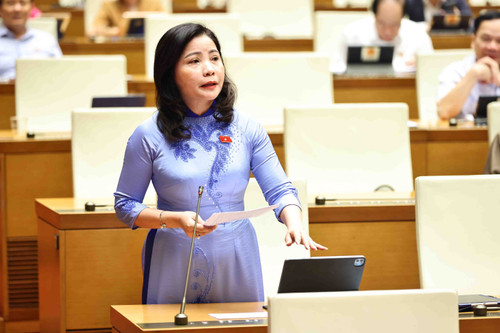
Nguyen Thi Thu Nguyet, a deputy from the Central Highlands province of Dak Lak, acknowledged that abolishing the capital punishment aligns with global trends and directives from the Politburo and the Party Central Committee. However, she urged drafting agencies to conduct comprehensive and meticulous research when proposing the removal of the punishment, particularly for drug transport offenses.
vna-potal-quoc-hoi-thao-luan-ve-du-an-luat-sua-doi-bo-sung-mot-so-dieu-cua-bo-luat-hinh-su-8056692.jpg
Nguyen Thi Thu Nguyet, a deputy from the Central Highlands province of Dak Lak. (Photo: VNA)

The number of drug-related crimes has not declined despite the application of the death penalty, she noted, saying criminal activities are becoming more sophisticated and dangerous, with many law enforcement officers sacrificing their lives in the line of duty.

If the death penalty is replaced with the life imprisonment, it is necessary to assess whether the punishment would provide rational deterrence or create legal loopholes that could result in increasing criminal activities.

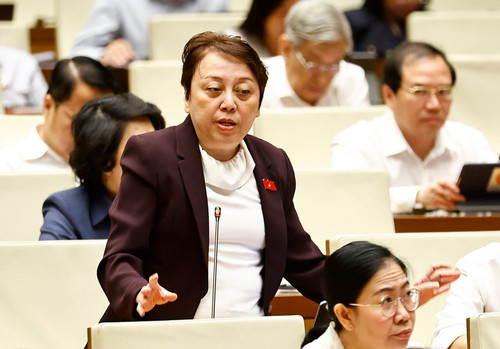
Meanwhile, deputy Pham Khanh Phong Lan from Ho Chi Minh City challenged the logic behind the reform, stating drug crimes are becoming more serious and harder to control, with law enforcement and judicial agencies struggling to detect and handle them in a timely way.
vna-potal-quoc-hoi-thao-luan-ve-du-an-luat-sua-doi-bo-sung-mot-so-dieu-cua-bo-luat-hinh-su-8056559.jpg
Deputy Pham Khanh Phong Lan from Ho Chi Minh City. (Photo: VNA)

Lan said that showing sudden leniency towards drug traffickers could be seen as disregarding the suffering of victims and their families, adding most offenders are fully aware of the consequences but they choose crime for profit.

Deputy Pham Van Hoa from the Mekong Delta province of Dong Thap took a similar stance, warning that trafficking is inseparable from drug production and sales. He elaborated without traffickers, there would be no users and recommended maintaining this crime classification.

Supporting the replacement, deputy Nguyen Thi Viet Nga from the northern province of Hai Duong said this approach demonstrates the State’s humanity while maintaining strict deterrence and ensuring long-term isolation of serious offenders.

She argued that unlike organised manufacturing and trafficking operations often linked to international networks, transporters are often poor or manipulated due to shortage of legal understanding. Since masterminds who manufacture, sell, and transport drugs already face death sentences, removing capital punishment from the trafficking charge is suitable, helping differentiate criminal responsibility and individualise punishment while providing opportunities for leniency for those capable of rehabilitation./.
VNA

See more

Assaf Talgam, a historian and a journalist of Zo HaDerekh, the official newspaper of the Communist Party of Israel. (Photo: VNA)

CPV's leadership - central factor shaping Vietnam’s enduring stability, impressive achievements: Israeli historian

Talgam said that from a comparative and historical perspective, the CPV’s leadership has been the central factor underpinning the country’s enduring political stability and impressive development trajectory. In a world marked by rapid and unpredictable changes, few political organisations have been able to maintain continuity of leadership while simultaneously adapting their governance approach as effectively as the CPV.

Prime Minister Pham Minh Chinh presents Certificates of merit from the Government’s Party Committee to individuals with outstanding achievements. (Photo: VNA)

Prime Minister outlines five specific strategies for Government’s Party Committee

PM Chinh noted that the Government’s Party Committee exercised comprehensive leadership over the Government's operations, proactively and effectively responded to emerging issues, with a particular focus on socio-economic development. As a result, 2025 witnessed high economic growth, sustained macroeconomic stability and ensured major balances.

Politburo member, Standing member of the Party Central Committee’s Secretariat Tran Cam Tu attends the rehearsal. (Photo: VNA)

Security forces stage rehearsal for 14th National Party Congress

The People’s Public Security forces have been praised for their core role in closely working with the army and relevant ministries and agencies, with success in thwarting hostile plots at an early stage, drastically combating fake news and disinformation surrounding the 14th National Party Congress.

Senior Lieutenant General Le Quoc Hung (L), member of the Communist Party of Vietnam (CPV) Central Committee and Deputy Minister of Public Security, and General Vilay Lakhamfong, Politburo member and permanent member of the Secretariat of the Lao People’s Revolutionary Party (LPRP) Central Committee. (Photo: VNA)

Deputy Minister of Public Security congratulates Lao officials following succesful 12th National Party Congress

Deputy Minister of Public Security Senior Lieutenant General Le Quoc Hungconveyed the warmest congratulations of the Central Public Security Party Committee, the Ministry of Public Security leadership, and the Vietnamese People’s Public Security Forces to Lakhamfong and other Lao public security leaders on the congress’s success and their election to key leadership positions for the new term.

A session of the National Assembly Standing Committee. (Photo: VNA)

NA Standing Committee's key work agenda for 2026 approved

A major focus will be preparations for the election of deputies to the 16th NA and to People’s Councils at all levels for the 2026–2031 term. The NASC will coordinate with the National Election Council, the Government, the Vietnam Fatherland Front Central Committee, and relevant agencies and organisations to continue implementing the election plan, organise oversight of the electoral process, and carry out its duties and powers as prescribed.

Party General Secretary To Lam receives US Ambassador Marc Evans Knapper in Hanoi on January 9, 2026. (Photo: VNA)

Party leader receives outgoing US Ambassador

Vietnam always values its relationship with the US and looks forward to continuing close cooperation with the US government to deepen bilateral relations based on mutual respect for each other’s independence, sovereignty, territorial integrity, and political institutions, contributing positively to peace, stability, cooperation, and development regionally and globally.