NA reviews major education law reforms to boost autonomy, modernisation

Lawmakers largely concurred that the three draft laws are tightly interwoven, designed to institutionalise the Party’s sweeping policy directives, notably the Politburo’s Resolution 71, which charts breakthroughs in education and training reform, along with key resolutions on sci-tech, innovation, digital transformation, international cooperation, private sector growth, and legal reform.

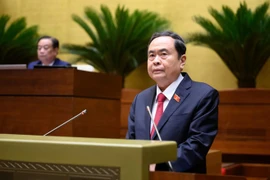
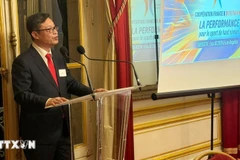
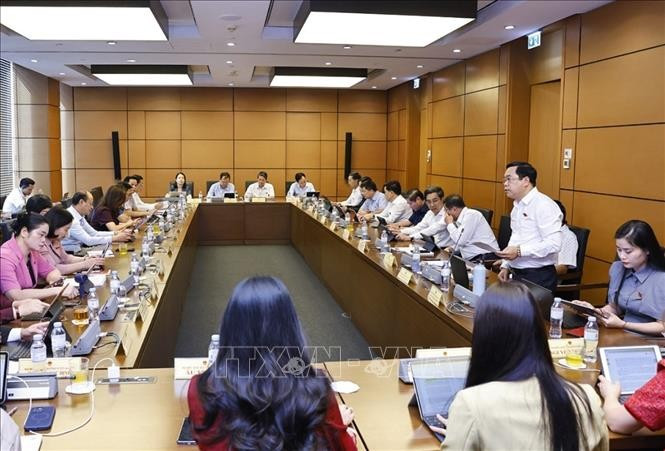
At a group discussion within the 10th session of the 15th National Assembly (Photo: VNA)

Hanoi (VNA) – The 15th National Assembly, in its ongoing 10th session, held group discussions on October 22 afternoon to review the draft Law on amendments and supplements to several articles of the Law on Education, the revised Law on Higher Education, and the amended Law on Vocational Education.

Lawmakers largely concurred that the three draft laws are tightly interwoven, designed to institutionalise the Party’s sweeping policy directives, notably the Politburo’s Resolution 71, which charts breakthroughs in education and training reform, along with key resolutions on sci-tech, innovation, digital transformation, international cooperation, private sector growth, and legal reform.

They stressed that the proposed reforms are a must to fix the education system’s nagging problems. The draft laws seek to grant greater autonomy to educational establishments while ensuring quality, accountability, and efficiency. They also meet new requirements on decentralisation, delegation of authority, administrative reforms and a shift to a two-tier local administration model.
jr.jpg
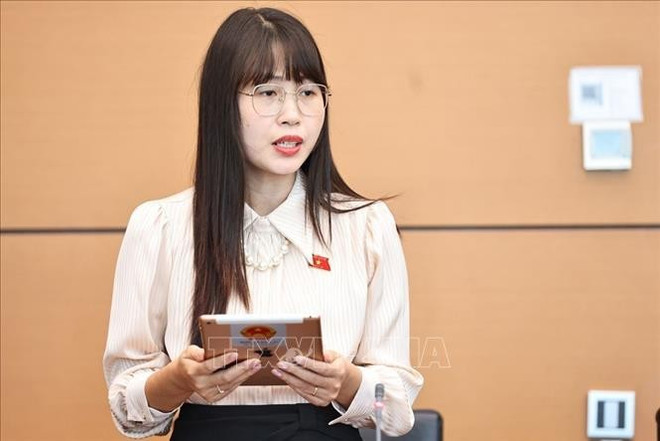
Deputy Tran Thi Quynh, representing Ninh Binh province, speaks at a group discussion. (Photo: VNA)

Deputy Tran Thi Quynh, representing Ninh Binh province, drew attention to a forward-looking clause in the draft amendments to the Law on Education, which would permit diplomas to be issued in paper, electronic, or digital formats. She lauded it as a step to meet Vietnam’s digital transformation ambitions and simplify diploma management and verification.

Discussions also turned to proposals to make secondary education compulsory, roll out universal preschool education for children aged three to five, introduce a single national set of textbooks, and abolish school councils in public educational establishments./.
VNA

See more

Prime Minister Le Minh Hung speaks at the working session with the Ministry of Science and Technology in Hanoi on April 22, 2026. (Photo: VNA)

PM underscores priority funding for strategic, core technologies

Highlighting the importance of accelerating digital transformation, particularly in the digital economy, Prime Minister Le Minh Hung set targets for the sector to account for 30% of GDP and for over 40% of enterprises to engage in innovation activities.

Deputy Prime Minister Ho Quoc Dung (R) and IAEA Deputy Director General Mikhail Chudakov (Photo: VGP)

Deputy PM, IAEA official discuss nuclear power development

Vietnam speaks highly of the IAEA’s role and efforts in promoting the peaceful use of atomic energy and supporting countries in building nuclear infrastructure. Since becoming a member of IAEA, Vietnam has seen the agency as a strategic and reliable partner, with cooperation activities increasingly effective and practical.

At the signing of the minutes of the talks (Photo: VNA)

Vietnam–China border forces hold talks, confer Friendship Envoy title

Border guards of Vietnam and China pledged to strengthen information sharing on emerging issues at border gates, coordinate timely responses and enhance the effectiveness of control operations. They reaffirmed their commitment to maintaining order in immigration procedures, ensuring stable security in the Lao Cai–Hekou international border gate area, and promoting legal awareness among border residents.

☕ Afternoon briefing on April 22

☕ Afternoon briefing on April 22

The welcome ceremony for President of the RoK Lee Jae Myung and his spouse, PM Le Minh Hung's working session with the Ministry of Industry and Trade, and the Global Sourcing Fair Vietnam 2026 are among news highlights on April 22.

The National Assembly (NA) is scheduled to discuss a proposal to establish Dong Nai as a centrally-run city on April 22. (Photo: VNA)

NA to discuss proposal to establish centrally-run Dong Nai city

According to a Government report, Dong Nai has effectively leveraged its strategic location, historical traditions, and strengths in national defence, security, culture, and society to emerge as one of the country’s leading economic localities. The province serves as a key hub linking major development corridors and Ho Chi Minh City with the Central Highlands, the south-central coastal region, and the Mekong Delta region.

☀️ Morning digest on April 22

☀️ Morning digest on April 22

Party General Secretary and State President To Lam's working session with the standing board of the Ha Tinh Party Committee, President of the RoK Lee Jae Myung's beginning of a state visit to Vietnam, and 84% of Vietnam’s small businesses reporting growth last year are among news highlights on April 21 evening.

Minister of Foreign Affairs Le Hoai Trung (R) and outgoing Mongolian Ambassador Jigjee Sereejav. (Photo: VNA)

Foreign Minister hosts outgoing Mongolian Ambassador

Affirming Vietnam’s high regard for Mongolia and their longstanding friendship, Minister of Foreign Affairs Le Hoai Trung called for closer coordination to further develop the Comprehensive Partnership.

Deputy Minister of Foreign Affairs Le Thi Thu Hang (R) meets with Irish Ambassador to Vietnam Deirdre Ní Fhallúin in Hanoi on April 21. (Photo: baoquocte.vn)

Vietnam, Ireland seek ways to step up bilateral cooperation

Hang proposed the two sides further strengthen political trust, increase high-level and all-level exchanges, and organise youth, student and cultural activities to mark the upcoming anniversary. The Deputy Minister also called on Ireland to soon ratify the EU–Vietnam Investment Protection Agreement (EVIPA), which would create fresh momentum for economic cooperation.

Vietnamese Ambassador to the Czech Republic Duong Hoai Nam speaks at the event. (Photo: VNA)

Foreign policy drives Vietnam’s development momentum in new era: Diplomat

The ambassador highlighted that after four decades of Doi Moi, Vietnam now ranks among the world’s 35 fastest-growing economies. The country has signed and implemented 17 free trade agreements, positioning itself as an important economic hub in the Asia-Pacific, while attracting 38.42 billion USD in registered foreign direct investment.

President of the Republic of Korea (RoK) Lee Jae Myung and his spouse arrive in Hanoi on April 21 afternoon. (Photo: VNA)

Korean President arrives in Hanoi, beginning state visit to Vietnam

The visit is expected to become a special milestone in the 34-year history of diplomatic relations between the two countries, marking the starting point for a strategic leap forward in the bilateral ties amid evolving global dynamics, according to Korean Ambassador to Vietnam Choi Young Sam.

Vietnamese Ambassador to Thailand Pham Viet Hung (middle) at the discussion. (Photo: VNA)

Vietnam pushes people-centred priorities for Asia-Pacific at UNESCAP

Vietnam remains firmly committed to multilateralism and the United Nations’ central role in global governance. It appreciates UNESCAP’s role in translating global commitments into concrete regional action and cooperation, sharing best practices, supporting evidence-based policymaking and tackling emerging challenges.

Vietnamese Ambassador to New Zealand Phan Minh Giang (L), who is concurrently in charge of Samoa, presents his credentials to Head of the Independent State of Samoa Tuimalealiifano Va’aletoa Sualauvi II in Apia on April 21. (Photo: VNA)

Vietnam seeks to deepen ties with South Pacific partners

The diplomat voiced his confidence that with joint efforts, bilateral relations will continue to grow, particularly in areas of shared interest and strength. He also underscored the importance of enhancing coordination and mutual support at regional and international multilateral forums.