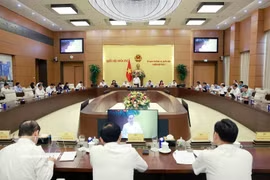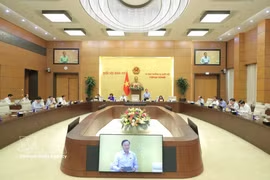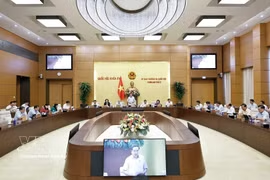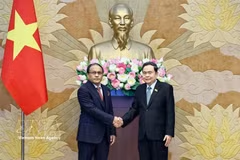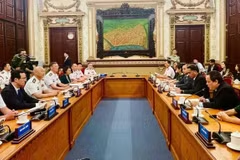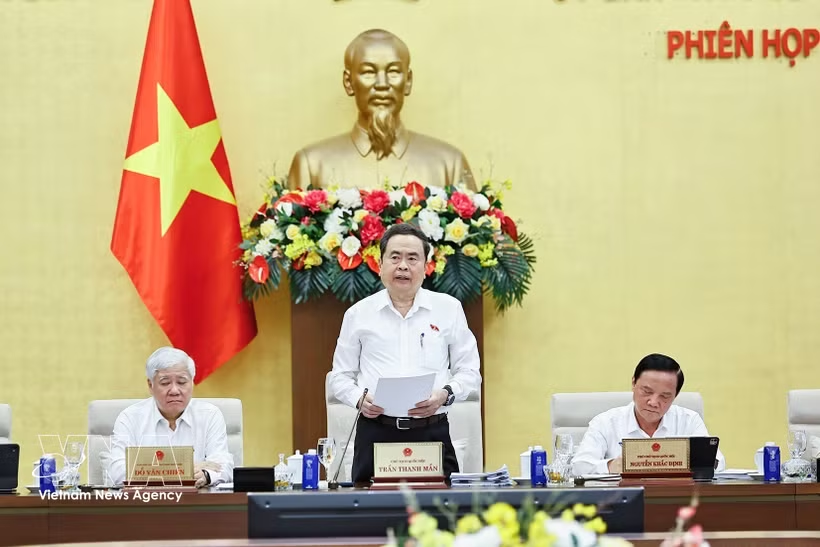
Hanoi (VNA) - The National Assembly (NA) Standing Committee convened its fourth session in Hanoi on July 8 under the chair of NA Chairman Tran Thanh Man.
No room for delay on urgent matters
In his opening speech, Chairman Man said the committee will discuss a slate of important issues in preparation for the 16th NA’s first extraordinary session set for early August, review preparations for the second regular session later this year, and take up other matters under its purview.
The agenda covers 24 draft laws and resolutions slated for the extraordinary session, two draft laws for the second regular session, 10 ordinances and resolutions under the 2026 legislative agenda, and three additional items within the committee’s mandate.
The extraordinary session demonstrates the Party, NA, and Government’s strong political determination to promptly turn the Party Central Committee’s directions and conclusions into the law, address pressing issues without delay, clear bottlenecks, and ease the load on the year-end regular session, he said.
With the Government proposing to add the revised Housing Law and Real Estate Business Law to the extraordinary session under fast-track procedures, the top legislator instructed the NA Secretary General, NA Office, relevant committees and NA Vice Chairpersons to assess whether the two bills meet the conditions for inclusion.
If scheduled for discussion alongside the revised Land Law, the review will take place on July 28. The committee will also adopt four resolutions under its authority via written procedure, he added.
Leaders must bear responsibility for delays or subpar quality
According to the top legislator, the NA Standing Committee's session is set to last six days. The first phase, on July 8 and the morning of July 9, covers eight items while the second, from July 14 to 17, mulls over 25 items. An extra session on July 28 will address two matters after the Party Central Committee provides policy guidance.
Facing a heavy workload, Chairman Man requested agencies to enforce strict discipline, stick to the agenda, and avoid delays, withdrawals, or late document submissions for subjective reasons. Preparations for the extraordinary session must be finalised this month, he stressed.
Ministers, heads of drafting agencies, and appraisal bodies will be held accountable before the Government, Prime Minister and NA Standing Committee if quality or timeline requirements aren’t met, he warned.
On contentious issues or policies that break from existing laws, he urged agencies to work with NA bodies early and report matters to competent authorities promptly, avoiding last-minute pile-ups.
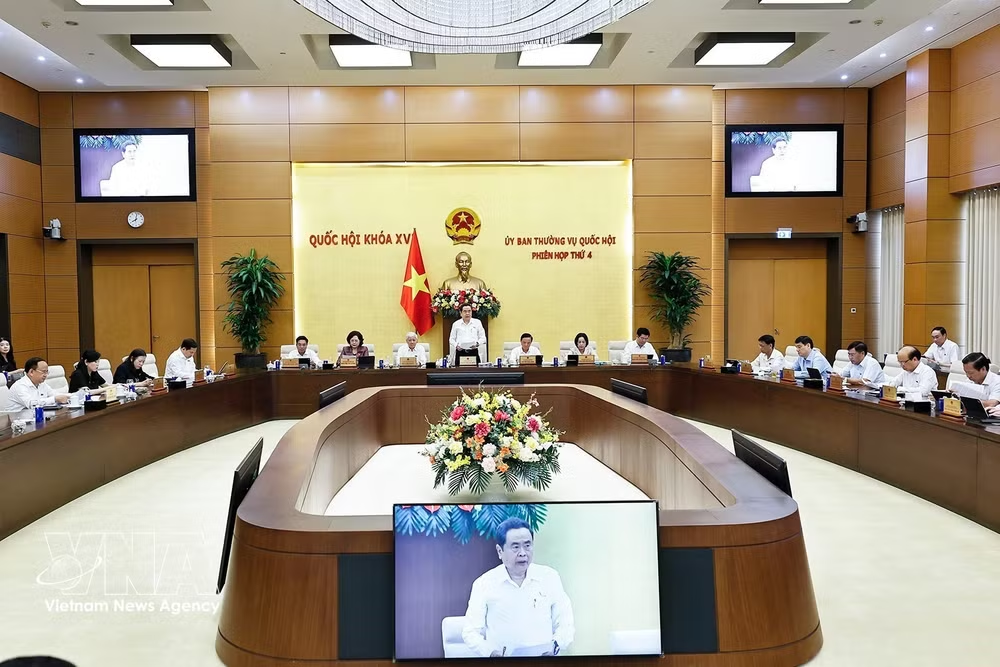
Standing members of the NA's Council for Ethnic Affairs and committees were requested to strictly fulfill their appraisal duties, and clearly express views on document quality and completeness. Bills that fall short of quality or timing should be firmly recommended for exclusion from the extraordinary session and refined for the year-end meeting.
When reviewing draft laws, he called for a close examination of nearly a year of the rollout of the three-tier administration model, a careful look at rules on decentralisation and delegation of authority, and the feasibility of each policy.
He underscored the need to clearly define roles, tasks, responsibilities, tasks, authority, and accountability so localities can enforce regulations as soon as laws take effect, while avoiding legal gaps, overlapping responsibilities, or buck-passing among agencies.
The NA's Council for Ethnic Affairs and committees were also assigned to work directly with relevant ministries and agencies to identify reasons for delays in issuing enforcement guidance documents, especially those for operations of the Vietnam International Financial Centre in Ho Chi Minh City and Da Nang./.