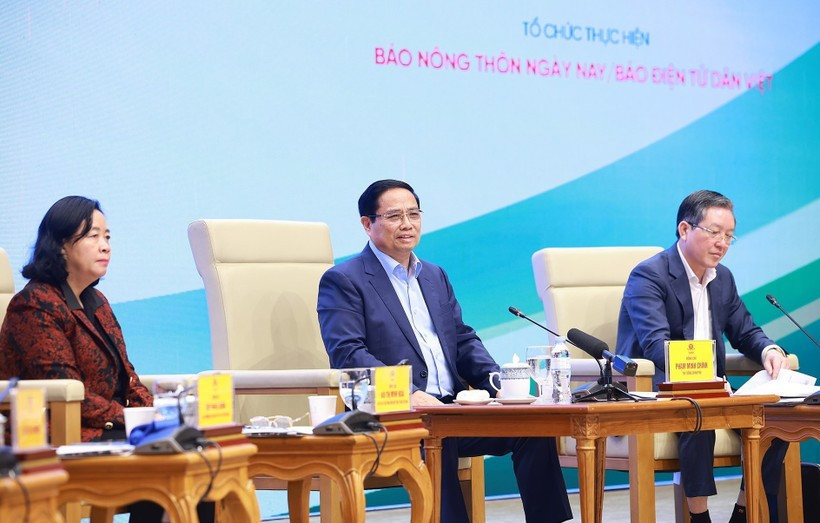
Hanoi (VNA) - The new generation of Vietnamese farmers - those who embody knowledge, creativity, digital capability, autonomy, resilience, pioneering spirit, aspiration and dedication, will serve as a key force in building a prosperous agricultural sector, elevating Vietnamese agricultural products on the global map, and fostering a more civilised and modern rural ecosystem.
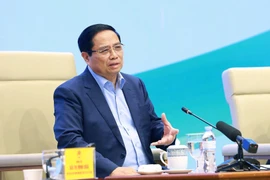
This will contribute to improving people’s livelihoods and advancing rapid, sustainable national development, said Prime Minister Pham Minh Chinh while chairing his 2025 dialogue with farmers on December 10.
The PM noted that Vietnam is on track to fulfill and surpass all 15 socio-economic targets for 2025 and achieve one of the highest GDP growth rates in the region and the world. Agriculture, farmers and rural areas, he emphasised, have played an essential role in these achievements.
He reaffirmed the strategic importance of agriculture, farmers and rural areas in every development stage of the nation. He called for breakthroughs in science and technology, innovation and digital transformation, accelerated development of strategic infrastructure, especially transport works, expanded export markets, alongside diversification of markets, products and supply chains.
He also stressed the need to promote green production, ensure food safety and traceability, and continue training high-quality human resources through stronger linkages between the State, educational institutions and enterprises. The PM called for strengthened value-chain linkages and for policies that mobilise diverse resources, including public investment, private finance, loans, bonds and public–private partnerships, ensuring harmonised benefits for the State, businesses and farmers.
On climate resilience, he urged the urgent implementation of the “Quang Trung Campaign” to repair and rebuild homes for disaster-affected households in central Vietnam ahead of the Lunar New Year.
Reflecting on the previous dialogues, the PM highlighted the issuance of various policies that support green agriculture, digital transformation and sustainable rural development. However, he acknowledged significant gaps between research and real-life application of technology, slow digital transformation in rural areas, limited infrastructure in remote regions, and inadequate incentives for green and smart agricultural practices, challenges that have kept farmers’ incomes modest and exposed to risks.
He called on ministries, localities, enterprises and experts to accompany farmers, not only in providing knowledge and technology transfer but also in policy development, market access, product sale and brand building. He urged stronger application of science, technology and innovation in agricultural production, improved value-chain management, and proactive access to capital, land and markets.
Reiterating the goal of fostering “ecological agriculture, modern rural areas and civilised farmers,” the PM urged authorites at all levels and sectors to continue affirming the strategic role of agriculture, farmers and rural areas as pillars of macroeconomic stability and sustainable growth. Farmers must remain central actors and key drivers of development, he said.
The PM stressed that developing science, technology, innovation and digital transformation must be regarded as the key to removing bottlenecks in agriculture and rural development, and as a breakthrough driver for increasing added value and improving the quality of agricultural products. He called for building a new generation of agricultural extension personnel who serve as both extension officers and scientists, working closely with farmers from production to processing, and for establishing an order-based mechanism linking scientists, enterprises, cooperatives and farmers.
Regarding infrastructure, digital platforms and scientific research, he called for robust public–private partnerships to modernise digital infrastructure and meet farmers’ needs. He requested the development of more accessible agricultural insurance policies and stronger mechanisms to attract young people into agriculture.
On food safety and origin tracing, he urged investment in digital data systems for agriculture and the environment to facilitate traceability, carbon emission monitoring and value-chain governance. He called for developing digital cooperatives, digital extension services and digital production zones, and linking farm produce e-commerce with national traceability systems.
PM Chinh also asked for stronger cooperation in forming sustainable value chains; effective implementation of the national target programmes on new-style rural development, poverty reduction and development of ethnic minority areas; and continued care for disadvantaged communities, especially those in remote and mountainous regions.
The 2025 dialogue, the seventh of its kind, focused on science and technology application, innovation and digital transformation among farmers. More than 5,000 questions and recommendations were sent to the Government ahead of the meeting, covering scientific and technological applications, digital transformation, credit, taxation, infrastructure, market access, brand development and quality management in agriculture.
At the dialogue, farmers and cooperatives raised direct questions, which were addressed by the PM and leaders of relevant ministries and sectors. PM Chinh stressed the need to elevate the OCOP programme in the context of both green transition and digital transformation and emphasised the importance of commercialising scientific research results following the Politburo’s Resolution 57-NQ/TW on science, technology and innovation breakthroughs.
He also instructed ministries to ensure electricity and mobile coverage in remote areas to support online business and accelerate the development of digital government, digital society and digital citizens.
Calling for full implementation of origin-tracing regulations, including measures against IUU fishing, he insisted on strict enforcement and sanctions against violations. He also highlighted the need to strengthen linkages between domestic and foreign enterprises and encouraged Vietnamese businesses to expand agricultural investments overseas.
The PM urged effective use of 17 free trade agreements Vietnam has signed with more than 60 economies, diversified supply chains, and improved production and export logistics. He also stressed sustainable development, including combating IUU fishing, preventing counterfeit goods and protecting clean, safe and lawful agricultural production.
Addressing administrative procedures, he reaffirmed the Government’s efforts to streamline institutional frameworks, amend laws, decentralise authority, and reduce compliance costs for citizens and businesses./.