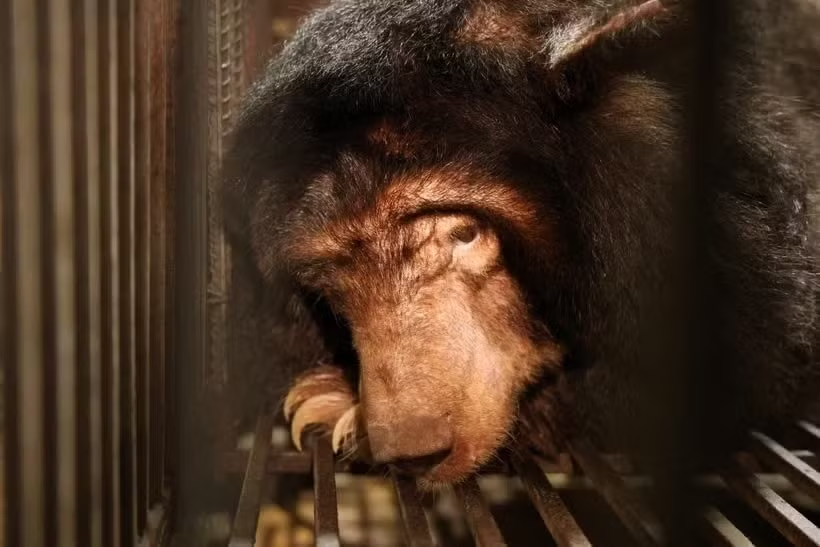
Hanoi (VNA) – Voluntarily relinquished by a farmer in Hanoi's Phuc Tho commune – an area known for having the highest concentration of captive bears in the country, an Asiatic black bear has been transported for lifelong care at the Vietnam Bear Rescue Centre in Bach Ma National Park in the central city of Hue.
This rescue represents the culmination of years of persistent campaigning and dialogue between forest rangers, local authorities, Animals Asia, and the bear's owner. It marks a significant step towards phasing out bear bile farming in one of the nation's most concentrated hotspots.
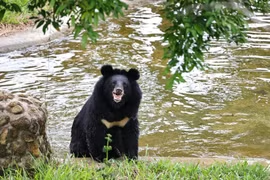
The female bear, who has been kept in captivity since 2010 and is now nearly 20 years old, has been aptly named 'Odyssey'. The name reflects her long, arduous journey and the dawn of a safer, freer existence at the Vietnam Bear Rescue Centre.
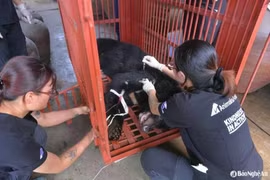
Odyssey’s new chapter began when she was sedated and carefully moved into a specialised transport cage, designed to ensure her safety and minimise distress during the long journey from the capital to Bach Ma National Park.
Initial veterinary checks indicate that Odyssey is rather frail, weighing merely 80-90 kg, and will require extensive healthcare. Upon her arrival at the rescue centre, a veterinary team will conduct a thorough medical examination and provide any necessary treatment. She will then be closely monitored in quarantine for a minimum of 30 days before being gradually introduced to her new, semi-wild environment.
According to Animals Asia, Odyssey's story spans over a decade. Sixteen years ago, during a visit to Vietnam, the legendary British actress and esteemed animal welfare campaigner Dame Virginia McKenna DBE, alongside Dr Jill Robinson MBE, Founder and CEO of Animals Asia, first encountered Odyssey at the farm in Phung Thuong (now Phuc Tho commune). When Dame Virginia returned to the facility in 2018, she recognised Odyssey instantly by the distinctive golden-brown patch on her muzzle.
After years of unwavering dedication to monitoring, dialogue, and advocacy, Odyssey has finally been granted the opportunity to begin anew.
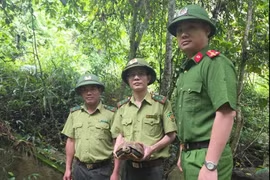
The operation stands as a testament to the power of perseverance, negotiation, and cooperation between farmers, local administration, forestry officials, and Animals Asia, paving the way for a more secure future for each captive bear.
With this latest operation, Hanoi’s forest protection department has successfully facilitated the transfer of 11 out of a total 30 rescued bears to the Bach Ma facility. Animals Asia notes that whilst Hanoi still harbours the highest number of caged bears nationwide, it has simultaneously achieved the most remarkable progress in persuading owners to surrender their animals.
Over the past seven years, the department, working in tandem with Animals Asia and various specialist bodies, has successfully relocated 42 bears from private households across the city to the two rescue centres in Tam Dao National Park (Phu Tho province) and Bach Ma National Park (Hue city). In these sanctuaries, the bears are rehabilitated, given the freedom to roam and forage, and slowly encouraged to reclaim their natural instincts.
In an effort to curb the demand for bear bile, Animals Asia has also partnered with practitioners from the Vietnam Oriental Traditional Medicine Association to promote the use of herbal alternatives. Furthermore, the charity regularly conducts educational programmes in schools, teaching students about the vital importance of protecting bears and other wildlife./.