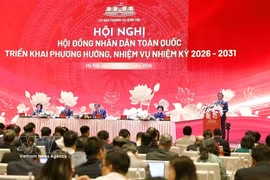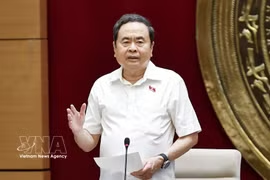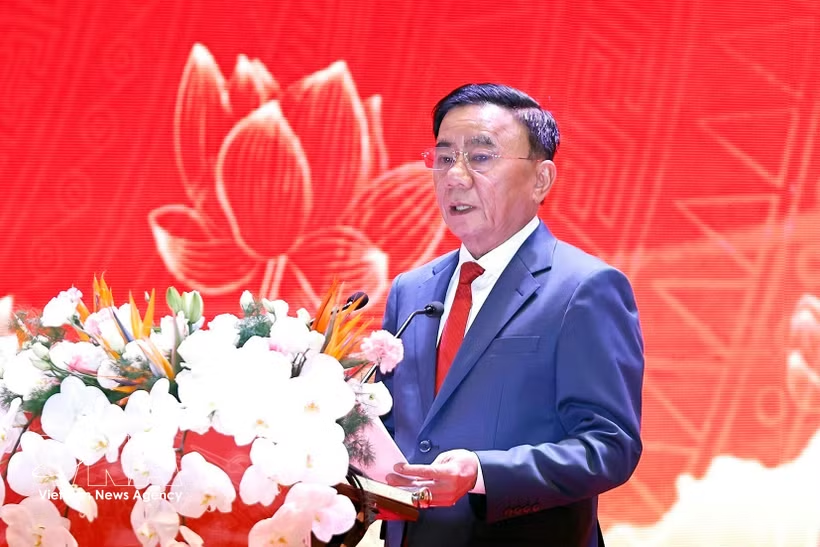
Hanoi (VNA) – Politburo member and Permanent member of the Party Central Committee’s Secretariat Tran Cam Tu has called for stronger reforms in the operations of People’s Councils at all levels while maintaining and enhancing the comprehensive leadership of the Party over local administrations.
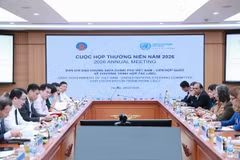
Addressing a national conference on May 28 reviewing orientations and tasks for People’s Councils for the 2026-2031 tenure, Tu stressed that the activities of People’s Councils must be “renewed more strongly” to meet growing governance demands in the new development period.
“Activities of People’s Councils at all levels need to be further strongly renovated, while continuing to uphold and strengthen the Party’s comprehensive leadership over the organisation and operation of local administrations,” he said.
The official noted that the 2026-2031 tenure would be of special importance as Vietnam accelerates the implementation of strategic development goals for 2030 and the vision towards 2045, while continuing to streamline the political system and improve the efficiency of local government structures.
In that context, he said People’s Councils would face significantly higher requirements in policymaking, supervision, policy responsiveness and coordination with local People’s Committees in addressing emerging issues.
Reviewing the 2021-2026 tenure, Tu acknowledged that local People’s Councils had played an important political role despite numerous challenges, including the prolonged impacts of the COVID-19 pandemic, global economic fluctuations, natural disasters and climate change.
He said the councils had helped ensure the smooth and effective transition of local government organisational models while maintaining uninterrupted operations.
Many localities had proactively introduced reforms to make council activities more democratic, professional and modern, while the quality and effectiveness of implementing resolutions had improved markedly, he noted.
Supervisory and questioning activities had also become more substantive and focused, while voter engagement and the application of digital transformation in council operations had recorded initial positive results.
However, Tu also pointed out several shortcomings, saying the performance of People’s Councils in some areas had yet to fully meet new requirements. In certain cases, Party committees’ leadership over council activities remained insufficiently close and comprehensive, while supervisory effectiveness was uneven among localities.
He also criticised weak follow-up on post-supervision recommendations and the lack of close coordination in some places.
The senior Party official requested Party committees to continue reforming leadership methods over People’s Councils in a more scientific, professional and effective manner, ensuring both the Party’s direct and comprehensive leadership and the proactive role, creativity and responsibility of councils' standing bodies, specialised committees and deputies.
He particularly stressed the importance of leadership in preparing and issuing council resolutions to ensure that all major local policies closely follow Party guidelines, match practical conditions and remain highly feasible.
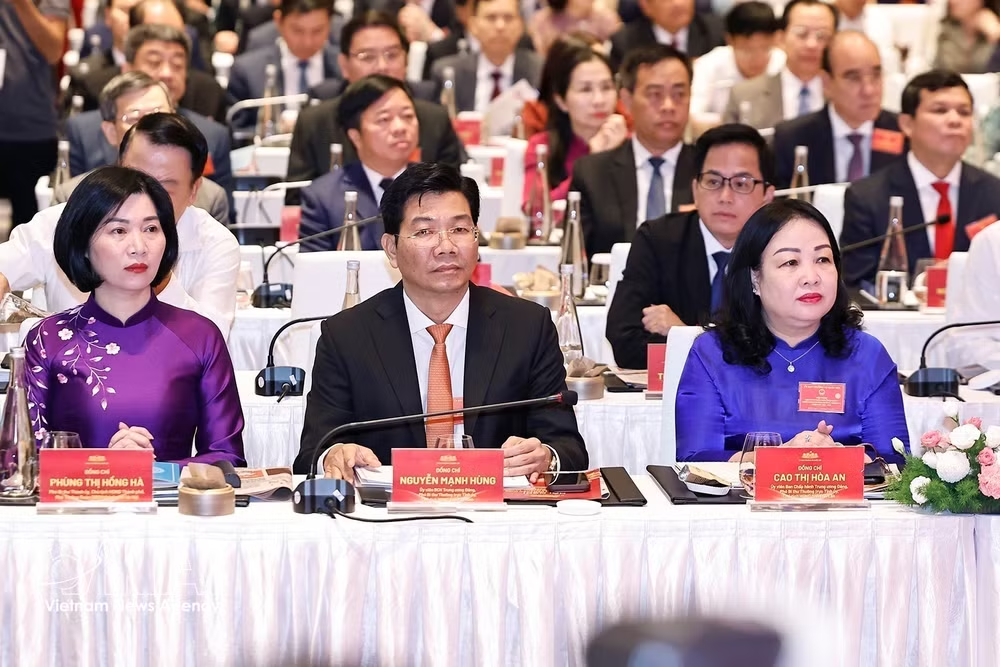
Party committees were also urged to strengthen inspection and supervision of the implementation of council resolutions and promptly rectify formalistic attitudes, irresponsibility, avoidance of accountability and bureaucracy.
Tu underlined the need to further enhance the role of People’s Councils in controlling power at the local level, especially as Vietnam promotes a two-tier local administration model alongside stronger decentralisation and delegation of authority.
As local administrations are granted greater powers and responsibilities, supervision and power control mechanisms must become stricter and more effective to prevent abuse of power and improper implementation of authority, he said.
He stressed that supervisory activities must serve as an important tool to prevent violations, corruption, wastefulness and other negative practices at an early stage.
Question-and-answer sessions, he added, must directly address key issues, clearly define responsibilities and avoid evasion of difficult or sensitive matters of public concern.
The official also called on local Party committees to pay greater attention to building a contingent of People’s Council deputies with strong political mettle, professional competence, ethical qualities and close ties with the people.
He urged increased training for council officials, particularly in supervision skills, policy criticism, digital technology application and handling emerging issues under the two-tier local government model.
According to Tu, People’s Councils play a particularly important role in concretising Party policies, ensuring the people’s right to mastery and maintaining public trust in the Party and the State./.