Hanoi (VNA) – The Vietnam Maritime Corporation (VIMC) will develop the Can Gio International Transshipment Port project as part of its strategy to expand port and logistics infrastructure, strengthen competitiveness, and lay the foundation for accelerated growth in the 2026–2030 period.
Risks remain
Speaking at VIMC’s 2026 annual general meeting of shareholders on April 15, Chairman of the Board Nguyen Canh Tinh said the corporation is targeting maritime cargo throughput of 23.78 million tonnes this year, up 10.5% from 2025, while port cargo volume is expected to reach 180.1 million tonnes, an increase of 11%.
The VIMC aims to generate revenue of 22.19 trillion VND (about 845 million USD), with pre-tax profit projected at 3.24 trillion VND and after-tax profit at 2.59 trillion VND.
However, Tinh warned that escalating tensions in the Middle East, particularly the conflict involving the US, Israel, and Iran, pose significant risks to global energy markets, supply chains, and logistics operations, directly affecting shipping, port, and logistics businesses.
He noted that major container shipping lines have already adjusted service routes, avoided high-risk ports, and introduced war-risk surcharges. If instability persists, shipping networks could undergo broader restructuring, with carriers increasing transshipment activities at safer intermediate ports and altering routes, while leading to longer transit times and higher freight rates on key trade lanes.
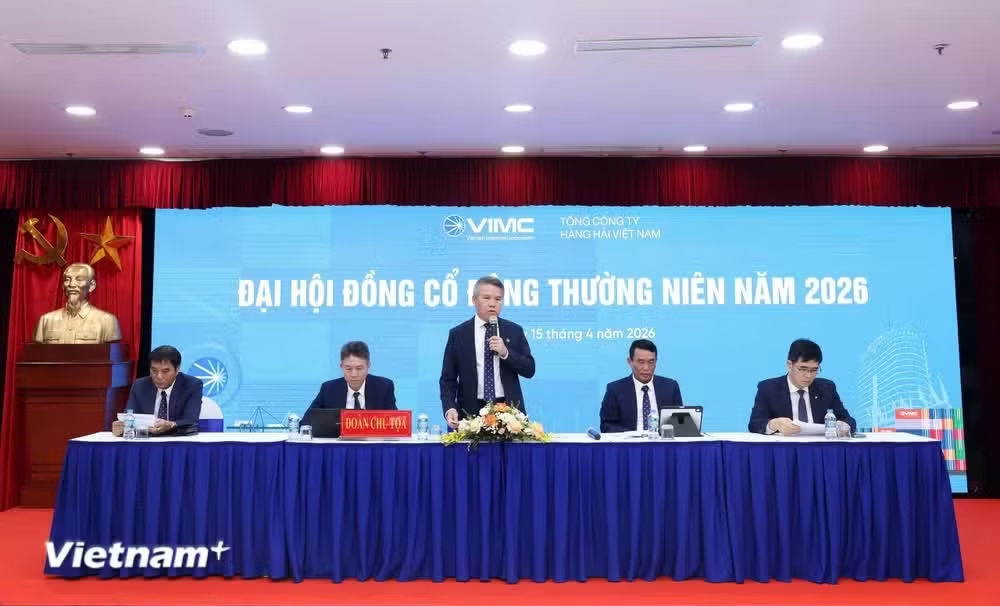
VIMC General Director Le Anh Son said marine fuel prices have surged to levels two to three times higher than assumptions used in the company’s business plan at the start of the year.
“With freight rates yet to improve significantly, fuel costs, which account for around 30% of shipping operating expenses, are placing tremendous pressure on fleet efficiency,” Son said, warning that sustained high fuel prices could seriously undermine the performance of the VIMC’s international fleet and business targets.
According to the corporation, monthly fuel expenses have increased by 40–51%, outsourced transport costs have risen by around 20%, and overall logistics service costs by 14–17%. The situation has also intensified working capital pressures, as operators must spend substantially more on fuel before receiving payments from customers.
Ambition for a super transshipment port
Despite these challenges, the VIMC is pressing ahead with its long-term strategy to become a leading regional maritime group through fleet modernisation, deep-water port development, integrated logistics investment, improved governance and deeper integration into global supply chains.
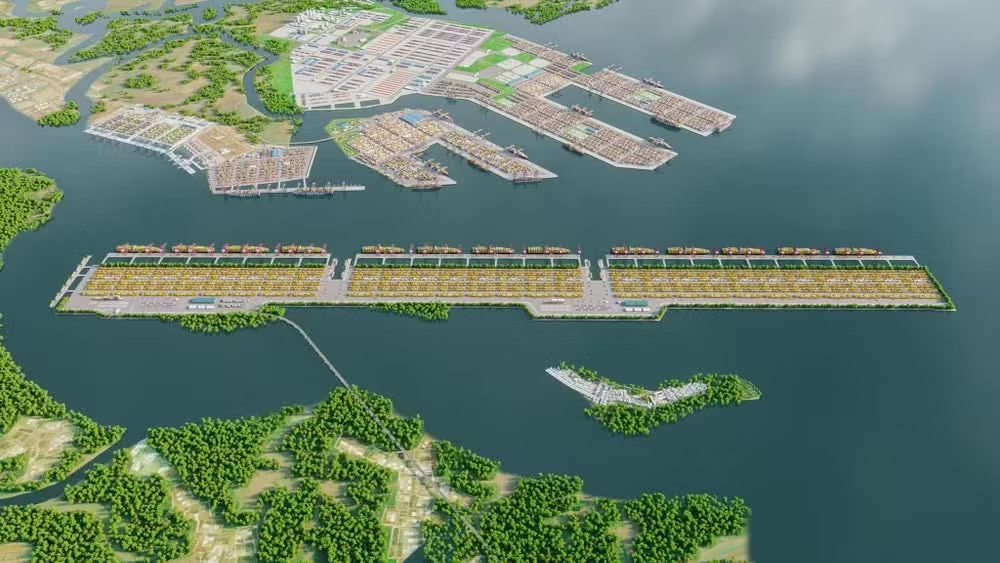
A key component of that strategy is the Can Gio International Transshipment Port project, which has a total investment capital of nearly 128.9 trillion VND.
Tinh said the VIMC’s board has approved a flexible approach to managing market volatility while maintaining investment momentum. The corporation will continue implementing measures to preserve and enhance the efficiency of State capital and maximise returns for shareholders.
“In 2026, the VIMC will serve as an investor in the Can Gio International Transshipment Port project, helping develop deep-water and international transshipment facilities, expand maritime and logistics infrastructure and strengthen operational capacity and competitiveness, with sustainable development as a core value,” he said.
The project is regarded as strategically important for Vietnam’s socio-economic development, national competitiveness and logistics network enhancement.
Under the proposed investment structure, the VIMC will hold a 36% stake in the joint venture, while Saigon Port Corporation will own 15% and strategic partner MSC/TIL will hold the remaining 49%.
The VIMC said the partnership aligns with Vietnam’s marine economic development strategy and its own deep-water port investment plans, while reflecting the Party’s policy of promoting public-private cooperation in infrastructure development and management.
To ensure project efficiency and safeguard State capital, the corporation plans to optimise its financing structure by balancing equity and borrowing based on available resources.
Alongside the Can Gio project, the VIMC intends to retain existing customers, expand market share, develop new shipping routes and strengthen integrated logistics services built around its port-shipping-logistics ecosystem.
The corporation also plans to accelerate investment in logistics infrastructure and fleet modernisation while making science and technology, innovation, digital transformation and green transition the key drivers of future growth and competitiveness./.