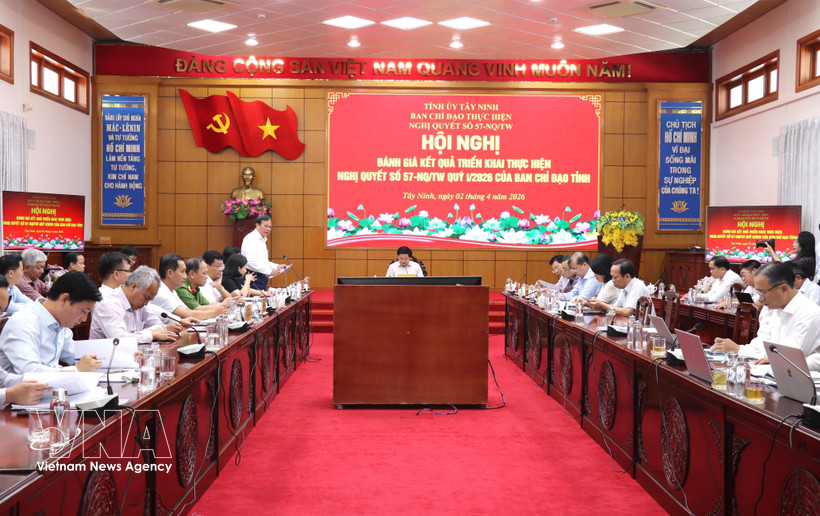
Tay Ninh (VNA) – The southern province of Tay Ninh has rolled out effective measures to accelerate digital transformation in line with the Politburo Resolution No. 57-NQ/TW on breakthroughs in science and technology development, innovation and digital transformation.
A report by the provincial People’s Committee at a meeting on April 2 of the provincial steering committee on implementing Resolution 57 showed that the locality has carried out promptly advisory and institutionalisation work from the beginning of 2026. Based on central directions, the Standing Board of the provincial Party Committee issued Plan No. 35-KH/TU on February 12, 2026, setting out 62 targets and 150 tasks, clearly assigning responsibilities to departments, sectors and local authorities.
Inspection and supervision activities have been conducted rigorously. The province introduced self-assessment procedures in line with decisions of the Ministry of Science and Technology, considering them an important measure of state management effectiveness. Systems for receiving public and business feedback have also operated efficiently, ensuring timely responses to recommendations.
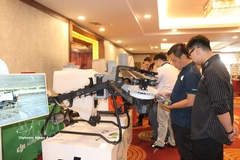
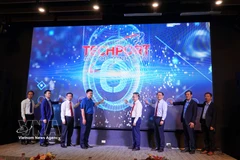
In science, technology and innovation, Tay Ninh has identified six major priorities: development of the digital economy, a carbon credit market, a Halal ecosystem, renewable energy, enterprise innovation support, and applications of artificial intelligence and big data. The provincial Innovation Centre has been inaugurated, while robotics competitions and start-up initiatives have helped foster a culture of creativity within the community.
Digital transformation infrastructure continues to expand, with 5G coverage reaching all communes and wards and fibre-optic internet access available to 96.25% of households. The province is accelerating the completion of digital platforms and databases, while document digitisation is underway and expected to be completed in 2026.
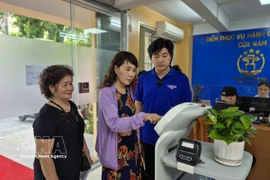
Positive progress has also been recorded in digital government and public services. Shared systems are operating stably, improving administrative management and public service delivery. Tay Ninh is piloting proactive public administrative services while advancing administrative reform alongside high-quality human resource development.
In developing the digital and social economy, technologies such as blockchain, QR codes in agriculture and e-invoices have been effectively applied. Digital citizen utilities, national population database integration and electronic identification services have also delivered encouraging results.
However, challenges remain, including insufficient information technology personnel, particularly at the commune level, where only 45.8% of officials have IT expertise. As of late March 2026, nine commune-level units had yet to complete approval of job positions. Slow investment procedures in several projects have also affected public investment allocation and disbursement, impacting overall targets under the resolution.
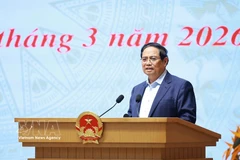
In his concluding remarks, Secretary of the provincial Party Committee Nguyen Van Quyet said the report clearly outlined achievements but should further assess implementation results against assigned requirements. He stressed that delays in implementing directives reflected shortcomings in awareness and accountability.
He called for stronger leadership responsibility and urgent removal of bottlenecks related to financial resources and investment procedures. The requirement to allocate at least 3% of the budget to science and technology must be strictly implemented, and all projects must complete procedures before April 15, 2026.
Human resources were identified as the decisive factor. The provincial People’s Committee was urged to finalise approval of job positions before April 30, and develop mechanisms to attract high-quality personnel.
In the second quarter of 2026, the province will focus on institutional improvements, accelerating digital transformation and speeding up public investment disbursement./.
See more
Plan issued to implement Vietnam–France agreement on science-technology cooperation
Under the plan, the Ministry of Science and Technology will take the lead, in coordination with relevant ministries and agencies, in directing, guiding, monitoring and inspecting the implementation of the agreement. The ministry will also prepare reports on the signing and implementation progress for submission to the Ministry of Foreign Affairs for consolidation and reporting to competent authorities as required.
IP mechanisms need refinement to facilitate strategic technologies
As strategic technologies evolve, IP is no longer seen solely as a legal shield but increasingly as a tool to unlock market value.
Vietnam accelerates 5G rollout, paving the way for 6G development
Vietnam’s approach of deploying 5G rapidly and extensively reflects a consistent development philosophy aligned with international experience: infrastructure must come first.
Sci-tech revenue up 17% in March
The sci-tech sector contributed 133.5 trillion VND to the country’s gross domestic product (GDP) in March, a 28% increase from the same period last year.
Controlled piloting of Starlink satellite Internet service to last for five years
As part of its deployment plan, Starlink will build four gateway stations in Phu Tho, Da Nang, and Ho Chi Minh City to ensure stable connectivity while complying with Vietnam’s cybersecurity requirements.
Project aims to enhance capacity of national cybersecurity protection force
The project aims to strengthen overall capabilities and develop an elite and modern cybersecurity force able to proactively prevent and effectively respond to all cyber risks and threats, safeguarding national security, social order and safety, and the rights and lawful interests of organisations and individuals in cyberspace.
Da Nang boosts hi-tech partnership with Germany’s Chemnitz City
Authorities in Da Nang hope Chemnitz and German partners will continue to accompany and support the city in accessing advanced technologies, connecting experts, integrating into innovation ecosystems, and attracting high-tech enterprises and supporting industries to explore investment and long-term cooperation opportunities.
Breakthroughs in Resolution 57 implementation need to be measured by results
With synchronised direction and unified implementation, ministries, sectors and localities are translating the Resolution into concrete institutions, mobilised resources and measurable outcomes.
Strategic tech must address practical challenges: PM
Prime Minister Pham Minh Chinh called for the rollout of a strategic technology development programme, alongside the completion of incentive policies to attract tech giants and develop key tech products, particularly in semiconductors and AI.
Ho Chi Minh City eyes place among Southeast Asia’s leading tech, innovation hubs
Ho Chi Minh City is aiming to become a leading science, technology and innovation hub in Southeast Asia by 2030, with investment in research and development expected to reach 2-3% of its GDP and the private sector accounting for more than 60% of the R&D spending.
Experts give ideas to build AI economy from data
Vietnam’s economic growth over past decades has largely relied on labour expansion, capital accumulation, export promotion and deep global trade integration, but as the country enters a higher development stage, this model is showing limitations.
Vietnam, India ink deal to step up IT cooperation
Under the terms of the MoU, the two sides will jointly push trade and investment in IT and services, arrange business delegations and business-to-business meetings, share market and policy information, and help companies access partnership opportunities and expand into new markets.
Vietnam looks to Europe for AI, nuclear medicine expertise
Vietnam needs a long-term strategy to develop specialised research and development centres in nuclear medicine, a process that will require substantial time, resources and meticulous planning.
Vietnam approves atomic energy development strategy, targeting civil applications
Tran Chi Thanh, Director of the Vietnam Atomic Energy Institute under the Ministry of Science and Technology, underscored that in the coming period, the institute and its affiliated units will continue promoting their strengths to promote the safe and secure application of atomic energy, contributing effectively to socio-economic development goals.
FPT joins top 35 global AI application development service providers
The recognition reflects FPT’s end-to-end AI capabilities, spanning strategic consulting, solution design, application development, and the integration and deployment of AI systems in real-world operations. Notably, the company has developed IvyHub, an integrated agentic AI platform that enables enterprises to design, deploy and manage AI agents at scale.
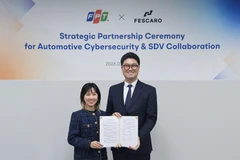
FPT, Korean firm seal deal on comprehensive automotive cybersecurity solutions
The partnership is intended to strengthen FPT’s cybersecurity capabilities in automotive software projects while laying the groundwork for joint development of solutions for software-defined vehicles (SDVs) in the RoK and the world.
Ho Chi Minh City sets sights on becoming semiconductor hub
A central component of the plan is expanding cooperation with global technology leaders such as AMD, NVIDIA and Qualcomm. These partnerships are expected to support technology transfer, strengthen chip design capabilities and help the city move further up global semiconductor value chains.
Resolution 57 delivers tangible outcomes from local practice
In the course of implementing this resolution, the northern province of Quang Ninh has emerged as one of the early movers in translating strategic orientations into comprehensive development models linked to innovation and digital transformation.
Ho Chi Minh City launches upgraded technology exchange platform
The upgraded platform represents a comprehensive shift from a simple information-sharing model to a managed online technology trading system, enabling monitoring and measurement of real transaction outcomes. It is built on three pillars, namely new tradable technology products, a modern digital platform, and an improved operational model.
Resolution 57: Vietnam advances domestic AI ecosystem
At the forefront of this push are major technology groups such as VNPT, Viettel, FPT and CMC Corporation, which are playing a leading role in shaping the domestic AI ecosystem.