Hanoi (VNA) – Remaining steadfast in its philosophy of "Respecting Mother Nature" in all business and production activities, TH Group is contributing to Vietnam’s commitment to achieving "Net Zero" made at COP26 through a wide range of sustainable development initiatives and solutions.
So far, the principle of “Commitment matches with action” towards Net Zero has enabled TH Group to reduce total greenhouse gas (GHG) emissions by up to 85% compared to previous levels, and cut more than 500 tonnes of plastic annually.
Reducing GHG emissions, promoting circular economy
Vietnam’s commitment to Net Zero by 2050, as announced at the 2021 UN Climate Change Conference (COP26) and reaffirmed at COP27, has become a milestone for building a green, sustainable economy. Businesses are expected to take the lead.
Cao Minh Hoa, Technical Director of TH True Milk Factory, said that from the very beginning, founder of the group - Labour Heroine and entrepreneur Thai Huong - defined green growth and a sustainable circular economy as core strategies, underpinned by the guiding principle of “Respecting Mother Nature.”
According to the plan, TH Group aims to reduce average annual GHG emissions by 15% at its farms and factories. The total GHG emissions per unit of product are also targeted to fall by an average of 15% per year.
Thanks to synchronised solutions and decisive actions from leaders to every unit and employee, the group’s farms surpassed the 2022 target, achieving a 20% reduction in direct and indirect GHG emissions per unit of product.
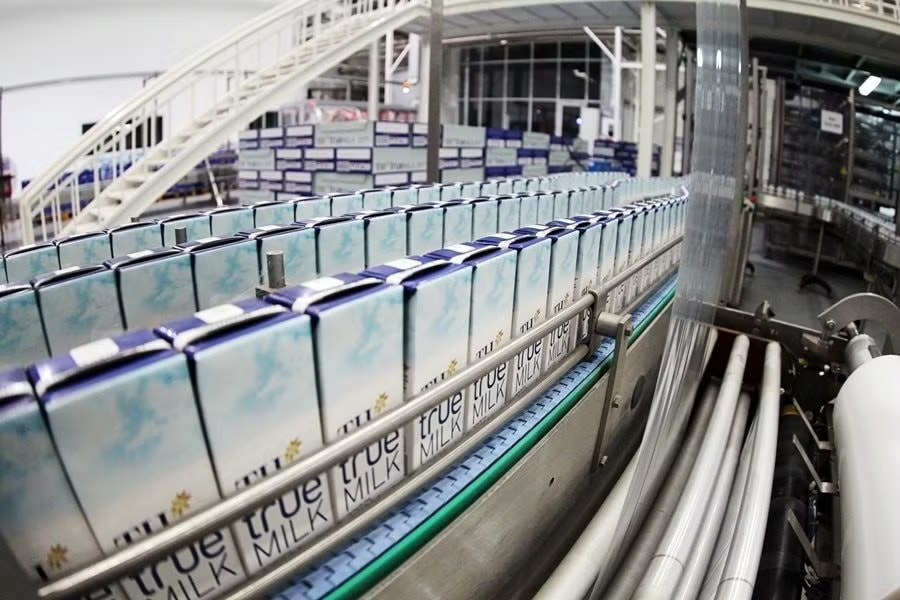
Notably, TH Milk JSC - a key production facility of the group which is supplying hundreds of high-quality fresh milk products - achieved an average emissions reduction of 0.168 kg CO₂ per litre of milk for two consecutive years 2019 and 2020, lower than the permitted limit.
Additionally, the TH Milk Factory has taken the lead in switching to environmentally friendly fuels, replacing fossil fuel (FO oil) with biomass fuel. According to Hoa, this green fuel is not only cheaper but also produces cleaner, safer emissions.
The factory now operates two biomass boilers. The steam generated meets all production needs, including sterilising equipment, heating water, and cleaning pipelines. Condensed water is also recovered from key equipment, accounting for 50-60% of total steam volume used, further conserving fuel during production.
Introducing about the factory's boiler area, Nguyen Van Hung, head of the factory's Utilities Department, said the work environment for boiler operators has greatly improved since switching from fossil fuels.
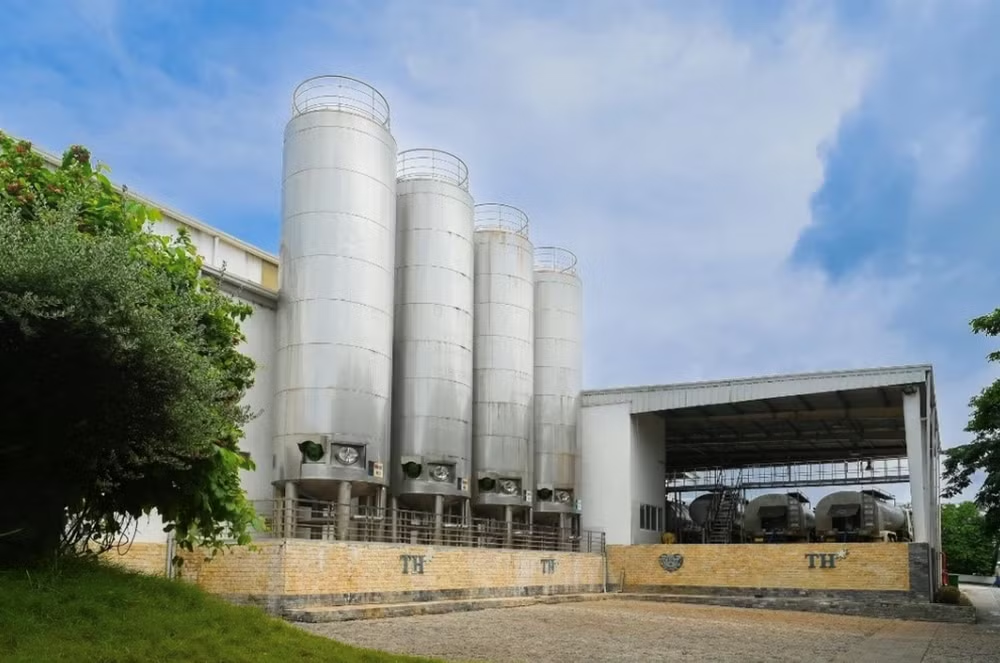
Hung explained that FO oil contains 3.4% sulfur, which, when burned, releases SO₂ and SO₃ gases that can form acid rain. In contrast, the biomass boilers filter emissions before release. Exhaust gases pass through dust-suppressing and membrane filtering systems that trap 99% of ash particles.
Given its many advantages, the biomass fuel solution has quickly been replicated across TH Group’s other factories. Overall in 2022, the transition helped the group cut GHG emissions by more than 85% compared to 2021.
Applying technologies, solutions to minimise plastic waste
In addition to reducing GHG emissions, TH Group has long pursued innovations to cut plastic use in production. A notable initiative was eliminating shrink wrap on bottle caps across all products.
Nguyen Van Nang, Director of the Nui Tien Pure Water, Herbal and Fruit Beverage Factory, said the plant produces dozens of high-quality bottled drinks, including TH true Water, TH true RICE (red brown rice water), and fruit juices.
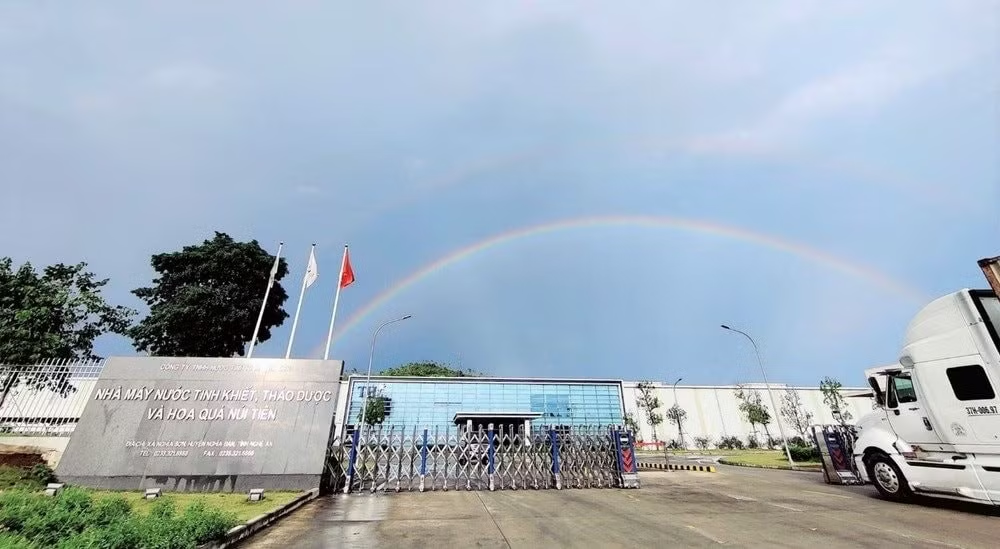
Launched in February 2019, the plant has continued to upgrade its systems with the dual goals of maintaining product quality and reducing environmental impact.
“In the past, shrink-wrapped bottle caps were needed due to older technology, which couldn’t guarantee air-tight sealing,” Nang explained. “With our current advanced sealing technology, there's no need for plastic film. This single change cuts 40 tonnes of plastic annually.”
Plastic reduction efforts also extend to bottle production. For fruit juice bottles, plastic weight has been reduced from 14.5g to 12g per bottle. Label thickness has also been cut to just 35 micrometres - the thinnest plastic label in Vietnam to date.
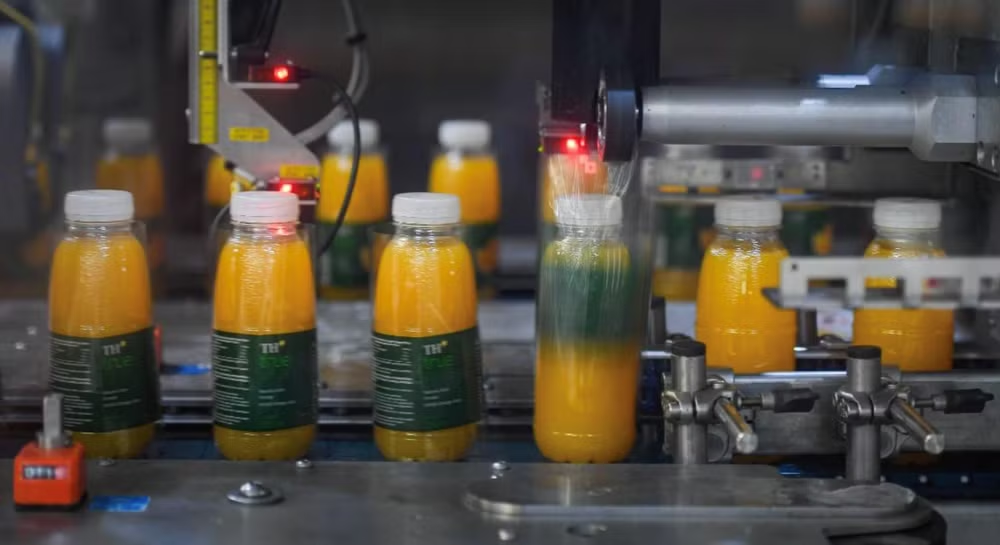
Calculations show that thanks to its comprehensive approach, TH Group now cuts approximately 500 tonnes of plastic during production each year.
“Reducing plastic not only lowers costs, but it’s a smart, eco-friendly choice,” Nang added. “Alongside providing healthy, high-quality products, TH employees are striving to turn our ‘Respect Mother Nature’ philosophy into reality through modern technology and sustainable action.”
Through daily practical efforts, Nang and his colleagues hope to affirm TH Group’s pride in its green growth strategy and ongoing commitment to supporting Vietnam’s Net Zero goal - working toward a cleaner, greener future for all./.