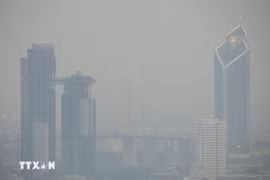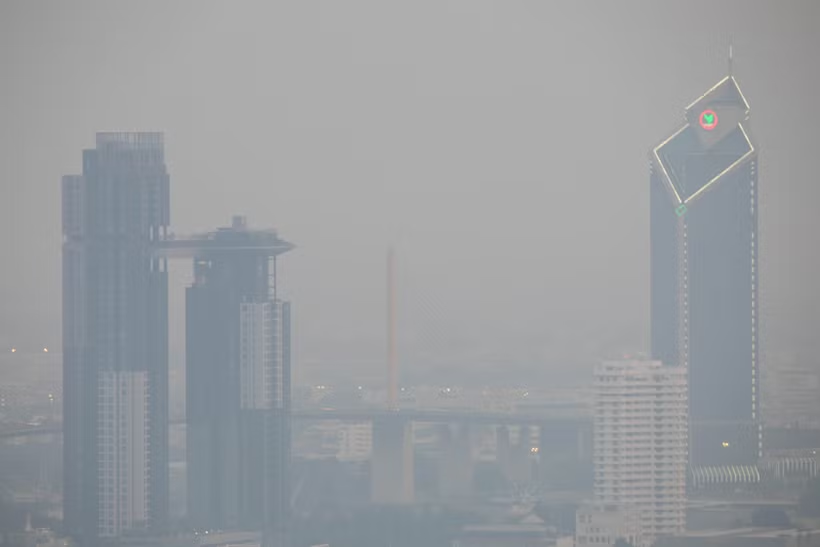
Bangkok (VNA) - Fine particulate pollution (PM2.5) has once again emerged as a serious concern in Thailand, particularly in the northern region, where prolonged high pollution levels have accumulated and begun to pose widespread risks to public health.
Dr. Somruk Chungsaman, Permanent Secretary of the Ministry of Public Health, said the latest air quality monitoring found that the 24-hour average PM2.5 concentration had exceeded the safety standard of 37.5 micrograms per cubic metre in 41 provinces.
Of those, 32 provinces have recorded PM2.5 levels above the standard continuously for more than three days, reflecting a prolonged build-up of pollution.
Northern provinces remain the most critical areas, particularly Chiang Mai, Chiang Rai, Lamphun and Nan, where high PM2.5 accumulation has continued for several days.
In response, the Public Health Ministry has stepped up its measures by activating Public Health Emergency Operations Centres (PHEOC) in 12 provinces to speed up management efforts and reduce health impacts on the public, especially vulnerable groups such as young children, older people and those with underlying health conditions.
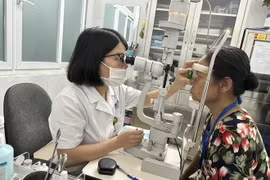
On the ground, proactive health screening has already been carried out for more than 29,000 people in red-zone risk areas, covering 75 districts. Authorities have also stockpiled more than 1.7 million surgical masks and over 180,000 N95 masks to prepare for a situation that may drag on.
At the same time, health service units are closely tracking patient data through hospital information systems in order to assess health impacts in detail.
The Ministry of Public Health has issued nine directives to provincial public health offices and all relevant operational teams in Health Region 1, requiring a review of data on patients affected by PM2.5 pollution and calling for close coordination with provincial governors to enable the use of disaster-declaration powers to accelerate procurement of essential supplies, such as dust-protection screens and face masks. The measures also include the provision of proactive healthcare services, particularly for vulnerable groups in heavily affected areas./.