Indonesia seeks alternative naphtha sources amid Mideast supply risks

Currently, about 70% of Indonesia's naphtha supply comes from the Middle East, while limited domestic refining capacity makes the petrochemical industry heavily dependent on imports.

Jakarta (VNA) – Indonesia is seeking alternative sources of naphtha from Africa, India, and the US amid disruptions to supplies from the Middle East due to escalating geopolitical tensions and shipping issues through the Strait of Hormuz.

Naphtha, a petroleum byproduct, is a crucial input for the production of ethylene and propylene, two key components of plastics. Currently, about 70% of Indonesia's naphtha supply comes from the Middle East, while limited domestic refining capacity makes the petrochemical industry heavily dependent on imports.

According to Fajar Budiono, secretary general of the Indonesian Olefin, Aromatic and Plastic Industry Association (Inaplas), disruptions to shipping through the Strait of Hormuz have severely impacted supplies from the Middle East. The pressure has spread to downstream industries, directly affecting profitability, especially for small businesses. The Indonesian Food & Beverage Industry Association (Gapmmi) also noted a 50–60% increase in packaging costs due to rising raw material prices.

Faced with this situation, businesses are being forced to seek alternative sources of supply from Africa, Central Asia, and the US, although this will significantly extend shipping times. Goods from the Middle East take only 10–15 days to reach Indonesia, while shipments from alternative regions can take at least 50 days.

In addition, Indonesian businesses are promoting solutions such as increasing the use of recycled materials, redesigning packaging to reduce plastic usage, and diversifying input materials beyond naphtha, including condensate, liquefied petroleum gas (LPG), and propane. Inaplas has also urged the government to consider reducing import taxes on LPG to make this raw material more competitive.

The Indonesian textile industry is also experiencing a ripple effect. According to Redma Gita Wirawasta, chairwoman of the Indonesian Fibre and Filament Yarn Producers Association (APSyFI), polyester prices have increased by approximately 40%, while rayon prices have risen by 15% due to higher acetic acid and transportation costs. Although the supply of raw materials such as PX, PTA, and MEG remains secure until the end of April, the increased costs may force downstream industries to further reduce production./.


VNA

See more

Petronas President and CEO Tan Sri Tengku Muhammad Taufik Tengku Aziz (Photo: Bernama)

Malaysia’s crude oil supply remains abundant

Petronas President and CEO Tan Sri Tengku Muhammad Taufik Tengku Aziz, said that almost 40% of Malaysia's crude oil imports pass through the Strait of Hormuz, compared with nearly 90% for other ASEAN nations that rely on the route.

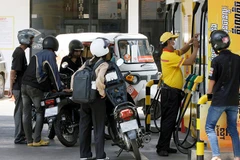
Thailand investigates illegal fuel stockpiling activities

Thailand investigates illegal fuel stockpiling activities

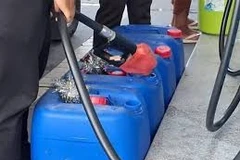
The investigation was launched after information circulated on social media alleging that a foreign logistics company had stored large volumes of fuel at a depot on Kanchanavanich Road. Songkhla Governor Rattasat Chidchu immediately ordered an inspection of the site.

Indonesia: Dozens of students hospitalised after free school meal

Indonesia: Dozens of students hospitalised after free school meal

Indonesia's government-funded free school meal programme was introduced in early 2025 with the aim of improving child nutrition and reducing malnutrition rates. The initiative, however, has faced repeated criticism following a number of food poisoning cases reported in various localities.

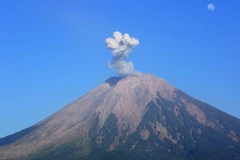
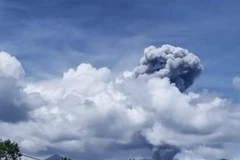
Mount Semeru, the highest volcano on Java Island, erupts repeatedly on April 6. (Photo: lokmattimes.com)

Indonesia raises alert as Mount Semeru erupts repeatedly

Observation data showed that the volcano erupted at least seven times from shortly after midnight, with the first recorded at 12:38am local time. The most powerful eruption occurred at 6:51am, when the ash plume reached its peak height of around 1,100m.

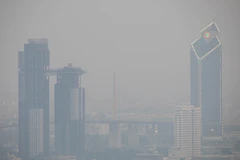
Smog blankets the sky over Bangkok, Thailand. (Photo: Xinhua/VNA)

Thailand steps up measures to tackle PM2.5 air pollution

Dr. Somruk Chungsaman, Permanent Secretary of the Ministry of Public Health, said the latest air quality monitoring found that the 24-hour average PM2.5 concentration had exceeded the safety standard of 37.5 micrograms per cubic metre in 41 provinces.

Thailand tightens crude palm oil export controls

Thailand tightens crude palm oil export controls

According to Announcement No. 1 of 2026 published by the Central Committee on the Price of Goods and Services in the Royal Gazette, no one may export crude palm oil, from April 7 onwards unless they first obtain written permission from the secretary-general of the Central Committee.

BOI Secretary-General Narit Therdsteerasukdi (Photo: thainews.prd.go.th)

BOI reports surge in Thai investment driven by tech shift

The Board of Investment (BOI) has reported strong growth in domestic investment, with Thai-majority companies increasing investment value by 86% in 2025 as businesses expand into new industries. Total investment exceeded 670 billion THB, driven by a shift toward technology, innovation, and sustainability.

Mount Dukono in North Halmahera, erupts with an ash column reaching 1,400 meters above the peak on April 4, 2026. (Photo: ANTARA/HO- PGA Dukono/rst)

Two Indonesian volcanoes erupt simultaneously

Indonesia’s Mount Dukono in North Maluku province and Mount Semeru in East Java province erupted on April 5, prompting authorities to issue safety warnings to residents and tourists.

Illustrative image (Photo: Straitstimes)

Malaysia moves to crack down on online frauds

Two Malaysia commissions made commitment to intensifying efforts against fraudulent schemes exploiting digital platforms, including the use of artificial intelligence and emerging technologies to enhance detection, investigation and enforcement.