Thailand tightens crude palm oil export controls

According to Announcement No. 1 of 2026 published by the Central Committee on the Price of Goods and Services in the Royal Gazette, no one may export crude palm oil, from April 7 onwards unless they first obtain written permission from the secretary-general of the Central Committee.

Bangkok (VNA) – Thailand will tighten controls on crude palm oil (CPO) exports from April 7, requiring exporters to obtain prior written approval in a move aimed at protecting domestic supply amid rising energy and export demand.

According to Announcement No. 1 of 2026 published by the Central Committee on the Price of Goods and Services in the Royal Gazette, no one may export crude palm oil, from April 7 onwards unless they first obtain written permission from the secretary-general of the Central Committee.

Applications must be filed with the Office of the Central Committee on the Price of Goods and Services at the Department of Internal Trade under the Commerce Ministry.

The announcement says the control measure will apply nationwide for one year from the day after publication, unless a new notice is issued earlier.

Exporters granted approval must ship only the type, quantity, timeframe and destination stated in the permit, and the permit must accompany every export shipment. Each permit may be used for one export only. Any shipment that fails to comply with those conditions will be treated as an unauthorised export.

The announcement was signed on March 26 by Suphajee Suthumpun, who is currently deputy prime minister and commerce minister, in her capacity as chair of the Central Committee on the Price of Goods and Services.

The committee said the step followed its March 25 resolution that the conflict in the Middle East had continued to drive global petroleum prices higher. At the same time, the energy sector is expected to increase biodiesel blending in diesel, while demand for Thai crude palm oil exports has also risen, pushing up the likelihood of stronger domestic demand for crude palm oil.

The stated aim is to manage crude palm oil volumes in line with market conditions and maintain balance across consumption, industry and energy, while ensuring there is enough supply for domestic use throughout the year./.

source

See more

Indonesia: Dozens of students hospitalised after free school meal

Indonesia: Dozens of students hospitalised after free school meal

Indonesia's government-funded free school meal programme was introduced in early 2025 with the aim of improving child nutrition and reducing malnutrition rates. The initiative, however, has faced repeated criticism following a number of food poisoning cases reported in various localities.

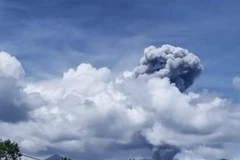
Mount Semeru, the highest volcano on Java Island, erupts repeatedly on April 6. (Photo: lokmattimes.com)

Indonesia raises alert as Mount Semeru erupts repeatedly

Observation data showed that the volcano erupted at least seven times from shortly after midnight, with the first recorded at 12:38am local time. The most powerful eruption occurred at 6:51am, when the ash plume reached its peak height of around 1,100m.

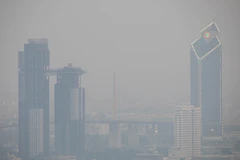
Smog blankets the sky over Bangkok, Thailand. (Photo: Xinhua/VNA)

Thailand steps up measures to tackle PM2.5 air pollution

Dr. Somruk Chungsaman, Permanent Secretary of the Ministry of Public Health, said the latest air quality monitoring found that the 24-hour average PM2.5 concentration had exceeded the safety standard of 37.5 micrograms per cubic metre in 41 provinces.

BOI Secretary-General Narit Therdsteerasukdi (Photo: thainews.prd.go.th)

BOI reports surge in Thai investment driven by tech shift

The Board of Investment (BOI) has reported strong growth in domestic investment, with Thai-majority companies increasing investment value by 86% in 2025 as businesses expand into new industries. Total investment exceeded 670 billion THB, driven by a shift toward technology, innovation, and sustainability.

Mount Dukono in North Halmahera, erupts with an ash column reaching 1,400 meters above the peak on April 4, 2026. (Photo: ANTARA/HO- PGA Dukono/rst)

Two Indonesian volcanoes erupt simultaneously

Indonesia’s Mount Dukono in North Maluku province and Mount Semeru in East Java province erupted on April 5, prompting authorities to issue safety warnings to residents and tourists.

Illustrative image (Photo: Straitstimes)

Malaysia moves to crack down on online frauds

Two Malaysia commissions made commitment to intensifying efforts against fraudulent schemes exploiting digital platforms, including the use of artificial intelligence and emerging technologies to enhance detection, investigation and enforcement.

Illustrative image (Photo: Bernama)

Malaysia rolls out proactive measures to cushion global energy crisis impacts

According to the Deputy PM, the government, in coordination with the national oil and gas company Petronas and industry players, is conducting daily monitoring of the fuel supply chain. A contingency plan has also been prepared to guarantee uninterrupted supply under all circumstances, including sourcing from alternative markets in the event of prolonged disruptions. As a result, Malaysia’s fuel supply has remained stable.

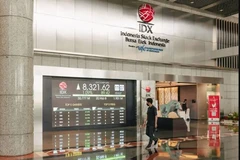
Indonesia reforms its stock market

Indonesia reforms its stock market

This move comes after global index compiler MSCI warned it might downgrade the Indonesian market amid investor concerns about a lack of transparency in shareholding structure and signs of coordinated trading activities.

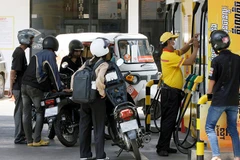
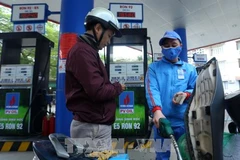
A customer purchases E5RON92 bioethanol fuel at a PVOIL gas station on Thai Thinh street, Hanoi. (Photo: VNA)

Golden time for biofuel energy in Vietnam: Japanese company

While Vietnam’s biofuel programme has been quietly building for nearly a decade since E5 bio-gasoline officially introduced in 2018, the programme itself has been pulled forward with the rollout of E10 biofuel nationwide from June 1, 2026, one month earlier than the previous schedule, due to the impact of the soaring global oil prices resulting from the Middle East tensions.

Illustrative image (Photo: EPA)

Thailand, Singapore respond to energy crisis

The Thai Government continues to spend 30 million THB daily to subsidise Liquefied Petroleum Gas (LPG), a move intended to keep food prices stable and protect the general cost of living.

Air pollution in northern Thailand remains at alarming levels

Air pollution in northern Thailand remains at alarming levels

Data from monitoring stations indicate that concentrations of fine particulate matter (PM2.5) have at times exceeded 900 micrograms per cubic metre, approximately 60 times higher than the 24-hour average guideline set by the World Health Organisation.