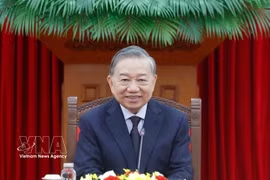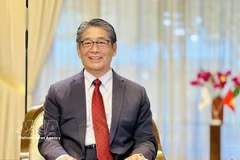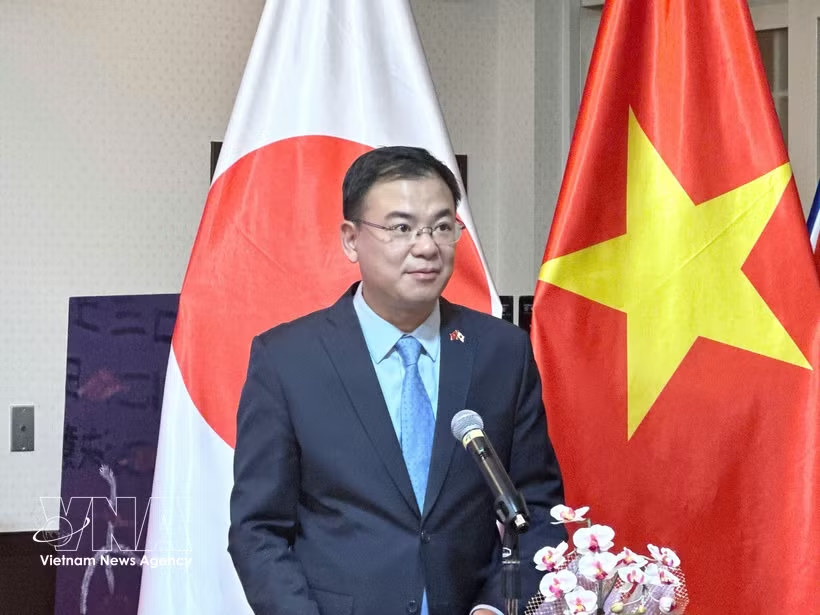
Tokyo (VNA) – The upcoming official visit to Japan by General Secretary of the Communist Party of Vietnam Central Committee and President To Lam is expected to open up new areas of cooperation, strengthen political trust and create fresh momentum for the Vietnam-Japan Comprehensive Strategic Partnership, particularly in science and technology, innovation, human resources development and cultural exchanges, Vietnamese Ambassador to Japan Pham Quang Hieu has said.
In an interview with the Vietnam News Agency (VNA)'s correspondent in Tokyo ahead of the visit, scheduled for November 8-11, Hieu said this would be General Secretary and President Lam's first visit to Japan in his capacity as the top leader of the Party and State. It comes at a time when both countries are facing new development requirements.
Vietnam is accelerating industrialisation and modernisation towards its two centenary development goals in 2030 and 2045, while Japan is working to generate new growth drivers by linking economic development with science and technology, strengthening national power and restoring its leading position in key economic and technological sectors. An important common ground is that both countries regard science and technology, innovation and human resource quality as decisive factors for future development, he said.
Japan has strengths in technology, capital, industrial foundations and management experience, while Vietnam offers human resources, a dynamic market and a strong development aspiration. This creates favourable conditions for the two countries to turn their complementary strengths into shared development capabilities, he noted.
Drawing on his experience as ambassador, Hieu said the bilateral relationship had a valuable foundation built on trust fostered by generations of leaders, long-standing business cooperation and close people-to-people ties. Japan has accompanied Vietnam in infrastructure development, industrial growth and human resources training. These achievements are now contributing increasingly to the economic and social development of both countries, making their cooperation more reciprocal and closely linked to their shared interests and development prospects.
According to the ambassador, the overarching message of this visit will be to jointly define and establish a new, higher-level framework for cooperation, open up development opportunities in strategic fields with a long-term vision, and create shared value so that people can benefit from these achievements.
Hieu outlined five major priorities to be promoted during the visit.
First, it will reaffirm Vietnam's high regard for Japan and its long-term strategic orientation towards the bilateral relations. Japan remains one of Vietnam's most important and long-term comprehensive strategic partners, and the two countries wish to work together as partners pursuing mutual development and benefits.
Second, the visit will strengthen political trust, particularly personal trust between their senior leaders. Direct exchanges will help both sides better understand each other's priorities, agree on major orientations and address outstanding issues, providing an important foundation for long-term cooperation.
Third, the two countries will promote cooperation to enhance their strategic autonomy and resilience. This will involve closer economic links, connecting trade and investment with science and technology, innovation and high-quality human resources development.
"We want to promote concrete programmes on joint research, technology transfer and mastery, and the training of experts and engineers, while strengthening links between businesses, universities and research institutes," he said.
Semiconductors, artificial intelligence, digital transformation, energy and green transition are among the promising areas. "What we aim for the two countries to conduct research, manufacture and develop together across value chains," he added.
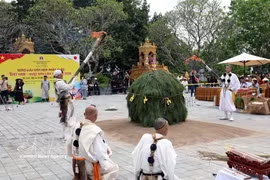
Fourth, the visit will promote closer people-to-people and local-level ties through tourism, cultural exchanges, education and cooperation among young people. The nearly 700,000-strong Vietnamese community in Japan is an important bridge between the two nations.
Cultural diplomacy will be a highlight, with a range of exchange activities, including the first Vietnam-Japan Art Sculpture Exhibition themed "Dialogue".
Fifth, the two countries will strengthen coordination and comprehensive cooperation within multilateral frameworks, upholding international law, including the United Nations Charter, settling disputes through peaceful means and making responsible contributions to regional and global peace, stability and cooperation.
The ambassador stressed that the Vietnamese Embassy's key task would be to translate high-level orientations into practical results. Following the visit, the embassy will work with relevant partners to identify responsibilities, focal points and implementation timelines for the agreements.
"Our goal is to find the right partners, connect the right needs and promote concrete projects. The key measure of the visit's success must be tangible benefits for the people and businesses of both countries," he said.
Regarding the Vietnamese community in Japan, Hieu said its members made positive contributions to Japan's economic and social life as well as Vietnam's development. They currently form the second-largest foreign community in Japan, with increasingly diverse backgrounds, including workers, students, intellectuals, experts, entrepreneurs and long-term residents.
The Politburo's Resolution No. 23-NQ/TW, dated August 2, 2026, on overseas Vietnamese affairs, further affirms that Vietnamese people abroad are an important strategic resource for the country.
"For the community in Japan, I believe it is essential to create favourable conditions for Vietnamese people to integrate successfully into their host society while becoming more deeply involved in the development of their homeland. Their success also contributes to the strength of the country and closer bonds between the two peoples," he said.
He expressed his hope that the visit would generate fresh momentum for cooperation in education, training, labour, science and technology, and human resources development, thereby expanding opportunities for Vietnamese people in Japan to study, work and develop their careers.
Vietnamese intellectuals, experts, engineers, researchers, entrepreneurs and students can directly contribute to the two countries' cooperation in science and technology, innovation and high-quality human resources development, he added.
The diplomat also emphasised that every Vietnamese citizen in Japan represents the image of Vietnam and its people. Respecting local laws and culture, demonstrating responsibility at work and actively participating in community activities would help strengthen trust, understanding and goodwill between the two peoples.
The embassy will continue to protect the legitimate rights and interests of Vietnamese citizens, support their integration and help them make full use of their potential. Hieu also called on Vietnamese associations, intellectual networks, entrepreneurs and workers to maintain solidarity and pay greater attention to preserving the Vietnamese language, cultural identity and ties with the homeland among younger generations./.