1946 Constitution remains cornerstone of Vietnam’s legal system: NA deputies

Looking back on the 80-year journey since the country’s first Constitution was adopted, deputy Trinh Ngoc Phuong from Tay Ninh province said the 1946 Constitution has served as a thread connecting different periods of the country’s constitutional development. Although constitutional provisions had evolved to meet practical requirements, its core value of serving the people remained unchanged.

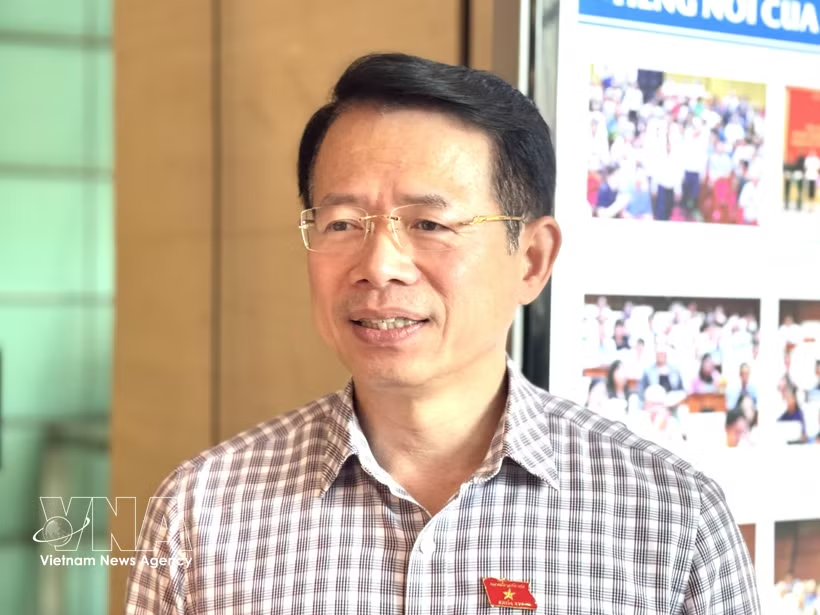
Deputy Nguyen Hai Dung from Ninh Binh province. (Photo: VNA)

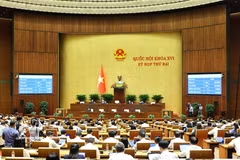
Hanoi (VNA) – The 1946 Constitution’s enduring values and people-centred approach remain a key foundation for Vietnam’s efforts to build and perfect its socialist rule-of-law State, National Assembly (NA) deputies said on the sidelines of the second session of the 16th NA.

Looking back on the 80-year journey since the country’s first Constitution was adopted, deputy Trinh Ngoc Phuong from Tay Ninh province said the 1946 Constitution has served as a thread connecting different periods of the country’s constitutional development. Although constitutional provisions had evolved to meet practical requirements, its core value of serving the people remained unchanged.

Phuong noted that its forward-looking and innovative mindset, together with its people-serving spirit, were not only significant at the time but also shaped subsequent constitutions and Vietnam’s legal system.

Even if the Constitution continues to be revised in the future, the spirit and core values of the 1946 Constitution will remain relevant, Phuong stressed.

Sharing this view, deputy Nguyen Hai Dung from Ninh Binh province recalled the extremely difficult historical circumstances facing the country immediately after its independence. Under the leadership of President Ho Chi Minh and generations of leaders, the country mobilised its collective wisdom and efforts to draft the first Constitution of the Democratic Republic of Vietnam, marking a special milestone in the constitutional and legislative history of the Party and the newly-established State.

From a legal science perspective, the 1946 Constitution is concise and succinct yet comprehensive in scope, fully governing the most important social relations, he said, noting that legal theorists and scholars always held the Constitution in particularly high regard.

Dung said that effectively applying and building on its spirit and drafting approach will contribute significantly to developing Vietnam’s socialist rule-of-law State. He cited its simple and accessible provisions on freedom and democracy, which reflect President Ho Chi Minh’s thought that democracy meant enabling the people to speak out.

Drawing lessons from the country’s constitutional history, the deputies expressed their hope that Vietnam’s legal system will retain the 1946 Constitution’s approach of using concise, clear and accessible language, while setting out general principles with lasting value, thereby further promoting the spirit of the 1946 Constitution in the country’s new development era./

VNA
See more

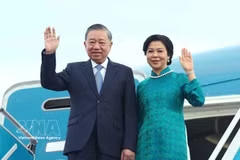
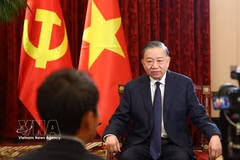
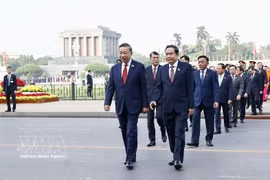
General Secretary of the Communist Party of Vietnam Central Committee and President To Lam, his spouse Ngo Phuong Ly and a high-ranking Vietnamese delegation leave Hanoi on November 8 for a four-day official visit to Japan at the invitation of the Japanese State. (Photo: VNA)

Top leader and spouse depart for official visit to Japan

General Secretary of the Communist Party of Vietnam Central Committee and President To Lam, his spouse Ngo Phuong Ly and a high-ranking Vietnamese delegation left Hanoi on November 8 for a four-day official visit to Japan at the invitation of the Japanese State.

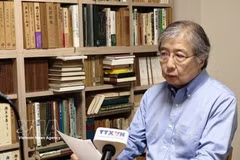
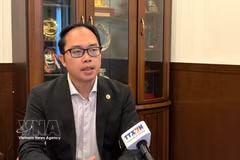
Toshiro Nishizawa, a Senior Fellow at Graduate School of Public Policy under the University of Tokyo in an interview with the Vietnam News Agency (VNA)'s correspondent in Japan (Photo: VNA)

Top leader’s visit to deepen Vietnam-Japan strategic cooperation: expert

The upcoming visit to Japan by General Secretary of the Communist Party of Vietnam Central Committee and President To Lam is expected to give fresh impetus to the Vietnam-Japan Comprehensive Strategic Partnership, reflecting the strategic priorities of both countries, according to a Japanese expert.

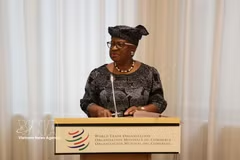
WTO Director-General Ngozi Okonjo-Iweala speaks at the event (Photo: VNA)

WTO hails Vietnam’s 20-year journey since accession

Joining the WTO was a strategic choice for Vietnam, closely associated with its Doi Moi (Renewal) process, opening-up policy and international economic integration. Over the past two decades, international economic integration has become a driving force for institutional reforms, trade expansion, foreign investment attraction and enhancement of the country's international standing.

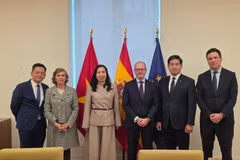
Vietnamese Deputy Minister of Foreign Affairs Le Thi Thu Hang (third, left) and other delegates at the political consultation (Photo: The Ministry of Foreign Affairs)

Vietnam, Spain seek to deepen Strategic Partnership

Vietnam asked Spain to continue voicing its support for and urging the European Commission (EC) to swiftly lift the IUU “yellow card” imposed on Vietnamese seafood, while actively encouraging EU member states to ratify the EU-Vietnam Investment Protection Agreement (EVIPA) at an early date.

Standing Deputy Minister of Foreign Affairs Nguyen Minh Vu (Photo: Ministry of Foreign Affairs)

Top leader's official visit to Japan carries three major strategic implications: Deputy FM

The visit, the first to Japan by the leader in his new capacity and the first visit to Japan by a General Secretary of the Communist Party of Vietnam in 11 years, will first set the overall strategic direction for bilateral relations in the new period, enabling leaders of the two countries to identify long-term cooperation orientations and priority areas that meet the development needs of both sides.

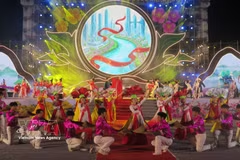
A performance at the 2026 Cultural and Artistic Exchange Programme for the Spring Border Festival between Lao Cai (Vietnam) and Honghe (China) (Illustrative image. Source: VNA)

Party directive calls for strengthening people-to-people diplomacy

People-to-people diplomacy is a key, regular task of the entire political system and people. People’s organisations, citizens, businesses, entrepreneurs, intellectuals, artists and overseas Vietnamese are at its centre and are the principal actors and direct participants in implementation, according to a new directive of the Party Central Committee's Secretariat.

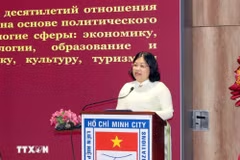
Nguyen Truong Nhat Phuong, Vice Chairwoman of the Ho Chi Minh City People's Council and President of the city's Vietnam-Russia Friendship Association, speaks at the gathering. (Photo: VNA)

Ho Chi Minh City seeks to strengthen cooperation with Russian localities

The Russian October Revolution laid the foundation for the longstanding friendship between Vietnam and Russia. Despite ups and downs of history, the traditional Vietnam-Russia friendship has been strengthened and nurtured by generations, with bilateral ties elevated to a Comprehensive Strategic Partnership.

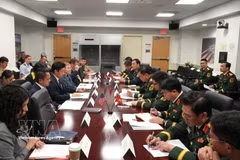
An overview of the 14th Vietnam–US Defence Policy Dialogue. (Photo: VNA)

14th Vietnam–US Defence Policy Dialogue held in Washington DC

Deputy Minister of National Defence Nguyen Truong Thang called for greater sharing of information, documents and memorabilia concerning Vietnamese servicemen killed or missing in action, as well as support in strengthening DNA identification capacity to accelerate Vietnam's 500-day campaign to intensify the search for, collection and identification of the remains of fallen soldiers.