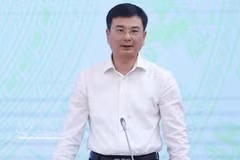
Hanoi (VNA) – Deputy Minister of Finance Nguyen Duc Chi outlined a price management scenario to keep average Consumer Price Index (CPI) growth around 4.5% in 2026, after inflation stood at 4.57% over the first 10 months.
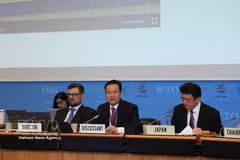
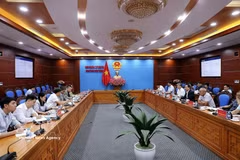
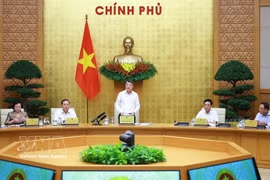
At the Government’s October press briefing on November 4, Chi said that at a meeting of the Steering Committee for Price Management in October, the Ministry of Finance presented a price management scenario comprising five key groups of tasks and measures.
First, authorities must monitor and forecast market price movements for essential goods. Ministries, sectors, and localities must regularly update information on domestic and international prices and propose timely, appropriate measures to avoid being caught off guard by price shocks.
Second, they must ensure a stable supply and maintain the prices of essential goods. Ministries, sectors, and localities should balance supply and demand, manage reserves, and facilitate the distribution of key items, including petrol, food, medicines, and medical supplies. They should also prepare sufficient stocks to meet end-of-year and Lunar New Year demand, strengthen supply-demand coordination between localities, and prevent supply chain disruptions and localised shortages.
Third, macroeconomic policies must be coordinated consistently, with monetary policy managed in coordination with fiscal policy and other macroeconomic measures. Appropriate tax and fee policies should continue to be implemented to reduce input costs and support businesses and residents.
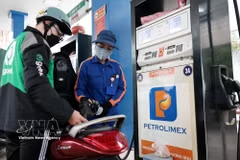
Fourth, the State must prudently manage the prices of goods and services. Ministries and sectors should carefully review the timing and scale of price adjustments, fully assess their impact on the CPI, people's living standards and business operations, and ensure consistency with inflation control targets. Special attention should be given to managing the prices of essential strategic commodities, including petrol and electricity.
Fifth, market inspections must be strengthened, alongside measures to reduce input costs. Authorities should inspect price declarations and listings, handle speculation, hoarding, price manipulation and profiteering, particularly during the year-end period and public holidays and festivals.
Under the scenario, the Steering Committee also requires businesses to reduce selling prices appropriately when input costs fall. Localities recording high CPI increases should analyse the causes by commodity and service group to enable targeted price management measures.
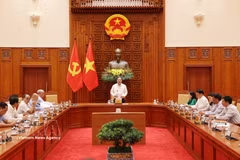
The Deputy Minister added that the Steering Committee for Price Management conducted a thorough analysis. Deputy Prime Minister Nguyen Van Thang, Head of the Committee, concluded that the target of keeping inflation at around 4.5% in 2026 could be achieved if ministries, sectors, localities and the entire political system effectively implemented the five groups of tasks and measures.
Petrol tax adjustment and electricity price cuts are expected to lower average 2026 CPI by 0.08 percentage points
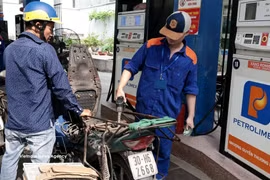
Regarding the adjustment of the special consumption tax on petrol and lowering electricity prices on the CPI, Chi said reducing the tax to zero from November 1, 2026, to March 31, 2027, would decrease State budget revenue by nearly 7 trillion VND (approximately 272 million USD).
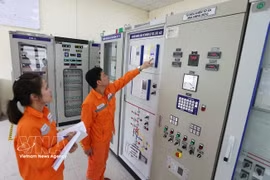
Together with the 2% reduction in average retail electricity prices from November 1, the two measures are estimated to lower the November CPI by around 0.5 percentage points compared with October, and reduce average CPI growth for 2026 by approximately 0.08 percentage points./.
See more
Public investment disbursement reaches 74.1% of annual target
As of October 31, total public investment disbursement stood at nearly 708.6 trillion VND (over 27.5 billion USD), rising more than 217.5 trillion VND from a year earlier.
Vietnamese localities strengthen investment links with Korean businesses
Ambassador Vu Ho stressed that direct connections between Vietnamese localities and Korean businesses will help tap complementary strengths, expand investment opportunities and deliver practical results.
Five industrial exhibitions open in Ho Chi Minh City
The five exhibitions comprise the 17th International Water Supply, Sanitation, Water Resources and Purification Exhibition and Conference (Vietwater 2026); Vietnam Energy Week; an international exhibition on refrigeration, air conditioning and smart buildings; Vietnam Supporting Industry Fair (VSIF); and the Vietnam Data Centre & Cloud Confex.
Commercial banks cut listed deposit rates by 0.5 percentage points
In October, the State Bank of Vietnam directed credit institutions to mobilise all available resources, cut operating costs, share profits and step up efforts to lower interest rates. Under its directive, banks were required to cut listed deposit rates and rates on newly mobilised deposits by 0.5 percentage points per year for tenors of six months or longer, while reducing lending rates by 1.5-2 percentage points per year for production, business activities and priority sectors.
Vietnam reaffirms firm support for WTO’s central role in multilateral trading system
Vietnam remains committed to deep, proactive and substantive international economic integration. Two decades of WTO membership have demonstrated the importance of international integration in promoting economic reforms, expanding trade, attracting investment and strengthening national competitiveness.
Meeting higher standards helps enhance competitiveness of Vietnam’s handicrafts
Effective implementation of trade agreements is not merely about taking advantage of market-opening opportunities. It should also serve as a catalyst for Vietnamese handicrafts to upgrade production capacity, build stronger brands and capture greater value in international supply chains.
Textile-garment industry restructures supply chains to meet rules of origin
While domestic yarn production largely meets local demand, fabric weaving, dyeing and finishing remain significant bottlenecks. Sourcing materials from within the CPTPP bloc is also challenging as member economies are not major suppliers.
Vietnam’s export growth hinges on fixing logistics planning, data, multimodal links
Online export growth needs order fulfillment, international delivery, data infrastructure and support for firms building storefronts on major e-commerce platforms.
Vietnam’s AI-led export boom meets FDI dependence, inflation test
Despite global AI-bubble risk, heavy FDI dependence and inflation pressure, Vietnam still has solid macro drivers. If it proactively clears internal bottlenecks, it has enough position and strength to weather short-term volatility and hit its double-digit growth target in the coming time.
Tech giant FPT expands operations in Europe
The opening of the FPT Poland office in Gdansk was not only a milestone in the corporation's development but also demonstrated the technological capabilities and international integration of Vietnamese businesses, said Vietnamese Ambassador to Poland Ha Hoang Hai
Vietnam Airlines launches direct Hanoi-Ahmedabad route
The inaugural flight departed from Sardar Vallabhbhai Patel International Airport in Ahmedabad for Hanoi. The route will operate four round-trip flights per week.
Vietnam sharply cuts petrol prices, except mazut
Following the fresh adjustment, E5RON92 gasoline is now sold at 23,203 VND (0.89 USD) per liter, down 1,020 VND per liter from the previous adjustment, and 28 VND per liter below E10RON95-III, which is set at 23,231 VND per liter, down 928 VND per liter.
Reference exchange rate further falls on November 4
The State Bank of Vietnam (SBV) set the daily reference exchange rate at 25,627 VND/USD on November 4, down 3 VND from the previous session.
Deputy PM calls for export-import market diversification, better trade governance
The Deputy PM called for timely handling of trade and tariff issues and effective solutions to address trade deficit. He also asked the drafting agency to continue reviewing the scope, title and content of the draft to ensure a balanced approach to trade governance that takes into account both trade surplus and deficit.
More room for Vietnam-Russia financial cooperation: Russian think-tank
For Russia, the Vietnam International Financial Centre is seen as a new financial lane alongside trade, energy and industry. Vietnam–Russia trade hit 4.77 billion USD in 2025, up 4%, generating demand for payments, bank guarantees, letters of credit, transport insurance and trade finance. VIFC financial entities can capture that business if they clear legal and commercial hurdles.
Forum promotes financial innovation alongside systemic safety
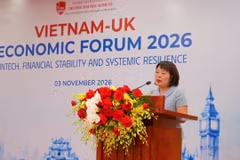
UEB Vice Rector Nguyen Thi Hong Thuy said the global financial system is undergoing profound transformation, with fintech, artificial intelligence (AI), big data, cloud computing, digital assets and open finance reshaping the delivery and supervision of financial services.
Vietnam eyes opportunities amid supply chain shifts in Southeast Asia
Vietnam aims to become a regional hub for artificial intelligence (AI) and data centres, as well as a destination for multinational corporations, international investment funds and financial institutions. To realise this goal, it is focusing on building a new-generation investment ecosystem that connects foreign-invested enterprises with domestic businesses, while developing logistics, data and clean energy infrastructure and a high-quality workforce.
APEC 2027: Special legal framework clears bottlenecks at major construction sites
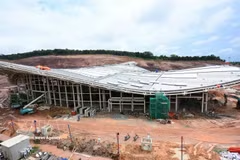
Beyond successfully hosting APEC 2027, An Giang aims to ensure that these investments deliver long-term benefits. Upgraded aviation, urban transport, water supply and drainage, environmental treatment and digital infrastructure are expected to transform Phu Quoc and create fresh momentum for the special zone’s socio-economic development in the decades ahead.
Phu Tho accelerates preparations for ADB-funded tourism infrastructure project
The project will be rolled out in Ky Son, Tan Hoa, Thong Nhat and Thung Nai communes and wards, with an estimated implementation period of six years from the loan agreement's effective date, during 2028–2034.
Bac Ninh targets 62.1 billion USD in development investment by 2030
Bac Ninh city aims to mobilise and effectively utilise around 1.6 quadrillion VND (62.1 billion USD) in total development investment capital across society during the 2026–2030 period.