Vietnam reaffirms firm support for WTO’s central role in multilateral trading system

Vietnam remains committed to deep, proactive and substantive international economic integration. Two decades of WTO membership have demonstrated the importance of international integration in promoting economic reforms, expanding trade, attracting investment and strengthening national competitiveness.

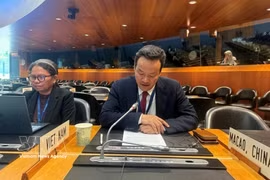
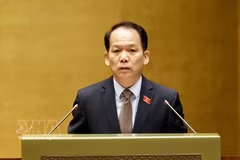
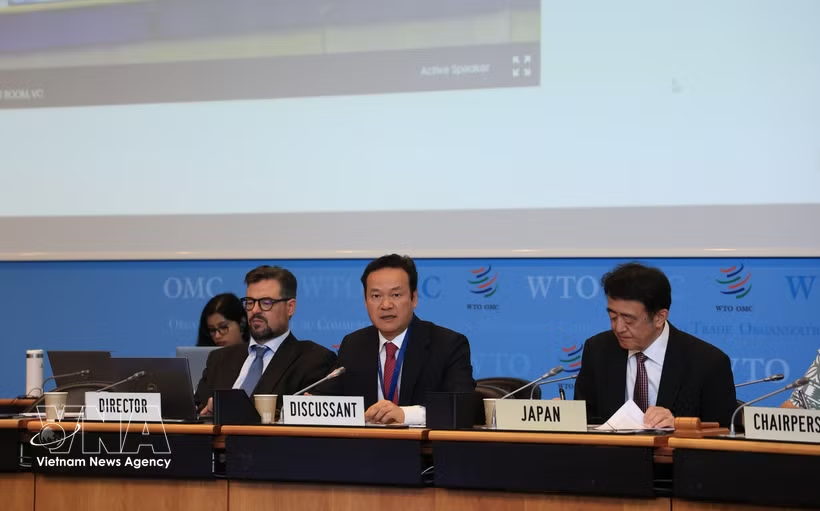
On May 27, 2026, at the headquarters of the World Trade Organisation (WTO) in Geneva, Ambassador Mai Phan Dung, Permanent Representative of Vietnam to the United Nations, the WTO and other international organisations in Geneva, delivers remarks as a discussant at Japan’s 16th Trade Policy Review (TPR). (Photo: VNA)

Geneva (VNA) - Vietnam remains steadfast in supporting the central role of the World Trade Organisation (WTO) in the multilateral trading system, Ambassador Mai Phan Dung, Permanent Representative of Vietnam to the United Nations, the WTO and other international organisations in Geneva, Switzerland, has said.

In an interview with Vietnam News Agency correspondents in Geneva ahead of Vietnam’s third Trade Policy Review (TPR), the ambassador outlined three key messages that Vietnam wishes to convey to WTO members.

First, Vietnam remains committed to deep, proactive and substantive international economic integration. Two decades of WTO membership have demonstrated the importance of international integration in promoting economic reforms, expanding trade, attracting investment and strengthening national competitiveness. Moving forward, Vietnam will focus not only on expanding economic and trade ties but also on improving the quality of integration, fulfilling commitments effectively and making better use of opportunities. Second, Vietnam will continue institutional reforms, improve its investment and business environment, and strengthen the economy’s internal capacity. Priorities include enhancing policy transparency, stability and predictability, simplifying administrative procedures, promoting science and technology, innovation and digital transformation, and improving domestic enterprises’ competitiveness and integration into regional and global value chains. Vietnam also recognises challenges, particularly the dependence of some export industries on imported materials and components, as well as difficulties faced by small- and medium-sized enterprises in accessing technology, finance and markets.

Third, Vietnam seeks to make more proactive and substantive contributions to shaping international trade rules and cooperation frameworks. Alongside fulfilling existing commitments, it will actively engage in discussions on emerging issues, including the digital economy, e-commerce, green transition, sustainable development and supply chain resilience.

Against the backdrop of rising protectionism, geopolitical competition and supply chain restructuring, the ambassador stressed that strengthening the rules-based multilateral trading system and safeguarding national economic and trade interests are complementary objectives. As a highly open economy deeply integrated into regional and global value chains, Vietnam considers a stable, transparent and predictable international trading environment essential to protecting businesses’ legitimate interests and sustaining growth. It therefore supports WTO reform efforts, particularly efforts to strengthen the organisation’s negotiating and monitoring functions and restore a fully functioning and effective dispute settlement system.

The ambassador emphasised that improvements to multilateral trade rules should preserve the system’s fundamental principles while taking into account differences in development levels and implementation capacities among members, particularly developing economies.

Meanwhile, Vietnam is working to enhance economic autonomy and resilience through market, partner and supply chain diversification, stronger domestic production and greater local added value. It will also ensure that legitimate national interests, public health, environmental protection, consumer rights and economic security are safeguarded through transparent, predictable policies consistent with international commitments.

Vietnam believes that sustainable protection of national interests amid growing uncertainty does not lie in limiting integration or staying outside international cooperation mechanisms, but in actively shaping rules, strengthening domestic capacity and effectively using multilateral mechanisms to protect its legitimate rights and interests, he added.

Vietnam officially signed its WTO accession protocol in Geneva on November 7, 2006, and became the organisation’s 150th member in January 2007. The WTO’s Trade Policy Review Mechanism is an important instrument for promoting transparency in members’ trade policies and their implementation of commitments./.

VNA
See more

Laos accelerates 47 power projects for export to Vietnam

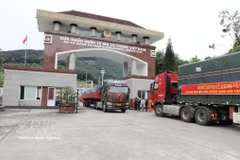
Laos accelerates 47 power projects for export to Vietnam

A notable project is the 600 MW Monsoon Wind Power Plant, located in Dakcheung district of Xekong province and Xanxay district of Attapeu province. Featuring 133 turbines, the project began commercial operations on August 22, 2025, and supplies electricity to Vietnam Electricity (EVN) under a 25-year power purchase agreement.

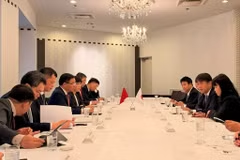
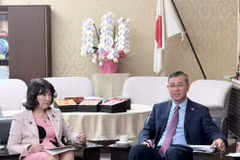
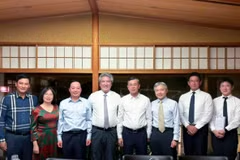
Minister of Industry and Trade Le Manh Hung holds working sessions with leaders of major Japanese corporations on November 10 to discuss investment cooperation opportunities in Vietnam’s mineral industry (Photo: Ministry of Industry and Trade)

Vietnam steps up cooperation with leading Japanese corporations

Minister of Industry and Trade Le Manh Hung spoke highly of economic, trade and investment ties between the two countries, highlighting the important role of Japanese businesses in developing production, transferring technology and strengthening supply chain linkages in Vietnam.

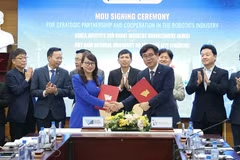
The MOU signing ceremony between Vietnam National University-Ho Chi Minh City and the Korea Institute for Robot Industry Advancement (KIRIA) on November 11, 2026 (Photo: tuoitre.vn)

Vietnam, RoK cooperate in robot industry

Vietnam National University-Ho Chi Minh City (VNU-HCM) and the Korea Institute for Robot Industry Advancement (KIRIA) will establish a cooperation framework based on their respective capabilities, strengths and networks in industry, academia, research and development (R&D).

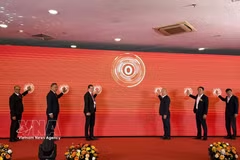
The opening ceremony of the Vietnam International Food Industry Exhibition 2026 (Vietnam Foodexpo 2026) on November 11 (Photo: VNA)

Vietnam Foodexpo 2026 opens in Ho Chi Minh City

Vietnam Foodexpo 2026 brings together more than 500 leading enterprises from over 20 provinces and cities nationwide, alongside large national pavilions representing more than 20 countries and territories. Exhibitors are showcasing over 700 booths, creating a platform for leading technologies, products and solutions from the global food industry.

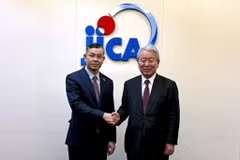
Vietnamese Finance Minister Ngo Van Tuan (right) meets with his Japanese counterpart Katayama Katsuki on November 10. (Photo: The Vietnamese Ministry of Finance)

Vietnam, Japan discuss cooperation in finance and strategic sectors

The two ministers exchanged views on the socio-economic development of their respective countries, as well as cooperation within the ASEAN-Japan framework and multilateral initiatives. They highlighted the importance of closer coordination to enhance their countries’ roles and voices at regional and international forums.

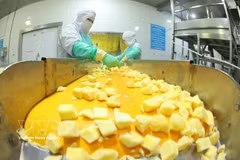
Processing frozen mangos for export in An Giang province (Photo: VNA)

Vegetable, fruit export boom hinges on technology

Pham Quoc Liem, General Director of U&I Agricultural JSC (Unifarm), said Vietnam needs chain-linked models for each key product, with clear roles for lead enterprises and clear responsibilities and benefits for stakeholders. The State should issue coordination policies and preferential credit support to build standardised raw material zones with stable productivity and quality. Research, development and commercialisation of competitive varieties will add further momentum.

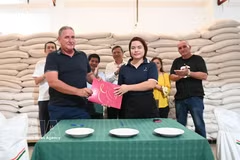
At the rice handover record signing ceremony. (Photo: VNA)

Vietnamese company hands over 1,500 tonnes of rice to Cuban partner

Vietnamese rice producer AgriVMA has expanded its cultivation area from 1,000ha to more than 2,500ha across the provinces of Pinar del Rio, Granma, Sancti Spiritus and Villa Clara. Its CT16 hybrid rice variety has achieved yields of more than 7 tonnes of fresh paddy per hectare.