Ho Chi Minh City pushes English as second language in schools

In 2027-2028, Ho Chi Minh City targets 20-30% of managers, teachers and staff in English proficiency training, 30% of establishments providing training in English/STEM/STEAM teaching methods, at least 30% of educational establishments with a complete English-speaking environment, and at least 15% of educational establishments teaching subjects in English.

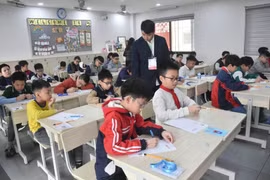
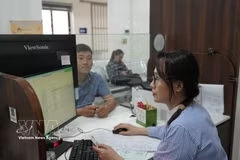
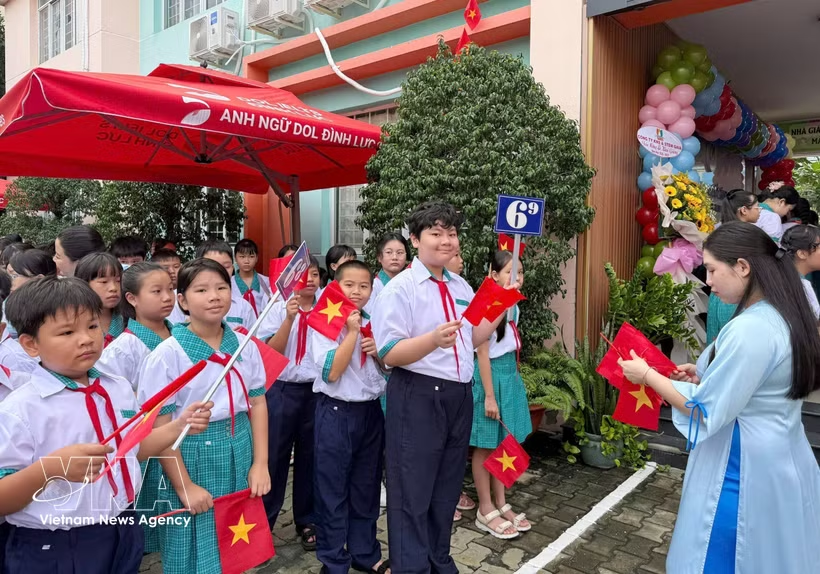
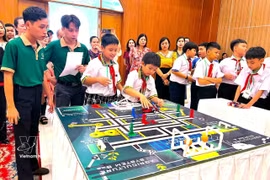
Secondary school students in Ho Chi Minh City (Photo: VNA)

Ho Chi Minh City (VNA) - Ho Chi Minh City has launched a plan to make English the second language in schools for 2026-2035, with a vision to 2045, aiming to ensure English is used widely, regularly and effectively in teaching and learning and build an English-speaking ecosystem under the national roadmap.

The plan also targets better teaching of English and subjects in English, quality workforce and a generation of global citizens able to integrate deeply, supporting the city’s role as Vietnam’s leading economic, cultural, education and science-technology hub.

Under the plan, announced by the municipal People’s Committee on November 3, the city will deploy key solution groups, including raising awareness of English’s role in education and integration, improving mechanisms and policies to build on the city’s existing English teaching foundation, developing staff and improving foreign language capacity and English teaching methods, and building English-taught and integrated curricula from preschool.

It will also innovate teaching, testing and assessment and develop an English-speaking environment, push advanced technology and AI and upgrade facilities; strengthen international cooperation, socialisation and public-private partnerships; and launch emulation and reward drives.

The city has set Phase 1 (2026-2030) as foundation building and preparation for rollout. In the 2026-2027 school year, it will compile statistics and survey English proficiency among all staff, and review current English-taught and integrated curricula.

In 2027-2028, it targets 20-30% of managers, teachers and staff in English proficiency training, 30% of establishments providing training in English/STEM/STEAM teaching methods, at least 30% of educational establishments with a complete English-speaking environment, and at least 15% of educational establishments teaching subjects in English.

In 2029-2030, each target rises by another 10%. By 2035, the city aims for 100% of managers and teachers meeting planned English proficiency standards, 100% of establishments completing training in methods of reaching subjects in English, 100% fully developing English-medium teaching programmes, and 100% completing school English-speaking environments.

In 2036-2045, the city will focus on upgrading conditions and resources for sustainable development. It will maintain and develop staff capacity, regularly update teaching methods, lift the share of general education establishments running integrated courses to 60-70%, and modernise and bilingualise education environments.

According to the municipal People’s Committee, the city has led Vietnam for eight straight years in average English scores in the high school graduation exam. More than 90% of general education establishments have run enhanced English and bilingual curricula for more than two decades. Since 2014, the city has embarked on the “Teaching and learning Mathematics, Science and English with integrated UK and Vietnam curricula” plan.

The city now has 69 international-model schools, 64 higher education establishments, 154 vocational education facilities and 1,915 foreign language centres./.
VNA

See more

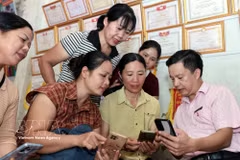
An official of the Bank for Social Policies in Lao Cai province guides local women in using the mobile application. (Photo: VNA)

Efforts made to create value from digital environment

As digital services become more accessible and public feedback is increasingly heard, Vietnamese citizens are expected to move from simply benefiting from digital transformation to actively contributing to the development of a prosperous digital nation, where people's happiness and satisfaction remain the ultimate measures of success.

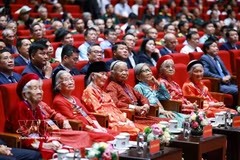
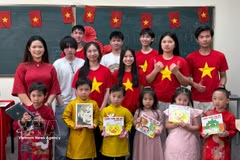
The Viet Youth Readiness Hub of the Canada Vietnam Council for Culture & Education (CVCEC) during a Vietnamese language lesson for Vietnamese-Canadian children in Toronto, Canada. (Photo: VNA)

Vietnamese culture connects generations in Canada

Beyond language skills, children learn about Vietnamese history, stories of filial devotion and national heroes, and the importance of respecting parents and teachers. Weekend classes begin with the national anthem, while festivals and traditional holidays offer opportunities to make greeting cards, prepare traditional cakes and learn to wrap 'banh chung' (square sticky rice cakes).

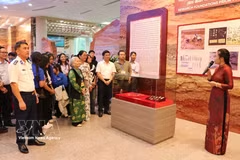
Delegates and local residents explore the themed exhibition “Coastal and Island Archaeology in Ho Chi Minh City: New Discoveries in 2020–2025”. (Photo: VNA)

Archaeological exhibition showcases 300 artefacts in Ho Chi Minh City

The exhibition presents 150 artefacts and 150 documentary photographs collected through archaeological surveys, field investigations and excavations over the past five years. The items were unearthed at notable sites including Cu Bi, Quang Thanh, Go Nan, Kim Long, Go Dat Nai, Giong Lon, Con Dao and Vong Thanh Da Trang. The findings have helped researchers shed light on traces of ancient settlements, craft workshops, distinctive burial practices, as well as ancient citadels and trading ports.

A TTU–VWAI representative hands the National Steering Committee 515 delegation several sets of dossiers on martyrs’ burial sites and artefacts that TTU–VWAI experts collected and studied during joint work to search for, recover and identify Vietnamese martyrs’ remains. (Photo: VNA)

Vietnam, US step up cooperation in search for fallen soldiers’ remains

Ambassador Nguyen Quoc Dung pressed partners to adopt four strategic tracks: a two-way verification process, standardised and professionalised outputs, breakthrough use of digital technology and AI, and maximum diplomatic patronage and resources, all aimed at converting documentary research into field investigation capacity.

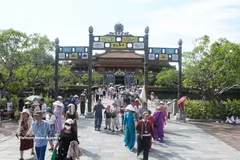
Visitors tour the Hue Imperial Citadel. (Photo: VNA)

Hue cuts heritage site entrance fees to attract more tourists

Under the first scheme, visitors using new tourist transport services to Hue will receive a 50% discount on entrance fees. Eligible services include the Hue – Phong Nha heritage railway, the Hue – Da Nang heritage steam train, and new domestic and international air routes, including charter and scheduled flights. The incentive does not cover existing air routes with increased flight frequencies.

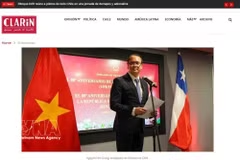
Screenshot of the article. (PhotoVNA)

Chilean media spotlight Vietnam’s growing global role

Chilean newspaper El Clarín recently published an interview with Vietnamese Ambassador to Chile Nguyen Viet Cuong, highlighting Vietnam’s foreign policy of independence and self-reliance and international integration, its contributions to regional cooperation, and prospects for bilateral ties as the two countries mark the 55th anniversary of diplomatic relations.

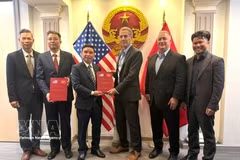
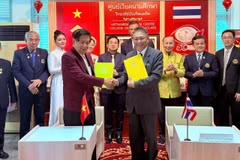
The exchange of a Memorandum of Understanding (MoU) on academic cooperation between the Vietnamese Consulate General in Khon Kaen and College of Asian Scholars. (Photo: VNA published)

Vietnam Studies Centre opens in northeastern Thailand

The centre would serve as a valuable academic hub for teaching and promoting Vietnamese language, culture and history, while fostering people-to-people exchanges and connecting younger generations of the two countries.

Fishing boats enter and leave Quy Nhon port (Photo: VNA)

Gia Lai tightens controls over vessels to combat IUU fishing

Inspections by an inter-sectoral working group identified weaknesses in managing ineligible fishing vessels, controlling vessels entering and leaving ports, seafood traceability, handling violations and implementing support policies for decommissioned vessels, according to the committee.

Construction site for the Ben Thanh - Tham Luong metro project on Cach Mang Thang Tam street (Photo: VNA)

Ho Chi Minh City plans five TOD areas along Metro Line No. 2

According to the Ho Chi Minh City Department of Planning and Architecture, the boundaries of the five TOD areas along Metro Line No. 2 (Ben Thanh – Tham Luong) have been approved, covering a total area of approximately 939 ha. The city is now drawing up plans for these areas.