ASEAN–China Dialogue spotlights AI, digital education

Discussions ran across three topics: AI-based innovation in future teaching and learning, AI in professional education and specialised practice, and digital transformation and regional cooperation ecosystems.
Participants pose for a group photo at the ASEAN–China dialogue on AI and digital education on November 2, 2026. (Photo: VNA)

Hanoi (VNA) – Artificial intelligence (AI) is creating new opportunities in education, but wiring tools into classrooms is not enough. The shift has to stay human-centred, uphold teachers and learners’ active role, and be inclusive, ethical, transparent and respectful of diversity.

It was spotlighted by experts at an ASEAN–China dialogue on AI and digital education hosted by the Vietnam National University-Hanoi’s University of Education on November 2.

The dialogue opened the Global MOOC & Online Education Conference (GMC) 2026, themed “Reallocating Intelligence: Transforming Education for a Human-AI Future”, co-hosted by VNU-Hanoi and China’s Tsinghua University in Hanoi from November 2 to 4.

It drew experts, scientists, universities and research groups from China, ASEAN and beyond to share experience, pool resources and look for new models in digital education and AI application.

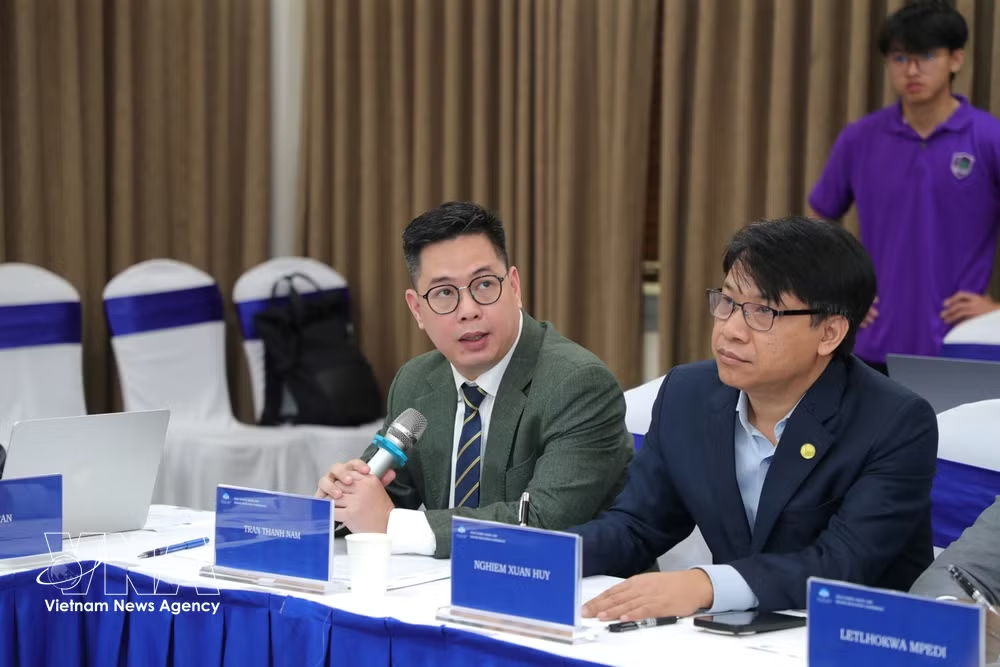
President of the VNU-Hanoi’s University of Education Assoc. Prof. Dr Tran Thanh Nam said the event lets the school widen its international academic network, boost expert exchanges, step up joint research and training, and take a deeper role in global education-science and technology forums.

He said the school hopes to push practical Vietnam–China–ASEAN cooperation and build an open, creative, inclusive and responsible digital education ecosystem.

A representative from the UNESCO Institute for Information Technologies in Education (UNESCO IITE) said teachers remain central to pedagogical decisions. Technology can help with data analysis, lesson design, personalised learning and workload, but cannot replace teachers in guiding, organising learning and supporting holistic development of students.

Meanwhile, students need more than tool skills; they must understand and judge AI with critical thinking, spot opportunities, risks and limits, and use it responsibly, the UNESCO IITE representative noted.

Discussions ran across three topics: AI-based innovation in future teaching and learning, AI in professional education and specialised practice, and digital transformation and regional cooperation ecosystems.

vnanet-x.jpg
President of the VNU-Hanoi’s University of Education Assoc. Prof. Dr Tran Thanh Nam (left) speaks at the event (Photo: VNA)

On professional training, participants shared ways to fold AI into curricula and practice in medicine, chemistry, biology, education science and education management. The focus was on building professional competence and training quality amid fast-changing digital workplaces.

Another focus was digital education ecosystems, open learning infrastructure and resources, knowledge sharing among universities and cross-border cooperation. Sharing resources, experience and practical fixes helps countries and universities learn from one another and adapt global technological and educational trends to local economic, social, cultural and educational conditions.

At the Global MOOC and Online Education Alliance (GMA)’s Executive Board meeting on November 2, Nam proposed four cooperation initiatives, including a working group on teachers’ AI competence, with the VNU-Hanoi ready to co-chair work toward a common framework and practical training; multilingual smart courses, starting with 2–5 pilot ones in Vietnamese and English on AI in education, digital teaching and learning assessment.

He also suggested a GMA scholar exchange and a joint research on AI in education, and urged that multilingual education and teacher competence should be priorities in the Global Digital Higher Education Development Report 2027.

The VNU-Hanoi is ready to help build a Southeast Asia chapter and share regional experience and practical issues, he added./.


VNA

See more

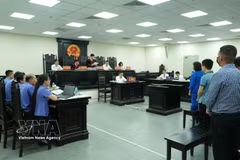
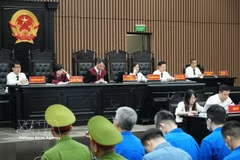
The first-instance trial held by the Hanoi People’s Court (Photo: VNA)

Trial of Chu Thi Thanh: Proposal to revise oversight of petrol price stabilisation fund

The Hanoi People’s Court commenced the first-instance trial on the morning of November 2 for Chu Thi Thanh, Chairwoman of the Board of Directors of Thien Minh Duc Group Joint Stock Company, along with 22 other defendants, in a case involving embezzlement, the illegal issuance and trading of invoices for state budget payments, and tax evasion.

Nguyen Thi Bich Ngoc, Chairwoman of the Association for the Support of Vietnamese Handicapped and Orphans in Ho Chi Minh City, presents wheelchairs to people with disabilities (Photo: VNA)

New plan aims to empower people with disabilities, promote social inclusion

By 2030, Vietnam aims to ensure social security and improve the quality of life of people with disabilities, with priority given to those facing hardship or unable to support themselves. It also aims to ensure their appropriate participation in elected bodies and enable them to benefit from the country's development achievements.

Empowering people with disabilities to immune against online scams

Empowering people with disabilities to immune against online scams

Notably, it has organised online scam prevention training courses for more than 1,000 young people with disabilities. In coordination with the Hanoi Police, it has also conducted awareness campaigns and provided guidance to members on identifying fraudulent schemes, protecting their accounts and personal data, and verifying information before sharing it on social media.

Using specialised equipment to detect and locate unexploded ordnance in the sandy area of Hai Lang, Quang Tri province. (File photo: VNA)

Quang Tri allocates 90 billion VND for landmine clearance in six communes

The central province of Quang Tri has approved an investment of 90 billion VND (3.48 million USD) for a landmine and unexploded ordnance (UXO) clearance project for 2026-2030, aiming to clear approximately 2,400 hectares of land and provide safe ground for local socio-economic development.

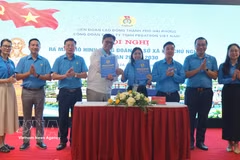
A leader of Pegatron Vietnam Co., Ltd. sign an agreement with the firm's trade union. (Photo: VNA)

Hai Phong launches “socialist trade union” model at two major FDI firms

Leaders of Pegatron Vietnam and LG Innotek Vietnam Hai Phong expressed confidence that the “socialist grassroots trade union” model will help build a skilled workforce with professional industrial discipline and an innovative spirit, while enhancing workers’ commitment to their companies.

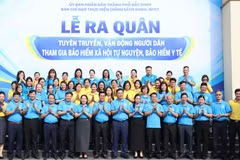
Delegates at the ceremony to launch a campaign to promote health insurance participation in 2027 and encourage continued participation in voluntary social insurance in 2026 (Photo: https://baobacninhtv.vn/)

Bac Ninh targets 96.2% health insurance coverage

Bac Ninh city is stepping up efforts to expand social insurance and health insurance coverage, targeting a health insurance participation rate of 96.2% in 2026 through a campaign to encourage new enrolments and the resumption of voluntary social insurance contributions.