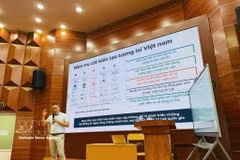
Ho Chi Minh City (VNA) – Artificial intelligence (AI) is bringing rapid changes to the way information is accessed, case files are processed and legal services are delivered.
In Ho Chi Minh City, which is home to many lawyers and businesses and has diverse demand for legal advice, technology offers opportunities to improve professional efficiency while also creating new requirements for information verification, data security, professional ethics and the building of trust in the digital environment.
Technology as a tool, people as the decision-makers
Lawyer and legal expert Dang Dinh Thinh, Director of the Vietnam Lawyers Association’s legal consultancy centre in Ho Chi Minh City, said technology can provide answers very quickly but not necessarily accurately; it can simulate reasoning but cannot replace the conscience, professional judgement and responsibility of legal practitioners. Behind every legal case are people's rights and interests, dignity and, in some cases, their very lives.
Lawyer Nguyen Van Hau, Deputy Chairman of the Ho Chi Minh City Bar Association, said AI is a technical support tool that can improve efficiency, assist with case-file processing, legal research, contract drafting and data management. Technology can automate part of administrative work, but empathy, flexible thinking, the art of negotiation and advocacy, as well as the handling of complex personal relationships, remain areas in which people play an indispensable role.
This approach is reflected in the Nhip cau Luat su digital platform (nhipcauluatsu.com.vn).
Thinh said the platform provides a space connecting information, professional expertise and legal needs, giving individuals and businesses a basis for finding lawyers whose expertise matches their specific requirements. For lawyers, it provides an environment in which to build digital professional profiles and showcase their experience and professional contributions.
An information system organised by areas of expertise and geographical location can help narrow the gap between people seeking legal assistance and appropriate legal resources.

Managing risks to maintain trust in the legal system
However, AI also presents specific risks for legal practice. Legal expert Tran Dinh Dung of the legal consultancy centre in Ho Chi Minh City said AI may provide inaccurate information or even cite legal documents that are no longer in force, meaning that its output must be verified before being used. At the same time, it may struggle to ensure sufficient personalisation for individual cases.
Hau warned of the risk of AI “hallucinations”, whereby it may generate non-existent case-law citations or legal grounds that are presented convincingly. Practitioners must independently verify such information, he said, as errors could have serious consequences for clients.
Dr Tran Quy, Director of the Vietnam Institute of Digital Economy Development, stressed the need for data controls, security, information quality, human oversight and accountability when applying AI in the legal profession.
In Ho Chi Minh City, digital transformation in the legal profession is not simply about introducing more technology into professional practice. It must also create ways of working that ensure technology serves people, while lawyers retain control and responsibility for the quality of legal services. This is particularly important in a metropolis with a large-scale economy and diverse legal needs.
According to Thinh, the ultimate measure of technological progress is whether people can access the law more easily, receive better protection and have greater confidence in justice. Technology can help narrow the gap, but lasting value must still be built on the competence, reputation and responsibility of legal practitioners. This also provides the foundation for strengthening trust in the legal system in the digital environment./.